Monday, April 17, 2006

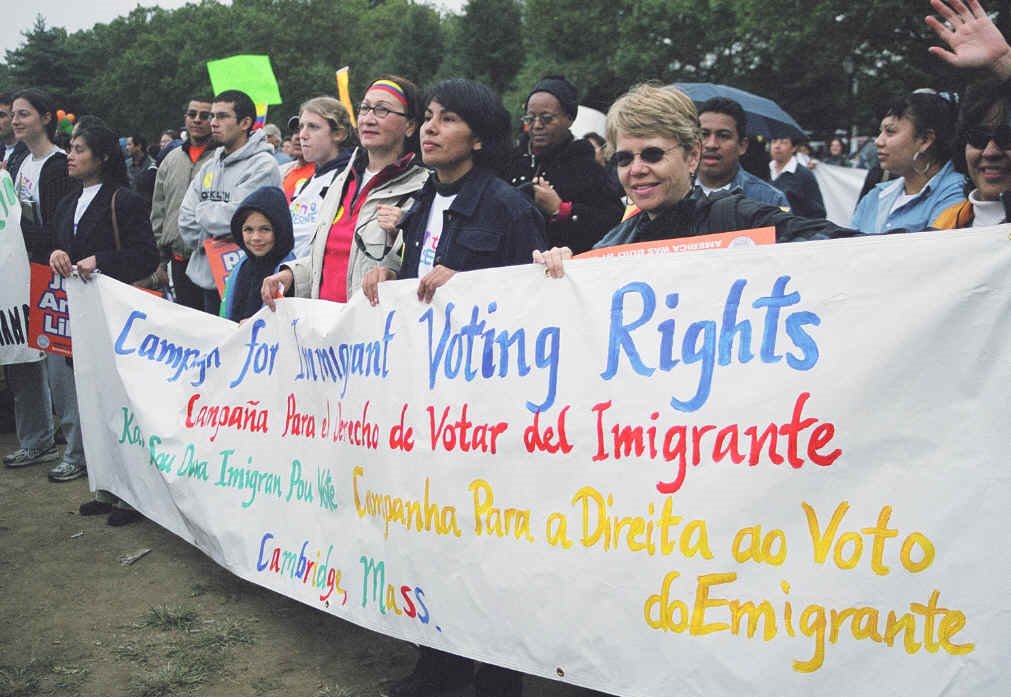
Linking immigrant rights with Voting Rights and political empowerment

The Oakland-based Applied Research Center is pointing its folks towards a piece in today's San Diego Tribune. In their Race in Focus email blast to racial justice activists and policy-makers like me, ARC 'raved' about the perspective from the Tribune.

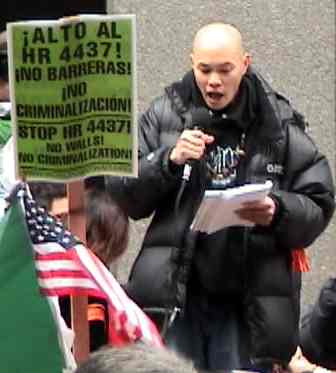
March Today, Vote Tomorrow: Immigrants' Rights Organizers Mobilize Voting Power. Efforts are moving forward in San Diego to harness the momentum created by immigrants' rights marches across the country for voter registration and mobilization. UC Riverside ethics professor Armando Navarro said, "We now have to move into a much more organized voter registration and political organization effort. Read more: San Diego Union Tribune

I think the key question for many immigrant rights and social justice activists is how to harness the momentum and energy of the new movements for the future. On the eve of the historic A10 nationwide protests for immigrant rights, the aptly named League of Pissed Off Voters [but also known as League of 'Independent' or 'Young' voters] put out a clear call for young activists to recognize the significance of the new social movements, express solidarity and to get active electorally and politically. Check out League leader Val Benavidez's excellent piece from Alternet - Join the Largest Social Movement of Our Decade

...the young people of this country -- are walking out, marching, organizing and voting for humane immigration reform.
You are about to meet the largest social movement of our decade. All across the country young people are organizing. Immigrants and non-immigrants, we are taking to the streets to protest some of the most racist legislation to ever enter the halls of Congress. We are walking out of our schools, organizing the social justice community and rallying our statehouses.
More stories by Val Benavidez. More on the League of Pissed Off voters. The league's Blog.

Lastly, one of my movement colleagues Carl Davidson of Chicagoans Against War & Injustice or CAWI and Networking for Democracy has written about the theory and practice of everything from registering new high school-aged voters to passing anti-war resolutions at the City Council level and impacting national elections.
high school peace and justice voters Carl and Marilyn Katz' piece on regime change

Radical NYU Education professor Jean Anyon at the AERA [American Education Researchers Association] conference last week called the burgeoning immigrant rights movement one of the most profound social movements of our time. Whether the new movement's momentum and energy can be harnessed by our existing social justice organizatinos for longer term political power or whether new organizations will sprout up to lead for the future remains to be seen. But it seems to me that the Applied Research Center, League of Pissed Off Voters and Chicagoans Against War and Injustice, are asking the right critical questions for the future of our movements.
PLUG - New York City immigrant and voting rights activists are in the middle of a campaign for voting rights for non-citizens in their city elections. Activists re-introduced their historic Voting Rights Restoration Act on April 5, 2006 at the NYC City Council. for more info - www.immigrantvoting.org
eric

SB 1209- Compliance issues

SB 1209 Scott
The current highly restrictive law providing for teacher credentialing is SB 2042. This act was a continuation of the practice of standards based education and testing as a measure of accountability, promoted by groups such as the Business Roundtable. These reductionist practices which brought us Open Court, the High School Exit Exam, and others.
SB 2042 was developed and implemented through the Commission on Teacher Credentialing during the time when the chairs of that commission included the highly ideological Margaret Fortune and Alan Bersin.
The current proposal: SB 1209 would require more performance assessment of future teachers without providing funds for this assessment.

SB 1209 Scott.

(5) Existing law provides that the requirements for a professional
clear preliminary multiple or single subject teaching credential
include, among other things, completion of a an accredited program
of beginning teacher induction professional preparation, as specified.

This bill would eliminate the contingency that each teacher
preparation program include a specified teaching performance
assessment only if funds are available in the annual Budget Act for
this purpose.

Prior to developing new assessments to measure compliance with 2042, we need to first ask, Has anyone seen any evidence that 2042 has improved teacher preparation?
If you know of any empirical evidence that SB 2042 has improved teacher preparation please let me know.
More will follow on this issue including an assessment of the role of professional advocacy organizations such as ACSA and others.
Duane Campbell

Saturday, April 15, 2006

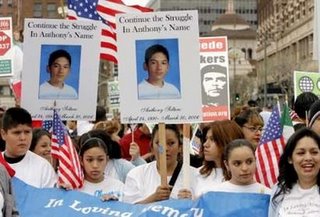
LA & Oakland marchers remember Anthony Soltero - First Student Casualty in the 2006 immigrant rights battle

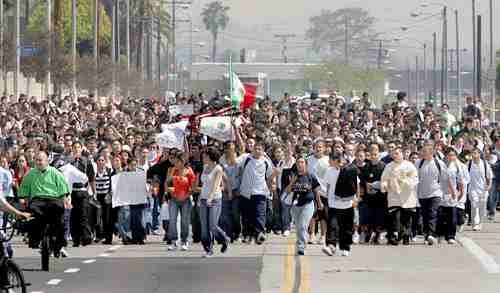
The LA Times, LAist and Reuters reported Saturday [Protesters Hit Streets to Support Immigrants] on another large student organized march and protest, this time on a non-school day. But with the suicide of Southern California middle schooler Anthony Soltero, the first 'casualty' of the 2005/06 battle for immigrant rights and against HR 4437 and other racist anti-immigrant legislation, students are stepping up with creative websites, blogs, and new organizing for their future.
Those participating dedicated the march to Anthony Soltero, 14, of Ontario, whose mother says killed himself after he was disciplined for missing class to take part in an immigration rights march. School officials have said there is no ''corroborating evidence'' to support that allegation.
Some 20,000 Oakland immigrant rights protesters and student activists on Monday, April 10th also dedicated their rally and march to Anthony. See artist/activist Faviana Rodriguez' great blog for more on the growing movement in Oakland. Anthony's mother Louise Corales has said that her eighth grade son shot himself through the head on Thursday, March 30, after the assistant principal at De Anza Middle School told him that he was going to prison for three years because of his involvement as an organizer of the March 28 school walk-outs to protest the anti-immigrant legislation in Washington.
She says that the vice principal also forbade Anthony from attending graduation activities and threatened to fine her for Anthony's truancy and participation in the student protests. The family's supporters say Anthony was learning about the importance of civic duties and rights in his eighth grade class.

“I want to speak out to other parents, whose children are attending the continuing protests this week. We have to let the schools know that they can‘t punish our children for exercising their rights.”

LAist said that Anthony's funeral was Saturday morning. Some bloggers and parent and education activists are calling for the firing of the Assistant Principal like LA's Politics in the Zeros and the The Good Reverend. Other great blogs - Detodos-paratodos No HR 4437.org

For a great new website which features student voices on immigrant rights go to:
http://www.studentsresponseshr4437.com/

From STUDENTS' RESPONSES HR4437.COM:

New policies, propositions, and initiatives to reform immigration are as frequent as the morning sunlight. The new HR4437 bill has stirred up the social activist in everyone who has a friend, sibling, or parent who is undocumented and among those who believe in justice and equality for everyone.
...This web site is meant to provide a forum for students(and non-students) to post their comments or responses about the HR4437 Bill, their experiences at multiple rallies that have been organized nationwide, or to share their thoughts and feelings about immigrant rights.

Thursday, April 13, 2006

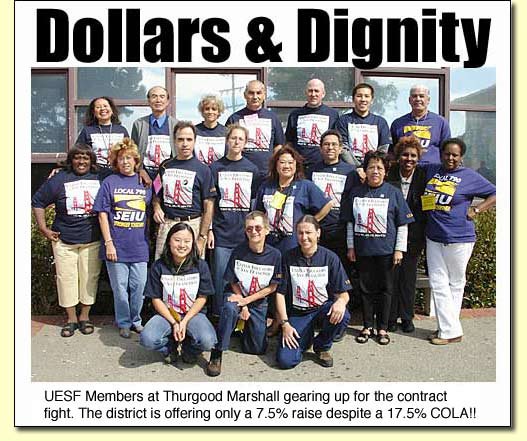
SF Teachers Organize & Win a Fair Contract and Avert a Teachers' Strike; Patricia Rocio Vattuone - Rest in Peace and Justice

The SF Bay Guardian's "Dodged bullet: The issues and emotions behind the teachers strike that almost was" provides good teachers' insight into the SFUSD teachers/paras contract, including how former Superintendent Ackerman's large raise, golden parachute and lavish spending habits complicated the delicate labor negotiations.
San Francisco parent leader Lisa Schiff also provides a useful analysis of how the SF teachers' strike was averted and how parents and communities need to unite to fight for adequate funding in Beyond Chron www.beyondchron.org.
As a Board of Education member here in SF, I do know that the interim Superintendent Gwen Chan and the Board worked for several days around the clock to find common ground with the well-organized teacher's union [UESF] after the union members voted 87% in favor of a strike authorization.
Since the settlement is only 'tentative' until it is voted upon by the UESF membership and then the full Board of Education, what I can say is that teachers and paras in our district deserve to be treated as professionals and to be paid a living wage. The United Educators of San Francisco, and SEIU 790 before them, organized at the grassroots level building strong ties with parents, school sites, and social justice and community-based organizations to pressure the Superintendent and Board to treat them with respect and to win a fair contract.
As SF, Oakland and other districts continue to face ongoing and severe underfunding and de-funding by the existing public education system, Schiff is right to be critical of short term fixes like our much needed parcel tax for schools -

But a parcel tax is insufficient for the revenue we need, and it is a local and partial solution to a state and federal level problem. Our goal should be to sufficiently fund all schools, not just our own schools. In that way, we help everyone and help ourselves too.
She also asks crucial questions now being looked at by the state and with a new study by Stanford researchers which focus on the structural problems with the school funding system -

1. What do California school finance and governance systems look like today?
2. How can we use the resources we have more effectively to improve student outcomes?
3. To what extent are additional resources needed so that California students can meet the goals we have for them?
But like many other middle class parents, Schiff fails to acknowledge how the funding crisis disproportionately harms African American, Chicano/Latino and students of color.
My SF State colleagues Jeff Duncan-Andrade, Sean Ginwright, and Antwi Akom presented an incredible workshop at the AERA [American Education Research Assn] conference on Tuesday which focussed not only on their work in Oakland schools like the East Oakland Community High School [founded by immigrant rights hunger striker Wayne Yang and others], but also on the importance of racial justice organizing among teachers, students and parents in the lowest income communities of color. Jeff, Sean and Antwi [and I] have been influenced by the important educational justice work of Pedro Noguera of NYU. [see below for more on the loss of Pedro's partner Patricia].
Schiff also leaves off the hook the big business power brokers like Eli Broad [KBC Homes], Don Fisher [GAP, Old Navy], Bill Gates [Microsoft],
Patrick Byrne [Overstock.com] who are reframing the education reform debate into one around high stakes testing, mayoral control of school boards, and standards and accountability.
For more on the business roundtable and the big business driven agenda which is 'reforming' our public schools today see Kathy Emery and Susan Ohanian's Why is Corporate America Bashing our Public Schools?. See also Nathan Newman's The Right Wing's War on the Public Schools
------------
Rest in Peace & Justice - Patricia Rocio Vattuone [1957-2006]
Lastly my deepest sympathies go out to Pedro [and his 4 children Joaquin, Amaya, Naima and Antonio] on the loss of his partner of 25 years -Patricia Rocio Vattuone. Hundreds jammed the Daly City, CA memorial last night to remember Patricia. She was the former Director of Parent Relations for the SF Unified School District, but I knew her for over 20 years as an amazing student organizer, schoolbus driver, SEIU union activist, and mother.
----------------
Beyond Chron has great coverage on the upcoming 4/17 People's Forum on the SF Earthquake and building multiracial unity in times of disaster.
www.beyondchron.org/news/
---------------
More on Pedro Noguera's work -
http://www.inmotionmagazine.com/er.html
More on Jeff Duncan-Andrade's work -
brown/issue2.html
youthculture.html

Wednesday, April 12, 2006

Learning from the 1906 SF Earthquake/Fire - Grassroots People's Forum in Chinatown 4/17

This week as the San Francisco City elites hold posh wine and cheese receptions and parties commemorating the 100th Anniversary of the Great 1906 SF Earthquake and Fire, grassroots community groups and activists will be dialoguing in Chinatown on the eve of the anniversary at the historic Commodore Stockton School [now Gordon J. Lau Elementary School] on lessons from the great earthquake and more recent disasters like Hurricane Katrina. Organizer Nicole Derse and others have put together the forum to draw lessons from these tradgedies for our movements to build stronger alliances and solidarity in times of crisis in the future.
On Tuesday 4/18 at 4:30am I will be joining city officials and others at a memorial gathering at Market and Kearny Streets, the epicenter of the 1906 disaster. But on Monday eve, please join grassroots organizations like the SF People's Organization and the Malcolm X Grassroots Movement for the PEOPLE's FORUM:

Ruin, Rubble And Race
The San Francisco Earthquake and Post–Katrina America, 1906 to 2006, One Hundred Years Later

Join a diverse group of community-based organizations and activists for a “People’s Forum” to commemorate and critically reappraise what happened 100 years ago, and what must change today to save lives and prevent displacement of vulnerable, working people from the city’s landscape.
Monday, April 17th from 6:30 PM to 8:30 PM
Gordon J. Lau Elementary School950 Clay Street (between Stockton & Powell)Admission is free. Food provided.

Distinguished Emcee Bob Wing, Activist and Writer
Panelists
CC Campbell-Rock, Katrina Survivor, Community Organizer, and Journalist
Willie Ratcliff, Community Activist and Editor of San Francisco Bay View newspaper
Connie Young Yu, Historian and Author of Chinatown, San Jose, USA
Chris Carlsson, Board President, Counterpulse and Executive Director, Shaping San Francisco: An Interactive Multimedia Excavation of the Lost History of San Francisco
Shanell Williams, Community Activist, Former SF Youth Commissioner

History has revealed that the 1906 Earthquake and Fire, and the monumental, post-disaster rebuilding efforts, gave tragic rise to a modern era of twentieth-century displacement and gentrification of working-class people, immigrants and communities of color throughout San Francisco. In 2005, the nation witnessed how Hurricane Katrina and the government’s racist and cruel response devastated the social and economic conditions of these same communities in the Gulf Coast region.
One hundred years later we ask: “What would happen if another earthquake shakes up San Francisco? Who would survive? Who would be displaced? And would the city be rebuilt for the wealthy, power elite and corporations that dominant the debate?”
Join us for the discussion!
For more information contact Nicole Derse at 415-374-5429

For a couple of good pieces on New Orleans rebuilding -
Check out Colorlines Magazine's article -
Imprisoned in New Orleans by Jordan Flaherty and Tamika Middleton
www.arc.org/C_Lines/

Honest and cutting edge reports - http://neworleans.indymedia.org/

Grassroots and People's Organizations like Critical Resistance, Malcolm X Grassroots Movement and Peope's Hurricane Relief Fund and Oversight Coalition also have good info.

I also like radio clips from shows like Democracy Now and the Labor/Community Strategy Center's show in Los Angeles on KPFA Voices from the Frontlines
Kali Williams.mp3 of the Malcolm X Grassroots Movement
Malcolm Suber.mp3 of People's Hurricane Relief Fund
Francisca Porchas.mp3 of the LCSC
Saladin Muhammad.mp3 of black workers for justice
Damu Smith and Beverly Wright on Democracynow.org

For those searching for more historical analysis -
See the Labor Community Strategy Center leader Eric Mann's excellent 'letter' in support of the movement in New Orleans and the Gulf Coast http://www.frontlinespress.com/Letter_in_Support_web.pdf

Monday, April 10, 2006

Historic Immigrant Rights Protests Continue - April 9th Dallas, St. Paul, San Diego; All out for A10 NYC to San Jose, SF and Oakland

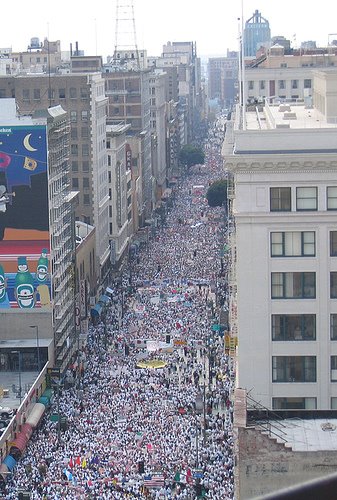
(AP Photo/Ric Francis)
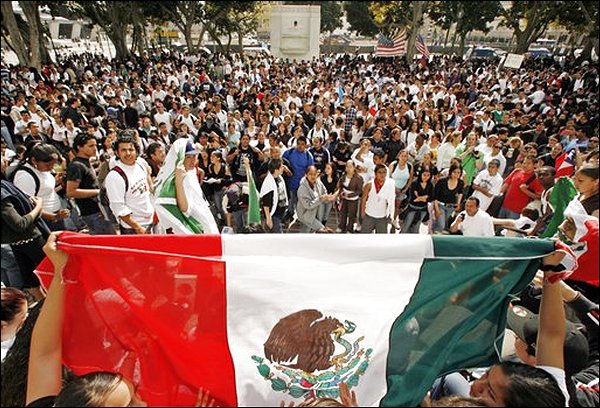
Just weeks after the massive Chicago, Los Angeles, Milwaukee and Denver mobilizations, the Associated Press is reporting now that Sunday's Dallas Immigrant Rights Protest drew historic record numbers of new activists half a million strong fighting for justice and dignity for immigrant communities. 50,000 more marched in San Diego and another 30,000 in St. Paul Minnesota.
San Francisco Chronicle reporter Delfin Vigil also confirms those numbers in this morning's story, but he also gives voice to teachers, young people, and community organizers.
In the Bay Area, Jay Pugao, a Filipino American and a teacher at East Oakland
Community High School
, said, "Our (House of Representatives) basically wants me to see my students as criminals. Some of my students might be illegal immigrants. But they are students. They are not criminals."
Pugao said he has noticed his students are increasingly aware of how they would be affected by the changes in the law.
"The revolution might not be televised, but it is definitely being digitized," said Pugao. "The students are getting organized through text messaging, blogs, and Web sites like MySpace.com. They know exactly what's going on."
He and others said the current debate has brought the Latino and other immigrant communities closer.
"The mass media forgets that immigrants come in all colors," Pugao said. "The Irish, Chinese, Japanese all helped build this country. Even our governor is an immigrant."
...Arnoldo Garcia, with the National Network for Immigrant and Refugee Rights, also said local radio stations like KRZZ 93.3 FM La Raza in San Francisco deserve credit for explaining complex immigration issues. The Spanish-speaking stations' DJs first opened their airways for political conversation in the week leading up to a rally March 25 in Los Angeles that drew 500,000.
"The Latino radio stations understand that they have got to get the word out because it's their audience who is under attack," said Garcia. "We're still preparing for something bigger because it's not going to take just one march to get what we deserve." full Chronicle story.
Join us Monday - April 10 - National Day of Action for Immigrant Justice
OAKLAND MARCH Organized by Saint Louis Bertrand Church
Contact: Jesus Rodriguez, 510-469-7785
9:00AM - March from Saint Louis Bertrand Church (100th Ave. & International Blvd.) to the Oakland Federal Building
SAN FRANCISCO PRESS CONFERENCE Organized by the Deporten a la Migra Coalition
Contact: Luis Herrera, St. Peter's Housing Committee, 415-724-2426
11:00AM - Press Conference at 24th St. and Mission St.
SAN JOSE MARCH Organized by SIREN and SEIU Local 1877
Contact: Martha Campos, SIREN, 408-453-3003, ext. 111
3:00PM - Gather at Story Rd. & King Rd.3:45PM - Program begins
4:00PM - March 3 mi. to San Jose City Hall
7-7:45PM - Rally at City Hall Flyer in Spanish and English
SAN FRANCISCO FAMILY MARCH Organized by Compañeros del Barrio
Contact: Compañeros del Barrio, 415-431-9925
5:00PM - March from 16th St. and Mission St. to 24th St. and Mission St.

Sunday, April 09, 2006

Transformation v Destruction

There is a revealing article in the front page of today’s NYTimes about phase II of standards based reform in the NY City Public school system (coming soon to a district near you). Upon reading this article, many will feel that here is more evidence that the goal of high stakes testing is to destroy public schools by privatising them. For example,

Joel I. Klein . . . has hired Chris Cerf, former president of Edison Schools, the commercial manager of public schools in 25 states.”

“. . . what prices should be set if services like teacher training, now provided by the administration, were essentially for sale, to be purchased only by schools that want or need them?”

“Support services, like counseling programs, could be outsourced.”
But a full reading of the article suggests that the story is more complex than “privatization”. There is no question in my mind that CEOs want to shrink public space (parks, schools, hospitals, housing), but I don't believe they are in agreement with Norquist that they want to take it into the bathroom and drown in it the bathtub. They still want taxpayers to pay for socializing and sorting the work force. Transformation is not the same as destruction. Destruction is useful as a rallying cry for public school teachers, but it is not useful to get parents on board who feel that any change is better than what has been. Transformation may be a more accurate description than destruction to explain what is happening in Chicago, NYC, Philadelpia, New Orleans, Baltimore and other major urban public school systems. But transformation doesn't describe the emotional and psychological impact that such reforms are having on teachers. Union leadership, therefore, is trapped into defending a system from "destruction", a system, however, with which poor and working class parents of color have never been happy. This allows vouchers to be an effective wedge issue, destracting both parents and teachers from the real changes CEOs want to make.

Klein is quoted in today's article, as calling the process “evolutionary restructuring.” Plato didn’t write the allegory of the cave for nothing. If we only look at the shadows --the effects of high stakes testing in the classroom -- and don’t read the policy literature that the people casting the shadows write for each other (see brt.org), we have only a distorted understanding of what is happening and why. And a distorted understanding leads to ineffective strategies and tactics of resistance. Granted, we will never really know with absolute certainty what the CEOs are up to in their pursuit of fundamentally restructuring public education (K-16)—I doubt they know themselves for sure, which is part of the problem. But we need to be more open minded about what the range of possibilities could be if we are going to be effective in resisting the changes. I don’t think it is a slam dunk that "the powers that be" are out to destroy public schools. If we can keep an open mind about this and debate the other possible goals, perhaps we can get some sharper definitions around the shadows, and thereby make our choice of strategies more effective? or maybe even develop some long range strategies? and then FRAME those strategies in a way that brings people to the barricades the way "destruction" is rallying teachers to charge into the valley of the shadow of death.

To go back to the NY Times article about Phase II plans in NYC and to provide context from the perspective of my research, I would argue that the following quotations support the thesis that the CEOs are still looking to impose the model of Total Quality management, USA style, onto public schools. This model comes from envying Toyota’s success in the 1980s, wanting to imitate Toyota’s business model, but not to the point of actually giving up control to the line workers, as Toyota did. TQM is not a term used anymore, but the concept is still seen as the elusive holy grail by many of the top CEOs in this country, and have been acting upon their interpretation of it for the last 20 years. They want to (and have been able to) downsize middle management—central office staff, supervisors, even school boards. Upper management (operating through state legistators) keeps control of the goals of the production process (accountability by test scores and other hard data as well as determining the budget parameters). Line workers, ie teachers, take on management tasks (interpreting the meaning of test scores, developing instructional responses, writing grants, and deciding what services to outsource). This model is revealed in the quotations below from the same NY TIMES article. Outsourcing is not necessariyly destruction – it is part of the leaner and meaner system. Closers are not destruction either. IF a lot of schools are closed and pushouts increase – that is okay because the real point is to increase the numbers of students going to college just a little so a greater surfeit of college grads will bring down the salaries of high tech workers. Growing numbers of pushouts are acceptable becuase they can compete with other low skill workers to drive down un-living wages even lower (those who don't cooperate are being taken care of by the growing prison industrial complex).

LEANER, FLEXIBLE AND MEANER:

“. . . Mr. Klein and his aides say they expect to produce a school system unlike anything the city has seen, with schools the primary drivers of decisions, and administration acting in service to them.”

“A top goal is to find ways to relax much of the very centralization put in place by the Bloomberg administration and give principals a far freer hand, provided schools can meet goals for attendance, test scores, promotion rates and other criteria . . .
Hypothetically, principals, now supervised by a local superintendent, might choose either to keep that overseer or to use the money to hire a different achievement adviser. Support services, like counseling programs, could be outsourced.”
At Mr. Klein's direction, the consultants' most immediate mission is to create a framework for expanding the "autonomy zone," a pilot group of 42 schools whose principals were largely cut free of administration this year after agreeing to meet performance targets. Mr. Klein announced in January that 150 more schools would enter the zone this fall.

The consultants are also working to fulfill the chancellor's pledge to redirect $200 million from administrative budgets to schools.

But to hold principals accountable, the department must have a way to judge performance. So the officials and consultants, led by James Liebman, a former law professor at Columbia, are looking to develop more sophisticated measures of performance and to vastly increase the amount of data available to administrators and teachers . . . . And in granting autonomy, how can the school system avoid what some experts view as a flaw in charter schools — privately run but publicly financed — which is that if they fail, typically the only remedy is to close them?

To give principals more control over school finances, the consultants from Alvarez & Marsal are mapping how every dollar flows through the system's $15 billion budget and how the flow might be altered. . . .what prices should be set if services like teacher training, now provided by the administration, were essentially for sale, to be purchased only by schools that want or need them? How can spending authority be given to principals without losing economies of scale? How can controls be established to prevent patronage and corruption?

Saturday, April 08, 2006

Chicago's Renaissance 2010 and the cooptation of Community-based School Reform

Telpochcalli Community Arts Elementary School

I feel like a fish out of water here in Chicago as a San Francisco school board member trying to stay warm while learning about the huge scale of Chicago social movements and the current big business generated 'reforms' at the City level. At the National School Boards Assn/Council of Urban Boards of Education conference here yesterday we heard a panel on how urban school districts are dealing with massive school closings. In San Francisco we have closed 8 schools and merged or moved a bunch more since last year in order to deal with declining enrollments for the past 5 years. There are probably more to come as our district [with communities and City partners] struggles to reverse the loss of 800-1000 students per year in our now 57,000 student district.
But Chicago and Detroit and other urban districts seem to be going through what Education Week calls a 'death spiral' as they are losing students at an even faster rate and on a much larger level than San Francisco or Seattle.
The ppt presentation from David Pickens, a young exec from Chicago Public Schools representing CPS CEO Arne Duncan, was chock full of numbers and policies and guidelines on how Renaissance 2010 [REN 10] and their school closings process is working. But my talks with community activists here give a much different story.

Susan Ohanian posted a recent Phi Delta Kappan analysis by Bill Ayers and Mike Klonsky of what's really going on in Chicago's schools.
Chicago’s School Reform: Chicago’s Renaissance 2010: The Small Schools Movement Meets the Ownership Society

Ohanian highlights the contradictory impact of school reform driven by big business and elites, as opposed to parents, students, teachers and our communities:

School reform becomes part of what the authors call the “ownership society,” which cannibalizes everything from education to health care to retirement benefits, criminal justice, waste management, elections, public safety, and water rights. Any area that has traditionally been part of the common good and publicly administered is now up for grabs, and public schools are no exception.
Public space is being divided into sectors to be sold off or privately managed.
The Smalls Schools Workshop which Klonsky, Ayers and others founded in 1991 just celebrated their 15th reunion last weekend. The article summed up some of the important lessons from the struggle for small schools and a more democratic education system.

Small schools are not a panacea, and, while they create wonderful possibilities, the language of small schools can be twisted to become an excuse for inequity and promotion of the ownership culture. Every wave of official “school reform,” including small schools and Ren 10, must be met with skepticism, agnosticism, and doubt by those of us who hope and struggle for a more democratic future, a more just social order.

A school renaissance built on the ideals of the ownership society, on privilege for a few, on creating winners and losers among students and among neighborhoods will never sustain itself. On the other hand, small schools and classrooms built on equality and community, on shared power, on the right to humane treatment, on full participation, and on access can flourish and nourish a community.

Klonsky gives regular updates on the impact of Ren 10 on his blog Small Talk
more on the small schools workshop and Sue and Mike Klonsky
more on Bill Ayers UIC/ Small Schools Movement
more on Susan Ohanian

Friday, April 07, 2006

Learning about educational justice - Chicago style

As a west-coast visitor to Chicago [for an urban schools meeting] I have been very lucky to hook up with some amazing community organizers, parents, teachers, small school movement folks out here in the past couple of days. Learning about the histories of the Haymarket Massacre 120 years ago, to the Harold Washington/Rudy Lozano and Rainbow coalition movements for justice and political power in the 80's, to the rich community organizing history of the Local School Councils, ACORN, and many other groups. What an amazing history of struggle Chicago represents.
But the heart of today's burgeoning immigrant rights movement here is clearly the Little Village/Pilsen neighborhood- with a huge mostly Mexican immigrant population resides. The community also is adjacent to Cicero, which has become majority Latino as well over the last few decades.
I visited 3 schools yesterday and hope to check out another amazing new community-based high school with a social justice focus that was WON through community struggle and a 19 day hunger strike by 13 community folks who were sick and tired of politicians' promises.
More info on the Little Village Lawndale High School and info on the historic Little Village/Lawndale Hunger Strike for edjucational justice in May 2001.
More info on the 12 year old Telpochcalli Community Arts Elementary School.
My gratitude and props go out to Sue and Mike Klonsky of the Small Schools Workshop here, Carl Davidson of Networking for Democracy, the folks from the Little Village CDC, and former CPS administrator and now Community Links HS principal Dr. Carlos Azcoitia for their hospitality.

As San Francisco parents, teachers and communities led by SFOP and the folks from June Jordan School for Equity fight for a stronger small schools policy in our district today, these examples from Chicago's decades of organizing and history of people's struggle are very useful and profoundly inspiring.

Tuesday, April 04, 2006

Right Wing talk radio

Just to listen to the other side, I listened to our local talk radio today. in Sacramento AM 1530.
The anti immigrant fervor was intense. It ranges from vigilante justice to advocacy.
These are the same folks who were able to recall Gray Davis as governor.

Duane Campbell
What should be our responses? Just ignoring them does not seem viable.

San Jose Rising!, Racial Justice in Policy-Making, Youth Breathing Fire into new movements

Check out 3 good reads on Racial Justice in education policy-making and on young folks and students breathing new fire into the immigrant rights and the new civil rights movements.

Oakland's Applied Research Center - Race in Focus v2, #10April 4, 2006
Welcome to Race in Focus, an action newsletter of the Applied Research Center.

With millions taking to the streets since the March 10th demonstration in Chicago, the political landscape and media reporting of immigration reform has shifted significantly.
This week we focus on key trends and the impact they may have for California.

Mass Mobilizations Refocus Debate: For the past four years, national security has framed discussions of immigration reform, employing a coded undercurrent of anti-immigrant hostility. Millions taking to the streets in Los Angeles, Detroit, Milwaukee, Phoenix, Dallas, and Charlotte have forced the media to focus on the human impact of immigration reform.

Students Step Up: Tens of thousands of high school and elementary school students have led multi-day walk-outs across the state, even in such conservative strongholds as San Diego, Fresno, and Delano.

California Politicians Forced to Change Their Positions: California Senator Dianne Feinstein, who has failed inexcusably to support immigrants' rights, was finally forced to stand up for comprehensive reform. Governor Schwarzenegger, who supported the Minuteman, has had to temper his position. His recent L.A. Times editorial stated, "We need a debate that attacks the issue without attacking individuals. And we need a comprehensive new law that respects immigrants and protects our nation." See L.A. Times Editorial.

Also, New American Media had a great piece April 3rd focusing on youth perspectives on the immigrant rights movement upsurge.
Young People Bring New Energy to Immigrant Rights Movement
New America Media, Commentary/Analysis, Hector Gonzalez, Elizabeth Gonzales, Raj Jayadev, Apr 03, 2006


Also see a great video and other stuff on San Jose Rising and Making history [again]!!! - DeBug [online magazine of the south bay at http://www.siliconvalleydebug.org/

Monday, April 03, 2006

Angelides v. Wesley on school funding.

Photo Green Lake School
Two Democrats spar on education

By Peter Hecht -- Bee Capitol Bureau
Published 7:28 pm PDT Monday, April 3, 2006

LOS ANGELES - It wasn't the great debate that both campaigns promise is coming.
But the two Democratic contenders for governor at least showed up in the same city and the same place - though two hours apart - Monday to contrast their visions for improving student achievement levels in California's struggling public schools and increasing access to higher education.

Steve Westly, the state controller, promised to raise K-12 funding by changing the payout formula for the California Lottery to offer a smaller percentage in prizes for lottery ticket buyers and a larger share of revenues for schools.

Phil Angelides, the state treasurer, sold his plan to tax high income earners and close corporate tax loopholes to pay for training and recruiting more teachers for public schools as well as rolling back student fee increases at the University of California and California state university systems.

Angelides also chided both Westly and Republican Gov. Arnold Schwarzenegger, who say they don't support a tax increase, for being in denial over how to fund education.

With the June 6 primary election nine weeks away, the two Democratic candidates preened their educational credentials and differing philosophies before the state convention of Education Trust - West, an advocacy group working on improving the quality of education for economically disadvantaged students.

Westly, the first to address the gathering at the Omni Hotel in Los Angeles, remarked on the challenges faced by many minority and low-income students and charged that California is turning its back on public education.

"We have tied their (students') hands with funding cuts, crowded classrooms and broken schools," he said. "If we want a high school degree to stand for something, we have to stand by our kids."

Angelides, noting that California has the largest number of low-income students and English learners of any state, complained that the state ranks near the bottom in education spending, declaring: "We are never going to have first-rate schools with second-rate levels of investment."

Turning his attention to Westly and Schwarzenegger and their stated resistance to raising taxes, Angelides said: "Let's be clear. I'm the only candidate for governor who will do what it takes to fully fund our schools and balance the state budget."

Angelides has proposed closing unspecified corporate loopholes and raising taxes on families earning $500,000 a year or more to generate more revenue for education.

On Monday, Westly pledged to squeeze more money out of the California State Lottery.

Currently, the lottery guarantees 34.1 percent of revenues from ticket sales for K-12 schools, 53.9 percent for prizes and 12 percent for administrative overhead and retail commissions. Westly told the gathering that he wanted to cut percentage of the lottery prize money by an unspecified amount and shift some of the prize money to schools.

His proposal seemed to challenge assumptions by state lottery officials, who have frequently said that big dollar lottery payouts lure more ticket buyers and, as a consequence, a greater share for education. Lottery revenues account for about two percent of total education funding.

In an interview, Westly said he wasn't sure if he would need to bring a new initiative before voters to rewrite the lottery funding program from the 1984 voter-approved California Lottery Act or whether he could into law a reform measure passed by the Legislature.

"While it was passed by voters," Westly said of the lottery initiative. "a lot of voters thought more money would be going to education."

Though Angelides didn't comment on Westly's plan, his campaign director, Cathy Calfo said in a statement Monday: "Instead of real plan, Steve Westly has offered a phony lottery reform proposal that incredibly calls for slashing prizes while still selling the same number of tickets."

The two Democratic candidates also disagreed on whether to roll back tuition increases approved by Schwarzenegger for the University of California and the California State University systems. Angelides said he would drop the tuition rates for all students to the levels before Schwarzenegger took office.

Westly said he would seek a targeted increase in financial aid for lower-income students, but not a tuition decrease for all students.

According to this story in the Sacramento BEE, the Education Trust/West hosted the events.
Why did not someone ask the basic question of them both:

Will you commit yourself to ending the underfunding of California schools k-12?
I am looking for the answer to this question.

See also: http://www.choosingdemocracy.blogspot.com

Duane Campbell

From NY to LA and SF - Si Se Puede! - Putting a Human Face on the Immigrant Rights Movement; All out for April 10 and April 23 [SF]

Alternet Photo
In this morning's SF Chronicle reporter Tyche Hendricks and photographer Mike Kepa do something many other mainstream media do not - put a human face on immigrant families.
The front page story has some amazing photos as well.

STAKES HIGH FOR FAMILIES Outcome of bill weighs heavy -- dad, in U.S. since age 8, could be deported

Alternet this morning also ran an excellent piece summarizing the movement, promoting A10 in NYC and around the country and where we go from here.
¡Sí, Se Puede!
By Maria Luisa Tucker, AlterNet. Posted April 3, 2006.
A contagious sense of optimism spreads as thousands of New Yorkers march for immigrants' rights.
Perhaps the optimism was due to the sheer exhilaration of coming together and the palpable possibility of legalization, which would untangle many of life's problems for immigrants constantly in fear of la migra. The tone of the rally seemed to signal a real moment of opportunity in America -- a moment of possibility.
...The ... motivator is hope; since the Senate picked up the ball on immigration reform last week, there has been growing support for bipartisan legislation initially put forth by John McCain and Ted Kennedy. This legislation proposes a path toward citizenship for undocumented workers, provided they pay a fine and back taxes, learn English and pass a criminal background check.
There is ample time for demonstrators to up the ante on the issue, as the full Senate moves closer to passing its version of immigration reform. If the Senate is able to approve an immigration bill, demonstrators will be sure to continue their call for compassionate immigration reform as congressmen attempt to reconcile the House and Senate legislation.
Aided by Spanish-language radio, unions and immigrant rights groups, undocumented immigrants have become increasingly organized and bold in their calls for legalization. They are getting support from far corners of the political landscape. Republicans, Democrats, communists and progressives from Los Angeles and Houston to Denver, Phoenix and Chicago have rallied for legalization of undocumented immigrants.
...Some have called the demonstrations a backlash against the backlash. Others believe it is the beginning of an international populist uprising connected with the leftist movements of many Latin American nations. Whatever it is, it is gaining momentum across the United States, and what it needs now is support from a larger base of progressives, liberals and compassionate people everywhere. ...
-------------
A10 - list of the local actions on April 10 - Immigrant Solidarity Network
Monday, April 10: National Day of Action for Immigrant Justice will be the biggest day of demonstrations around the nation. The following cities have rallies in the planning stages: Houston; San Antonio; Austin, Texas; Dallas; St. Louis; Minneapolis; Detroit; Chicago; Pittsburgh; Philadelphia; Miami; Charlotte, N.C.; New Haven, Conn.; Danbury, Conn.; Hartford, Conn.; Birmingham, Ala.; New York; Boston; Milwaukee; Washington, D.C.; and many more.
-----------------
Monday - April 10 - San Francisco and San Jose solidarity actions are taking place on April 10th as well. Companeros Del Barrio is calling for folks to assemble at 16th and Mission St. at 5:00pm in order to march to 24th and Mission for a rally at 6:00pm. More info: 415-431-9925.
A23 - Here in San Francisco - All out for Sunday April 23rd! - the Bay Area Immigrant Rights Coalition is calling on faith-based and labor organizations and the broader anti-war and social justice movements to support a mass demonstration on Sunday April 23, 2006 at Dolores Park, in the Mission District across from Mission High School.
for more info : Bay Area Immigrant Rights Coalition
Phone: (510) 839-7598Fax: (510) 465-1885
Email: info@immigrantrights.org
Website: www.immigrantrights.org

Saturday, April 01, 2006

Organizing student walkouts on the www.

David Bacon Photo
Or if you're a Mexican-American teenager, it's an easy way to subvert the man and surprise America.

Student Protests Echo the '60s, but With a High-Tech Buzz
Youths used a popular website to organize their walkouts. And some
did know what a 'sit-in' was.

By Scott Gold, Times Staff Writer
March 31, 2006

Shuffling her feet in her Garden Grove home last weekend, Mariela
Muniz stared into the carpet and suffered, as teenagers do, the
silent deliberation of her parents. Soon, her father nodded and her
mother uttered the words she'd been waiting to hear: "Lo puedes
hacer."

"You can do it."

The next morning, the 15-year-old sophomore at Garden Grove High
School — with the permission of her parents, both of whom are
factory workers and Mexican immigrants who became U.S. citizens
after entering the country illegally — skipped school for the first
time in her life.

Following in the footsteps of those who led the first of the student
walkouts March 24 and the adults who organized last Saturday's
massive protest against proposed immigration legislation, Muniz
became one of a few dozen students in Southern California who helped
spearhead a national exhibition of civil unrest, one of the largest
and most boisterous since the civil rights movement four decades
ago. By the end of today — in Fresno, in Monterey Park, in San
Diego — more than 40,000 students in California will have walked out
of their schools to protest the proposed reforms.

There is little question that some students took advantage of the
protests to ditch school. Some acknowledged they had little idea
what all the fuss was about. Others took the opportunity to throw
bottles at police and to shut down freeways. Law enforcement
officials criticized them for diverting resources from more pressing
needs, and Los Angeles Mayor Antonio Villaraigosa told them to go
back to school.

But for the small group of students who instigated the walkouts,
most of whom hadn't been politically active but were well-connected
on campus and online, it was a transformative week.

Using modern technology — mostly their communal pages on the
enormously popular MySpace website — they pulled off an event with
surprising speed and dexterity. Planned in mere hours on little
sleep, lacking any formal organization, the protests were chaotic
and decentralized and organic.

........................

They had heard about the March 24 walkouts at several high schools
in Los Angeles, and decided to launch a protest of their own. On
Sunday afternoon, they posted a bulletin on MySpace — since
discovered by school administrators, who were not pleased —
announcing that anyone wishing to participate should stand up at the
8 a.m. tardy bell Monday and "meet in front of the school."

In the scattered, rapid-fire text typical of students' MySpace
missives, the bulletin continued: "dOnt b scared…. All these politic
officials are trying to make their dreams come true by destroying
ours, AND THEY WILL, unless we do something about it!!"

On the Internet site, which serves as a free-of-charge, virtual
gathering place, users can send bulletins to all of their
MySpace "friends." The lists can include dozens of people and the
bulletins can be passed along in seconds.

It didn't take long before most of Garden Grove High's roughly 2,200
students knew what was coming, without the knowledge or involvement
of teachers or parents.

Soon, the bulletin crossed over an invisible but critical line
between teens who were friends but attended different schools.
Students began posting their telephone numbers, and soon dozens more
pledges to participate were obtained through phone calls and instant
text messages.

Still, when the tardy bell rang Monday morning, Muniz had no idea
what to expect. Teenagers can talk a big game. But would they follow
through?

She waited in front of the school. Soon, the doors opened, and
scores of students — most of them Latino, but a handful of whites,
African Americans and Asian Americans too — joined her. They marched
through Garden Grove and Anaheim, picking up students at several
other schools as planned through MySpace bulletins. By 1 p.m., they
had covered 10 miles. An estimated 1,500 students had walked out.
Muniz was a truant — and, to her friends, a hero.

School administrators have since informed her that she'll have to
perform community service as penance. Back at her home, a humble
ranch-style house with family photographs on the wall and avocados
on the dining room table, she said it was worth it.

"Sometimes you have to stand up for what you believe in," she
said. "We did. And it worked."
------------------------


Punishing students

State Superintendent O'Connell and local educational administrators ( not leaders) are responding to student demonstrations with punishment and threats.
It is noteworthy that they are avoiding their own responsibility.
Why must (mostly Latino) students walk out of school to find out about real world politics?
It is supposed to be a function of schools to prepare all for citizenship. Instead these folks want to punish students.
A reason is that California's History /Social Science curriculum was designed by neo con Diane Ravitch, and the standards respond to the frameworks. That is, we have a very conservative history/social science curriculum and textbooks.
And, unfortunately, as a consequence of the nature of higher education in California and the teacher selection process, we have a dominant majority of teachers who are not radical activists for democracy.
In the 1960's Chicanos had to walk out of school to find out about their own lives and cultures.
Now students have to walk out to discuss the draconian immigration bills.
Duane Campbell

NLG National Lawyers Guild - support website for student protesters

Friday, March 31, 2006

Re: Walkout

Educational Justice SF Freedom School

I watched the film "walkout" two nights ago and was really impressed with the quality of the film. One of the most important scenes in the film is when the students are watching the TV news version of the first walkout during which the police beat the sh** out them. The TV news reported that there were student disturbances but that the police were able to get them under control, indicating that the students started the violence. It was a complete misrepresentationof what happened. The movie was extraordinarily powerful and eloquent on how violent the police were and how the media distorted the event. This happens ALL THE TIME! Think about what happened at Thurgood Marshall HS here in SF and how the district and media spun it!!

This is why one of the civil rights veterans who trained people in non violent direct action explains to our SF Freedom School students (when he is a guestspeaker at our sessions) to not count on the media at all, in fact its best that they aren't around, since they will distort what you are doing. He has many experiences and good theory to back up this point.

The movie "walkout" also pointed out that the surveys that led to the walkout had been given out 3 years before and "didn't work." That is another important lesson to learn. That the first time you try something, if it doesn't work,that doesn't mean it won't work. It means that it needs to be tweaked or it wasn't the right time. Another example, those who organized the montgomery bus boycott had tried to do so several times. They learned from each failed attempt so that they finally got it right, at the right time.

I believe that the more we understand how social movements developed in the past, the better and more effective the next one will be. They have the monopoly of violence, the media, money and patronage. We only have people power. and to tap into it we need to be smarter and more organized than they are.

kathy

info on SF Freedom School
info on hbo's walkout
http://www.fightbacknews.org/2005/04/movie.htm
http://www.hbo.com/events/walkout/
more on today's walkouts and student movement from democracy now

A tribute to Cesar Chavez and Dolores Huerta

César Chávez: "Presente"
By Duane E. Campbell


The spirit of Cesar Chavez lives on in the struggle for union rights and justice in the fields of California. Along with Dolores Huerta, Philip Vera Cruz, and others, César created the United Farm Workers (UFW) the first successful union of farm workers in U.S. history. There had been more than ten prior attempts to build a farm workers union.
The United Cannery and Packinghouse Workers (UCAPAWA) organized in the 1930's, the National Farm Workers Union (NFW) led by Ernesto Galarza tried to organize Farm workers in the 40's and 50's. In 1959, the AFL-CIO tried to organize again with the Agricultural Workers Organizing Committee (AWOC). AWOC had several weaknesses, including a top down leadership selected by AFL-CIO leaders, not by farm workers, and a strategy of working cooperatively with labor contractors. AWOC continued the prior efforts of Ernesto Galarza and the NFW in struggling against "braceros" or guest workers, contract workers imported from Mexico, from breaking strikes. A renewed "guest worker" bill is presently before Congress.
Each of the prior attempts to organize farm worker unions were destroyed by racism and corporate power. Chávez chose to build a union that incorporated the strategies of social movements and allied itself with the churches, students, and organized labor. The successful creation of the UFW changed the nature of labor organizing in the Southwest and contributed significantly to the birth of Latino politics in the U.S.
Today, under the leadership of UFW president Arturo Rodriguez, over 28,000 farm workers enjoy benefits on the job. They are incorporated into California's educational, health and civic communities. The UFW has shown the AFL-CIO that immigrants can and must be organized. In 2002 we won significant victories in the legislature and numerous elections.
César Chavez, Dolores Huerta, Philip Vera Cruz, and others deliberately created a multiracial organization, Mexican, Mexican American, Filipino, African-American, Dominican, Puerto Rican and Arab workers, among others, have been part of the UFW. This cross racial organizing was necessary in order to combat the prior divisions and exploitations of workers based upon race and language. Dividing the workers on racial and language lines always left the corporations the winners.
In the 60's Chávez became the pre-eminent civil rights leader for the Mexican and Chicano workers, helping with local union struggles throughout the nation. He worked tirelessly to make people aware of the struggles of farm workers for better pay and safer working conditions. It is a testament to Cesar Chavez's skills and courage that the UFW even survived. They were opposed by major interests in corporate agriculture including the Bruce Church and Gallo Corporations as well as the leadership of the Republican Party then led by Ronald Reagan. Workers were fired, beaten, threatened and even killed in pursuit of union benefits . Non union farm workers today continue to live on sub-poverty wages while producing the abundant crops in the richest valley, in the richest state in the richest nation in the world.
In response to corporate power, Cesar developed new strategies, such as the boycott, based upon his personal commitment to non-violence in the tradition of Ghandi and Martin Luther King Jr. César Chavez died in his sleep on April 23, 1993 near Yuma, Arizona.
Today Mexican, Mexican American and Puerto Rican union leadership is common in our major cities and in several industries. For myself and others, the UFW was a school for organizing. Hundreds of activists in labor and community organizations owe their skills to UFW training and experience. Along with improved working conditions, salaries, and benefits, training this cadre of organizers remains a major legacy of the UFW.
César taught us that all organizations have problems, that all organizations are imperfect. But, if you wait for the perfect organization, nothing gets done. Building popular organizations builds people's power, and democracy. Chavez' legacy to popular struggles, to Chicano/Mexicano self determination and to unions for the immigrant workers is beyond measure. He is present in all of our work. I plan to march on March 25, and celebrate March 31,2006 in memory of Cesar Chavez' contributions building a more democratic society for working people. You can find our more about this remarkable leader at http://www.ufw.org
And, http://www.cesarchavezfoundation.org
---
Duane Campbell is a Professor of Bilingual/Multicultural Education at Calif. State University-Sacramento and the author of Choosing Democracy; a practical guide to multicultural education. (Merrill/Pren Hall.2004)

Thursday, March 30, 2006

Student protesters in San Diego need support

San Diego immigrant and police accountability groups like the AFSC - American Friends Service Committee are calling for solidarity with student activists who are facing a crackdown by San Diego police because of their blowouts/walkouts over the past few days.
Local affiliates of the SouthWest Network for Environmental and Economic Justice or SNEEJ and Grassroots Global Justice like AIWA, PODER and the Chinese Progressive Association have worked closely with Jose Bravo from San Diego. See the call to Action below.
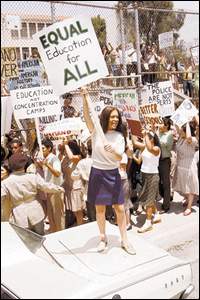
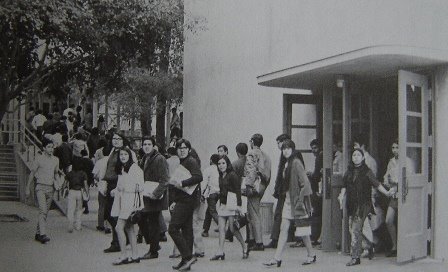
Historical note: when students from East LA high schools organized their March 1968 blowouts or walkouts of Wilson, Lincoln, Roosevelt, and Garfield High Schools with support from students from many other schools they faced the same kind of police and school district repression that the current students are facing today.
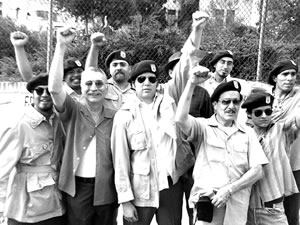
But at its height in 1968 the blowout movement counted somewhere between 10,000 to 15,000 students, according to LA 13 veteran and UCB Prof. Carlos Munoz in his chroncle of the Chicano Movement "Youth Identity and Power" [Verso 1989]. See also Brown Beret founder Carlos Montes' reflection on the making of the 2006 HBO film Walkout. Montes was also arrested as one of the LA 13 in addition to Munoz, and David Sanchez and Moctezuma Esparza and others portrayed in the HBO film.
Today's youth protests are clearly much larger and widespread. The LA based Brown Berets and UMAS [United Mexican American Students] supported youth movement in 1968 spread to schools in Denver and Crystal City Texas and were encouraged by Corky Gonzalez' [Crusade for Justice] and Reies Lopez Tijerina and other movement leaders.
At the college level students at San Jose State held walkouts later that year, and the Mexican American Student Confederation - MASC - at San Francisco State and groups at UC Berkeley helped to form the multiracial Third World Liberation Fronts on those campuses to shut them down from November 1968 through the Spring of 1969 over demands for student power, fair admissions and student support programs, Ethnic Studies, an Autonomous Third World College and community control over education. The establishment of Chicano and La Raza Studies and Ethnic Studies at many campuses up and down the Southwest were, in part, a result of the walkout movement begun in East LA by high school students and the growing Chicano movement.
But it appears that today's walkouts are more massive, spontaneous and widespread - thus the intense crackdown by police and school districts.

From: Jose Bravo
Sent: Thursday, March 30, 2006
Subject: Emergency call to action! Pass it on!
San Diego Police are in the process of Intimidating, brutalizing and arresting hundreds of students right now as I write this email. Many are being held by the SD Police Department in the a sub-station in Barrio Sherman (Sherman Heights) next to Barrio Logan. Cristian Ramirez / Cesar Luna and other people mobilizing for their release and legal representation. We need your help urgently.

Call the SDPD and demand an end to the violence on students from Memorial Jr. High. If people need to contact Cristian Ramirez with AFSC at the scene or can get press to contact Cristian here is the number 619 885-1289 Cell.

Here is the SDPD contact information:

By telephone at (619) 531-2000
By mail: San Diego Police Department 1401 Broadway, Mail station 700 San Diego, CA 92101
Citizens' Review Boardon Police Practices1200 Third Avenue, Suite 916San Diego, CA 92101(619) 236-6296Email: http://us.f825.mail.yahoo.com/ym/Compose?To=citizensreviewboard@sandiego.gov

Jose T. Bravo
Jose T. Bravo Executive Director Just Transition Alliance 2434 Southport Way, Suite D National City, California 91950 Office Phone: 619 474-4001 Cell Phone: 619 838-6694 http://us.f825.mail.yahoo.com/ym/Compose?To=justtransition@sbcglobal.net
http://www.jtalliance.org/

LA's independent media center just reported that the LA National Lawyers Guild is providing legal support for students -
Legal Defense for Walkouts
by Pachuco Wednesday, Mar. 29, 2006 at 10:14 AM
Legal Defense for Students Participating in Walkouts
For Students that have participated in the Walkouts and face legal issues resulting from their participation may contact the National Lawyers Guild at:
8124 West Third Street, Suite 101 Los Angeles, California 90048
(323) 653-4510; Fax (323) 653-3245
http://www.nlg-la.org/

Wednesday, March 29, 2006

Protecting Students' Rights to Protest in Support of Immigrant Communities

In the wake of the crackdowns on the massive immigrant rights demonstrations of the past week, the immigrant solidarity network and other immigrant agencies are working to support the students from California schools that walked out of classes in protest the racist anti-immigrant bills that passed in the House and are now being debated in the Senate.

The LA Times is reporting L.A.'s Top Officers Vow Crackdown on Students

Los Angeles' two top law enforcement officials Tuesday vowed a crackdown on students who walk out of class as authorities struggled to quell a third day of widespread demonstrations against immigration policy.

More than 12,000 students across Southern California defied Mayor Antonio Villaraigosa and school officials by participating in a new round of marches Tuesday, including one that blocked traffic on the San Diego Freeway in Van Nuys and a second in which protesters tried to stymie the Vincent Thomas Bridge in San Pedro. Sheriff Lee Baca and Los Angeles Police Chief William J. Bratton said at a
joint news conference that their agencies would begin aggressively enforcing truancy laws. Bratton said his officers will now cite any students found out of school, requiring them to appear in court. The citations could result in fines of up to $200 and 20 days of community service.

Despite school district officials efforts to prevent the walkouts with 'lockdowns' and other tactics, the students continued their 'blowouts' in the tradition of the 1968 demonstrations against racism and inequality in East LA schools which was recently dramatized by Edward James Olmos' HBO film Walkout. LA Officials reported more than 11,600 students from throughout the county were involved in the Tuesday protests — compared with more than 30,000 on Monday.

Meanwhile thousands of Long Beach and Santa Ana students continued their walkouts on Tuesday. The Times also reported continuing student walkouts in San Diego, Riverside and Fresno counties, as well as in Texas and Nevada. Full Article
Rough n' Tumble listed a number of links to press coverage of other walkouts up and down California -
Orange County schools curb walkouts -- Students protested immigration proposals in Orange County on Tuesday but in much smaller numbers. The item is in the Orange County Register
Students continue walkouts -- Despite educators' efforts to discourage them, hundreds of students across San Diego County once again left their schools yesterday to protest proposed revisions to federal immigration laws. Elizabeth Fitzsimons in the San Diego Union-Trib
BEN GOAD in the Riverside Press
Andrew Edwards in the San Bernardino Sun
Jason Newell in the Inland Daily Bulletin
Cyndee Fontana, Christina Vance and Louis Galvan in the Fresno Bee
---------------
Support for Students
The LA-based Immigrant Solidarity Network is giving useful information for student protesters and their supporters.

Also the ACLU of Northern California has produced a useful document for students, teachers and community members regarding the rights of protesters. -
ACLU of NOR Cal doc

The Midnight Special Law Collective also has produced excellent materials to help young people and community groups understand their rights, including a really useful comic book on the rights of students in school.
http://www.midnightspecial.net/comic/index.html

LA's chapter of the National Lawyers Guild also has a great pdf file outlining our general rights to protest.
http://www.nlg-la.org/righttoprotest.htm


Students’ Rights to Participate in Political Protest

Q: Am I allowed to express my political views while I am at
school?

Yes. The First Amendment of the U.S. Constitution and Article 1, Section 2 of the California Constitution guarantee freedom of speech and freedom of the press to all people, including students. In addition, two special laws in California specifically protect students’ rights of freedom of speech and freedom of the press at school.
Section 48907 of the California Education Code gives a special guarantee that students have a right to express their political opinions. This includes, but is not limited to
:

*wearing buttons, badges and other insignia (including armbands or message T-shirts)
*posting
*notices on school bulletin boards
*distributing petitions
*handing out other printed materials, such as leaflets
*writing in public school newspapers and yearbooks
*writing in "underground" (or unofficial) newspapers


Go here for the full report.

Los Angeles ARRESTS, CRACKDOWNS AND THREATS DIRECTED AT Student Walkout Movement

CISPES activists in LA report:
ARRESTS, CRACKDOWNS AND THREATS DIRECTED AT STUDENTS PROTESTING IMMIGRATION LEGISLATION;
CITY, EDUCATORS AND POLICE REVERSE "PERMISSIVE" POLICY AND THREATEN RETALIATION AGAINST YOUTH
by don white
LOS ANGELES March 28, 2006
In a clear reversal by city officials, educators and police, student protesters today faced campus lockdowns, arrests and threats with both Mayor Antonio Villaraigosa and Schools Superintendent Ray Romer threatening consequences to further student protests and "truancy."
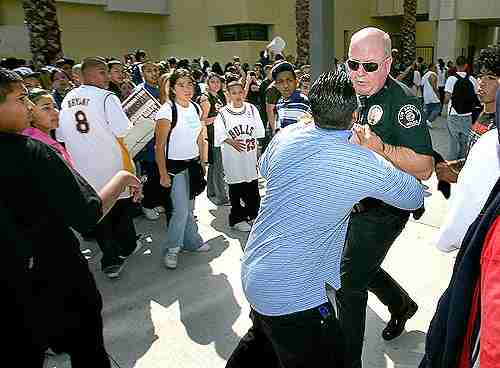
Police have made it clear they will no longer tolerate traffic closings and freeway protests. In a driving rain, thousands of students again left their campuses, often climbing over school fences, and targeted government buildings, freeways and streets calling for no government attacks on their families, neighborhoods and communities. At Carson High School police firmly brought to the ground a student protester, handcuffed him and booked him. The behavior of police was clearly an angry and brutal response.
Several arrests at Carson High and in areas around high schools were reported. At a joint press conference, Mayor Villaraigosa and School Superintendent Ray Romer firmly told students to stay in class or face the consequences. Romer said that families which did not have their students in class may be called in for conferences. He mentioned that the senior class should especially not take part in the protests, sending a threat about graduation participation. Arrests took place on two freeways where traffic jams were created by students blocking the highway.

Live television coverage showed ten or twelve students lined up, facing the cement wall of the freeway, handcuffed and being prepared for transfer to a police station. A heavy rain did not deter 200 students from again gathering at City Hall but no arrests or incidents were reported there. Numbers of protesters were down significantly from yesterday but the militancy remained high. But somestudent leaders, probably encouraged by school authorities, encouraged students to remain on campus. The general theme was "We've made our point; now we might be hurting ourselves."
Students here in Los Angeles, obviously motivated partly by the 600,000 to 700,000 people who marched last Saturday, have stunned city officials and police with their organizing and militancy. Overwhelminglythe student protests have been non-violent, well-organized and clearly focused on the issues, with signs and banners often targeting the House version ofthe legislation which calls for building a wall on the border, making felons of immigrants and criminalizing those who help undocumented immigrants. When asked about the Senate Judiciary Committeeaction yesterday, which some organizers have describedas positive, one student remarked, "We know that canbe reversed."
CISPES - Committee In Solidarity With The People of El Salvador
8124 West 3rd Street L.A. Ca. 90048
323-852-0721
Founded: 1980 - 25 Years of Solidarity

National Immigrant Solidarity Network No Immigrant Bashing! Support Immigrant Rights!webpage: http://www.ImmigrantSolidarity.org
e-mail: info@ImmigrantSolidarity.org
New York: (212)330-8172
Los Angeles: (213)403-0131
Washington D.C.: (202)544-9355

Tuesday, March 28, 2006

Politicians write teacher credentialing rules?

In a prior posting I asked if anyone knew about an Omnibus teacher preparation bill.
The bill is Senate Bill 1209. I encourage careful reading of this bill.
Among the provisions, as I read it are:
1. Consolidating pre service testing from Rica to CSET.
2. Elimination of current restrictions that teacher performance assessment would only begin when the budget provided funding for such assessment.
3. Item 8. Eliminates the current provisions that a teacher could appeal an adverse decision by a Principal.
4. Item 16. Seems to allow a district and the collective bargaining agent to agree on a separate salary schedule not based upon current regulations. (ie. Testing, Merit?)
5. Appears to sharply limit the use of Emergency Credentials.


Among the many provisions.

(13) Existing law requires each school with a substantial population of pupils of diverse ethnic backgrounds to provide an in-service preparation program designed to prepare teachers and other professional school service personnel to understand and effectively relate to the history, culture, and current problems of these pupils and their environment as specified. This bill would delete this and the related provisions.

In the replacement

8 9 10 11 12 13 14 15 16 17 18 19 20 21 22 23 24 25 26 27 28 29 (c) Completion of coursework in human relations in accordance with the commission’s standards of program quality and effectiveness that includes, at minimum instruction in the following: (1) The nature and content of culture. (2) Cross cultural contact and interactions. (3) Cultural diversity in the United States and California. (4) Providing instruction responsive to the diversity of the student pupil population. (5) Recognizing and responding to behavior related to bias based on race, color, religion, nationality, country of origin, ancestry, gender, disability, or sexual orientation. (6) Techniques for the peaceful resolution of conflict. (d) The commission shall establish alternative requirements for a teacher to earn the certificate, which shall be awarded as a supplementary authorization pursuant to subdivision (e) of Section 44225. (e) A teacher who possesses a credential or permit described in paragraph (1) of subdivision (b) and is able to present a valid out-of-state credential or certificate that authorizes the instruction of English language learners may qualify for the certificate issued under this section by submitting an application and fee to the commission.


For one thing, this looks again like politicians writing rules for the profession, much as they did in mandating the current reading programs.

I encourage others to look at this bill. What do others think?

Duane Campbell
Sacramento