Showing posts with label african americans. Show all posts

Wednesday, March 19, 2008

Obama Transcends Racial Divisiveness with Historic Philadelphia Speech; Bill Fletcher on Movement Building

Obama really surprised me this morning with his
"A More Perfect Union" speech in Philadelphia. He spoke again about the unfulfilled promise of Brown v. Board of Education and the intensifying inequality in our schools and the need for a multiethnic coalition involving immigrants and everyone to come together to meet the challenges of our time.
But he caught me off guard when talking about Rev. Wright.
He resisted the tremendous political pressures to disassociate himself from his pastor and the African American community. He did this through an incredibly brilliant framing of his 'progressive' values through the telling of human stories which were connected to our nation's founding in Philly and our future with the story of young white campaign volunteer Ashley Baia. He managed to embrace both Rev. Wright and Obama's own white grandmother who he said had expressed prejudice and discriminatory attitudes at times that made him cringe. "These people are a part of me. And they are a part of America, this country that I love."
Obama also masterfully transcended the divisiveness of petty racial politics and individual racism to point the finger at the institutional racism and classism in American society and the “real culprits of the middle class squeeze – a corporate culture rife with inside dealing, questionable accounting practices, and short-term greed; a Washington dominated by lobbyists and special interests; economic policies that favor the few over the many.”

It is also encouraging to me that, like JFK, Chuck D, KRS-One or Malcolm X before him, Obama always manages to tie the future of our nation also to the energy and idealism of young people and their movements. He concluded:
"I believe deeply that we cannot solve the challenges of our time unless we solve them together – unless we perfect our union by understanding that we may have different stories, but we hold common hopes; that we may not look the same and we may not have come from the same place, but we all want to move in the same direction – towards a better future for of children and our grandchildren."

Thinking more long-term beyond the November election longtime movement and labor leader Bill Fletcher identifies 2 important goals for progressive activists -
Burning Cane: Bill Fletcher: Obama, Enthusiasm, & Movement Building

But when the campaign is over, whether it is at the Democrat convention or in November, if there is nothing to build upon, the enthusiasm will evaporate as it has on so many other occasions after energizing electoral campaigns. I would suggest two steps:

1. Progressives for Obama:

While there are many progressives who have entered into the Obama campaign and are doing good work, there needs to be an independent voice and location to push progressive politics. I spoke the other day with someone working in the campaign that - as enthusiastic as she is - acknowledged that a number of the proposals her committee has been developing have simply been overlooked. My guess is that more of that will happen and the candidate will be increasingly influenced
by financial
contributors and those forces he believes to be most significant. If the
progressive voice is only one among many, it will be drowned out. Progressives need to figure out where they can make a difference in the larger campaign as well as explain to their respective constituencies why they are taking the step of supporting Obama; what to expect and what not to expect from the candidate; and what can be done now.

2. Build locally-based, independent political organizations:

Electoral activism and energy is so easily and quickly lost. For those who have become motivated through this campaign, they should be
encouraged to build organizations in their communities and social movements that reflect progressive politics. Such organizations should be grassroots based and, among other things, aim to identify, train and run progressives for local elected office. Holding a President of the USA accountable - be it Obama, Clinton, McCain or Huckabee - will necessitate organization at the base, organizations capable of both putting people into the streets as well as getting them to the polls.
There are tremendous dangers AND opportunities in this election season. Casting caution to the wind and uncritically supporting any
candidate is a recipe for disaster. We must expect that there will be immense tugs to the Right on any elected official. If progressives are not prepared to push back and keep Obama’s feet to the fire then every reservation that many of us have about his candidacy will become a self-fulfilling prophecy.

Tuesday, March 18, 2008

Burning Cane: Obama's Crisis - learning from Martin Luther King and Malcolm X

More on Obama's Historic Challenge - from Martin Luther King to Malcolm X - from John Delloro's Burning Cane Blog, a grassroots organizing perspective on social movements and issues of race, class, gender and citizenship.
Activist Historian Scott Kurashige gives historical context to the crisis in the '08 Presidential Race for Obama:

Obama’s Crisis and MLK’s Hard Truths - by Scott Kurashige
Millions of Barack Obama’s supporters are asking, “What does he do now?” Everyone following the Presidential campaign has heard sound bites of his pastor Jeremiah Wright condemning American racism and imperialism in the harshest tone possible. In response, Obama has once again been forced to distance himself from a close associate, but this time he has had to do so more forcefully and urgently.
The first thing we need to do is to put this development into context. On the surface level, it is a critical moment in a bitterly contested campaign that has devolved into a back-and-forth match of denouncing and rejecting surrogates. But on a deeper level, it is a reflection of how Obama’s success has forced him to rise to bigger and bigger challenges. And for this reason, a moment like this was sadly inevitable, for there is no Obama path to the Presidency that does not require him to rise above charges that he is unpatriotic or that he is a Black extremist. Such is the inescapable reality of running for President as a progressive African American whose formative experiences came as an inner-city community organizer on the South Side of Chicago.
When confronting a moment of crisis, great leaders are those who can see through the fog of conflict and contradiction to envision a concrete path forward for the nation. What must also be understood is that great leaders do so not as individuals; they do so with the encouragement, involvement, and constructive criticism of millions of supporters. This is why there is a need not only for Obama and his aides to do some serious strategizing. Anyone invested in the short-term and long-term success of his campaign must do some soul searching and some deep thinking about the past, present, and future of America.
To challenge Obama and his supporters in this way, regardless of whether it is fair to do so, is to provoke an unprecedented debate that escalates the stakes beyond any election in recent memory. In order for his campaign to move beyond this crisis, he must do far more than prove that he does not stand for inflammatory rhetoric. Obama must redefine the meaning of love for America.

Thursday, February 28, 2008

Los Angeles Educational Equity Leader Karen Bass Rises to CA Assembly Speaker

Congratulations to LA Assemblywoman Karen Bass who Thursday morning will rise from the State Assembly Majority Leader to become California's first African American woman Speaker of the Assembly, the 2nd most powerful post in the State. Bass will be sworn in as Speaker-designate of the Assembly Thursday morning and confirmed later in March by her colleagues.
Bass was elected in 2004 to represent California's 47th Assembly District which includes parts of Westwood, West L.A., Culver City, Baldwin Hills, Leimert Park, Hyde Park, Crenshaw and Mid-City. She is the former Executive Director of the Community Coalition, a South LA-based grassroots community organization, which she founded in 1990, to change public policy and improve the quality of life in South Los Angeles.
In a 2005 interview with the LA Business Journal Bass described her influences:
Q: You call yourself an activist. How did that happen?
A: I grew up in South Central L.A. during the civil rights movement and the Vietnam era, so being an activist was second nature. In fact, there was a whole group of people who grew up in L.A. when I did who have now moved on to public office, union leadership and the non-profit world. There was Antonio Villaraigosa (city councilman), Gil Cedillo and Gloria Romero(state senators), Mark Ridley-Thomas (assemblyman), Anthony Thigpenn (president of Strategic Concepts in Organizing and Policy Education), Julie Butcher and Maria Elena Durazo (union local presidents). We all knew each other when we were in our 20s and early 30s and have worked together for the last 25 years to build coalitions.
In Cal State LA's Women's Magazine LOUDMOUTH Bass described her Educational Justice roots in policy-making and grassroots leadership development just before she joined the state Assembly in 2004 :
What public-policy efforts have you worked on in the past,
and what policy do you hope to work on in Sacramento?
Before I get up there I’m going to have to focus, because there are really a lot of areas of public policy that I’m interested in and that I have a background in. Education reform is one of them. One of the first things I did when I started the Community Coalition is form a youth arm of the coalition. That was really designed after how I was raised as a teenager.
I was active in high school in the anti-war effort and in the electoral arena, and there were always adults around me who helped nurture my activism and also kept me out of trouble. And so that’s what we did with a group of teenagers, because I believe that teenagers absolutely have the capacity to understand and interact in public policy and that if you give kids the opportunity to lead in that way, then they won’t lead in a negative way. In my opinion, gang leaders — gang involvement is negative leadership, but it is leadership. And it is organization. And so the question is, Can you get kids to organize in a constructive way? And being an activist fits in with adolescent rebellion anyway because you’re rebelling, and if you channel that in a proper way, then you really win on several fronts.
You win academically because you really do have to study to be an activist, and you win personally because you gain a lot of confidence and positive skills, and you win in the community because you’re getting involved in positive change. Anumber of the young people that we’ve recruited over the years actually stayed with us throughout their whole adolescence and they’re who I’m handing the organization over to, because they’ve grown up now. Fourteen years later, they’re in their late 20s now, and they’re running things.
So, education reform is an issue area that I’d be involved in.
Foster care is another area. Criminal justice is huge. As I mentioned, when I started the coalition, its origins were a response to the war on drugs. Every issue I just named is related to the drug issue. If you don’t make it in our society, you know, you either participate in the legal economy or you participate in the illegal economy. Certainly the major employer in the illegal economy is the drug industry on one level or another, and when they get pushed out of school, kids are left to the illegal economy.
All of these issues are interconnected. What I have to do in this period is a very serious analysis of Sacramento to see where I can be most effective. I’m in the process of doing that now.

Read the Full Interview!

Monday, February 25, 2008

Is Obama Progressive? - From Burning Cane/John Delloro

LA Labor leader John Delloro's blog Burning Cane has some great analysis for organizers and activists on the political significance of Obama's candidacy for President for our longer term social movements.
Check out John's views, along with Howard Zinn, Grace Lee Boggs, Bill Fletcher, Scott Kurashige, others.
Delloro is Executive Director, Dolores Huerta Labor Institute and a teacher in UCLA's Asian American Studies Department.

I met John in the early 90's through his student activism in LA and his leadership in APALA [Asian Pacific American Labor Alliance].
Scott Kurashige wonders if there are similarities between the negativity expressed by some of the "Old Left" of the "New Left" in the past with the criticism leveled against the Obama campaign by some of the "New Left. " Howard Zinn argues that the current concerted public attention with the elections is disproportionate to the amount of energy that needs to be given to direct action. Bill Fletcher suggests a measured "critical support" of the Obama Campaign.
Both Howard Zinn and Bill Fletcher raise valid points when one considers Obama's policy positions. However, Scott is also correct when you step back and examine the Obama campaign as a whole. Do we restrict the possibilities for social transformation if we limit our understanding of the Obama campaign to the legislative stands of the candidate? Are there opportunities offered by the Obama campaign to build real movement?

Saturday, December 29, 2007

Obama is Our Best Chance to "Keep Hope Alive" in 2008

Like longtime electoral and cultural activist Eddie Wong over 2 decades ago I was inspired by and became a part of the historic Rainbow Coalition campaigns in 1984 and 88. And I too have become active in the Obama '08 campaign with some of the same hopes as we had 20 years ago when our Jesse Jackson for President campaign won some seven million popular votes and registered 2 million new voters.

But most importantly, we used the rainbow coalition campaigns to:

1) Build a broader and more diverse base of support for progressive issues and our movements at the local level
2) Win concrete issues and influence public policy from the bottom-up
3) Use the electoral arena more strategically to build an ongoing multiracial organization and to open up political space for grassroots organizations
4) Successfully utilize media access and exposure for mass public education around social and economic justice issues. [For more see Applied Research Center's Multiracial Formations].
I think the intense Rainbow Coalition work of the 1980's also paved the way for many grassroots electoral activists and politicians like me. But the level of grassroots involvement and infrastructure to hold us accountable to our communities is much weaker today.

Though Obama has nowhere near the grassroots field campaign, or progressive vision/politics as Jackson had in the 80's, I believe his campaign gives our movements another historic opportunity, as Wong states, to "build bridges across constituencies and generations" and "for (progressive) change, for hope and for a better America."

Wong, a leader in the Asian American and Pacific Islander Leadership Council for the Obama campaign, comments in his Asian Week commentary The Man And The Moment:

Twenty years ago, as I stood in the bitter cold in a parking lot in Sioux City, Iowa, I saw a sight I thought I’d never see. A crowd of white meat-packers, big beefy men and their wives and children, shuffled their feet in quiet anticipation. They shielded their eyes against the low winter sun, stamping their feet for warmth on the frozen ground. They were waiting to hear my boss, the Reverend Jesse L. Jackson, a candidate for the Democratic nomination for president of the United States.
No one knew what to expect from this unlikely meeting of the Southern-born civil rights veteran and these heartland folk who had been on strike for months and were now down to their last savings. As Jackson began to speak, I could see heads nodding as he told them that their sacrifice was redemptive, and that they were not alone in their fight for fair wages and safe working conditions. He took their strike and cast it against the larger economic violence that came out of President Reagan’s
union-busting practices, and the failures of a trickle-down economy that brought wealth to the rich and poverty to the working poor. As Jackson spoke, he ignited a sense of pride and dignity in these men and women. He brought them to their feet with tears in their eyes with the cry, “Keep hope alive!”
Now, Senator Barack Obama is standing with the workers, farmers, students, elderly and others in Iowa, preaching a similar message of hope and offering a new way forward for our country. Just as Jackson offered a break from Reaganomics and repression, Obama would take us away from the destruction of Bush’s war policies and restore our democracy. Just as Jackson offered a message of hope across racial and class divides, Obama is building a bridge across generations and constituencies.
Obama is the new messenger of hope, justice and equality. His call for ordinary people to take back their government from the lobbyists and big business clients, who have reaped mega-profits through backroom deals, is exactly what we need at this critical moment when economic inequality is at an all-time high. His pledge to engage directly with foreign leaders who oppose us and with allies who should be our partners in solving intractable conflicts is exactly what we need. We need to build bridges and tear down walls.
This moment in United States history poses a turning point that can set the course
for decades. The crises posed by global warming, a protracted struggle against Islamic extremists, the deepening inequality in our country, our deteriorating infrastructure and declining educational system, and our tarnished international reputation cry out for new answers and new approaches. Obama is the best person to meet the challenges of this historical moment. He has shown a deep grasp of issues and, more importantly, exhibited the ability to listen to other points of view and find ways to build alliances across historic barriers.
Obama is the man with the vision, clarity and ability to meet the challenges of our times. He is the man, and this is the moment — for change, for hope, for a better
America.


Eddie Wong is a member of the Asian American and Pacific Islander Leadership Council for Senator Obama. He was the national field director of the 1988 Jesse Jackson for President campaign. He is a media and political consultant based in Oakland, Calif.

More on Obama

The argument that Obama is an example of color blindness is not consistent with the campaign. While I respect the opinion of Angela Davis on many issues, there is a problem here. We should look at the actual campaign and the actual programs.
Also see Shelby Steele, of all people, on this topic in Time Magazine.
Rather than dismissing Obama, or relying upon others views, I urge readers to look at what he is actually saying. His campaign, for example, is far from color blind. It is not “beyond race” at all.
There are important articles from the campaign and about the campaign on my blog;
http://choosingdemocracy.blogspot.com
Also, there are articles for and against at our electoral activism blog at
http://www.sacramentopa.blogspot.com/

Duane Campbell

Friday, December 28, 2007

The Obama Effect

Angela Davis quoted by Gary Younge in the December 31 issue of the Nation.

"[Obama] is being consumed as the embodiment of color blindness," says Angela Davis, professor of history of consciousness at the University of California, Santa Cruz. "It's the notion that we have moved beyond racism by not taking race into account. That's what makes him conceivable as a presidential candidate. He's become the model of diversity in this period...a model of diversity as the difference that makes no difference. The change that brings no change."

Friday, September 21, 2007

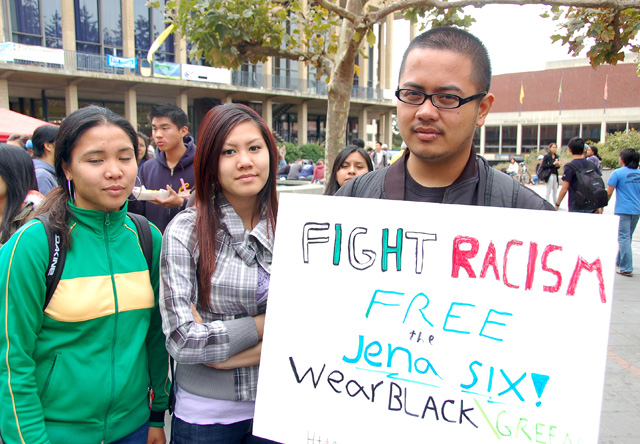
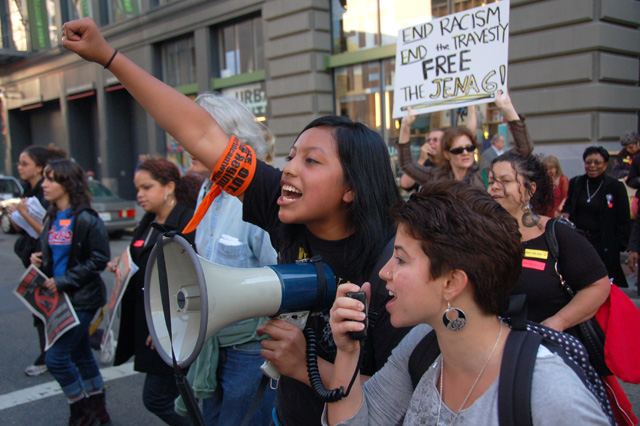
Students Rising Up in SF and East Bay to Support the Jena 6 in Louisiana

Incredible photos by Felix of the Revolutionary Worker which capture the militancy of students from Berkeley High School and San Francisco schools yesterday who joined the more than 60,000 in Jena, Louisiana and hundreds of thousands around the country to demand justice for the Jena 6. See the Teachers for Social Justice, NYCORE, and T4SJ Chicago lesson plans for teachers and students on the Jena 6 and the struggle for racial justice in the US.

See/hear/view also the independent media coverage at Indybay.org and Democracy Now.

Over 20,000 people from across the country gathered in Jena, Louisiana on Thursday, September 20th, from across the country to protest the pending charges against six African American high school students (Protest Details). The six students were charged with felonies after a fight that started after nooses were hung outside their high school. Protests were also held in cities across the United States. At UC Berkeley, over 1,000 protesters gathered in Sproul Plaza at 12pm. In San Francisco, over 200 people rallied at Powell and Market.
Last week the Louisiana Third Circuit Court of Appeals threw out the conviction of 17 year old Mychal Bell. The court ruled that he should not have been tried as an adult. Bell was supposed to have been sentenced for attempted second-degree battery this Thursday.
Mychal Bell and five other students were arrested for beating a white student during a schoolyard fight last year. The fight occurred after white students hung three nooses on a tree in the schoolyard. Bell has been jailed since January unable to meet his $90,000 bond. As of this morning he remains in prison waiting for his new bond to be posted. The District Attorney plans to appeal Bell's overturned conviction at the Louisiana Supreme Court.

Felix's photos from UC Berkeley and San Francisco protests.

Tuesday, September 18, 2007

Fighting Lennar Development and Environmental Racism in SF Schools and Hunters Point Community

Photos from SF Bayview Newspaper
Environmental racism and health inequality for the lowest income communities of color in San Francisco are clear structural barriers to educational equality in our school district. The largely African American Hunters Point community in the Southeast region of San Francisco has been organizing for almost a year now to stop the 'ethnic cleansing' of SF's Black community there.

Over the past decade big business developers and city politicians have gradually 'pushed out' African American families from Bay View Hunters Point and other Southeast areas of the City. But the most dramatic displacement is going on right now with Lennar Corporation's Hunters Point Shipyard development that is threatening the neighborhood with some 1500-1600 new condos. The School Board has been working with neighborhood and environmental justice groups, parents, students and social justice organizations to halt the Lennar Development until a thorough independent health study can be conducted to ensure the health of the community's children and families.

Here's the resolution the San Francisco Board of Education is scheduled to vote on at our school board meeting on Tuesday 9/25 at 6pm:
---------------

San Francisco Board of Education Resolution
In Opposition to Lennar Corporation’s Hunters Point Naval Shipyard Development and In Support of the Community’s Demand for a Temporary Stoppage and an Independent Health and Safety Assessment to Protect Our Students and Their Families

- Commissioners Eric Mar and Kim-Shree Maufas
[will move to suspend the rules to vote on First Reading 9/25]

WHEREAS: Patterns of environmental racism, inequity and injustice exist within San Francisco, where schools in communities like Bayview Hunters Point bear the brunt of environmental health problems; and
WHEREAS: Since October 2006, when a young worker blew the whistle on Lennar Corporation’s Hunters Point Naval Shipyard development, large numbers of students, teachers, educators, workers, and families of the Bayview Hunters Point area have been voicing their concerns about the construction-related dust at the Hunters Point Shipyard site and the dangerous health impact that the dust and toxics in it, including asbestos, heavy metals and other inorganics, are having on our SFUSD students, staff and members of the community; and
WHEREAS: Lennar Corporation is a Florida-based Fortune 500 company which reportedly had revenues of $16.3 billion in 2006 from development projects throughout the country like the 1500-unit condominium development planned for Hunters Point; and
WHEREAS: Lennar Bayview Hunters Point LLC was involved in large scale grading that reportedly caused untold amounts of toxic dust and Asbestos Structures to migrate over its boundary and into areas were children and families live, work and play; and
WHEREAS: In response to these health dangers and conerns, a broad grassroots coalition of Bayview Hunters Point and social justice community organizations has been demanding a temporary stoppage in Lennar Corporation’s construction so that an independent health assessment can be conducted; and
WHEREAS: There has been a history of problems with implementing the City’s dust-mitigation plan since the soil grading and disposal process began that has included: an absence of air monitoring for the first four months of the project during heavy grading; malfunctioning air monitors; a Notice of Violation from the Air Quality Management District; and when the monitors started working, routine exceedances of the agreed-upon allowance of asbestos prevalence in the air – 16,000 structures per cubic meter [SF Department of Health Regulations, Article 31] including 9 exceedances in June alone; and very poor communication of these exceedances to adjacent neighbors; and
WHEREAS: Numerous studies have documented that Bayview Hunter's Point and other communities in Southeast San Francisco are overburdened with the cumulative impacts of a multitude of environmental health threats that impact the health and well-being of children and other residents who are overwhelmingly African American and other people of color. These impacts include exposure to toxic air pollution, carcinogens, and other inorganic substances from industrial facilities, power plants, sewage treatment and solid and hazardous waste facilities and diesel particulate from trucks, trains and other vehicles. Additionally, these impacted children and residents are more vulnerable to environmental toxics due to their limited access to quality health care and healthy foods and other social and cultural factors. And, this disproportionate impact has a damaging effect on our students academic achievement and opportunities for success in school and in their lives; and

WHEREAS: San Francisco public schools such as Malcolm X Academy, George Washington Carver, Bret Harte, and Dr. Charles Drew College Prep Academy, other schools, childcare centers, and playgrounds are in the immediate vicinity of the Lennar development site; and
WHEREAS: Three African American employees of Lennar Corporation filed a whistle blower lawsuit in SF Superior Court on March 16, 2007, alleging that they suffered retaliation after reporting asbestos dust exposure and racial discrimination and that the company failed to contain asbestos dust while drilling into the Shipyard site, endangering the local community, including the school children of the neighboring Muslim University;
WHEREAS: The World Health Organization reports that there is no evidence for a threshold for the carcinogenic effect of asbestos and that increased cancer risks have been observed in populations exposed to very low levels of asbestos; However, there are tests for lead, chromium, radon, arsenic, etc., which are toxic chemicals that are present in the dirt on the affected site; and

WHEREAS: The ‘Precautionary Principle’ has been adopted by a growing number of cities, including San Francisco, as well as the Los Angeles Unified School District, as a proactive approach to promote the safest, lowest risk approach to protecting people’s health, the environment, and property; and

WHEREAS: The Precautionary Principle as adopted by the City and County of San Francisco includes the following “essential elements:” :

Anticipatory Action: There is a duty to take anticipatory action to prevent harm. Government, business, and community groups, as well as the general public, share this responsibility.
Right to Know: The community has a right to know complete and accurate information on potential human health and environmental impacts associated with the selection of products, services, operations or plans. The burden to supply this information lies with the proponent, not with the general public.
Alternatives Assessment: An obligation exists to examine a full range of alternatives and select the alternative with the least potential impact on human health and the environment including the alternative of doing nothing.
Full Cost Accounting: When evaluating potential alternatives, there is a duty to consider all the reasonably foreseeable costs, including raw materials, manufacturing, transportation, use, cleanup, eventual disposal, and health costs even if such costs are not reflected in the initial price.
Short-and long-term benefits and time thresholds should be considered when making decisions.
Participatory Decision Process: Decisions applying the Precautionary Principle must be transparent, participatory, and informed by the best available information. (City of San Francisco, Precautionary Principle Ordinance, Section 101, August 2003, http://temp.sfgov.org/sfenvironment/aboutus/innovative/pp/sfpp.htm)
THEREFORE BE IT RESOLVED: That the Board of Education of the San Francisco Unified School District believes that the Precautionary Principle as adopted by the City and County of San Francisco requires the Mayor Gavin Newsom, the Redevelopment Agency, Department of Public Health, Board of Supervisors, and other agencies accountable to our communities to take “anticipatory action” to prevent harm and through exploration and careful analysis of courses of action in order to present the least threat to the students, families and staff of the schools in the vicinity of the Hunters Point development; and

BE IT FURTHER RESOLVED: That the Board of Education of the San Francisco Unified School District calls on the Mayor, Board of Supervisors, Redevelopment Agency, Department of Public Health and other relevant City agencies to require an immediate halt of Lennar Corporation’s development of Parcel A in the Hunter’s Point Shipyard until an immediate and independent health and safety assessment can be conducted in coordination with the Superintendent and the School District’s School Health Programs Office and relevant community organizations and City task forces like the SF Asthma Task Force; and

BE IT FURTHER RESOLVED: That the Board directs the Superintendent to coordinate with City officials to ensure the health of our students and their families in the affected area and report back to the full Board with an environmental safety action plan and timelines to ensure the safety of our students and their families no later than the Board’s October 23rd meeting.
------
For more info on how you can support the Bayview Hunters Point community -

Thursday, September 06, 2007

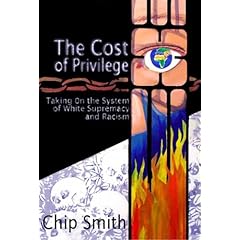
9/10 SF forum - Chip Smith's The cost of privilege; taking on the system of white supremacy and racism; 9/23 Forum on Revolutionary Art

Monday 9/10 @ Galeria de la Raza - SF - join me and other activists and organizers in discussing our decades of work in challenging white supremacy and institutional racism in America. And, pick up Chip Smith's great new book - The Cost of Privilege: Taking On the System of White Supremacy and Racism

Sunday 9/23 @ the Ctr for Political Education - join the SF Print Collective in celebrating the revolutionary art of Emory Douglas and others.

---------------

The Cost of Privilege: Join us for a discussion on the fight against white supremacy
with author Chip Smith, Alisa Bierria (INCITE! Women of Color Against Violence), Rachel Jackson, Eric Mar (SF State Ethnic Studies and Asian American Studies faculty and member of the San Francisco Board of Education), and Molly McClure (Catalyst Project)
Monday, September 10th
7-9:30 PM
2851 24th St., GalerĂ­a de la Raza Studio 24 Space
on the corner of 24th and Bryant in San Francisco, wheelchair accessible*

The Cost of Privilege: Taking on the System of White Supremacy and Racism, published in February 2007, will be the catalyst for a discussion amongst the author and Bay Area activists and organizers about:
* historical development of white supremacy, patriarchy and capitalism
* histories of resistance and what we can draw from them for today's struggles
* building an intersectional approach around race, class, gender and sexuality into our activism and organizing
The book takes readers from the creation of the white race over three centuries ago to the present-day myth of a colorblind society; from the intersections of class, gender and race to the concrete benefits-and harsh underside-of the privileges white people experience every day; from the victories when people ally across the color line to the failures of some of those alliances to hold; from personal transformations to international struggles.
$5-$10 donation requested, no one turned away for lack of funds.
Co-sponsored by the Catalyst Project, the Center for Political Education and Freedom Road Socialist Organization/OrganizaciĂłn Socialista del Camino para la Libertad.
For more information call or e-mail, 415-431-1918 or http://www.politicaleducation.org/
*GalerĂ­a de la Raza is wheelchair accessible, unfortunately the bathroom at the gallery is not.
_____________________________________________________________________
Chip Smith has given us a powerful weapon for the battle against white supremacy. It combines an in-depth look at the long history of this profoundly rooted plague with an enlightening, up-do-date review of the many efforts to end it. We have here much more than a brilliant analysis of past and present, the author dares to outline a bold program of revolutionary action that lays out both the challenges to be faced and how to confront them. Who could ask for more?
--Elizabeth (Betita) MartĂ­nez, Chicana author, activist and director of the Institute for MultiRacial Justice

This is a path-breaking study of the sometimes baffling dynamics of racial oppression in the United States. In fact, this is the most comprehensive and clear analysis of racism and national oppression that I've seen. It is recommended reading for any serious activist fighting for social justice in our time. Not just theory, but a guide to action!
--Komozi Woodard, Professor of History, Public Policy and Africana Studies, Sarah Lawrence College

*********************************************************************

REVOLUTIONARY ART: New work from the SF Print Collective with presentation and book signing with artist Emory Douglas
ONE DAY ONLY - Sunday, September 23, 2007
Exhibit 4 - 7 pm, Emory Douglas @ 5 pm
Located at the Center for Political Education, 522 Valencia Street at 16th St.
An exhibition of posters from the San Francisco Print Collective's Silkscreen Postermaking workshop. We will feature a talk, slideshow and Q&A with former minister of culture for the Black Panther Party Emory Douglas, signing his new book, Black Panther: The Revolutionary Art of Emory Douglas. This event will also raise funds to Free the San Francisco-8, former Black Panthers and community leaders arrested in January on 36-year old charges, based on confessions extracted by torture.
As a primer for public artists, SFPC's Silkscreen Postermaking workshop teaches students how to use the mass media for activist organizing with a focus on guerrilla art, graphic design, and legal defense. Participating artists include: Fiona Glas, Allison Lum, Davis DeBard, Arla Ertz, Ellen Frances, Ly Mai Hoang, Serena Huang, Stacy Kono, Harris Kornstein, John Lewis, Fernando Marti, Gabe Martinez, Jennifer Miller, Nicole Rivera, Suzanne Shaffer, Melanie Ann Tom, Amy Vanderwarker, Debra Walker, and David Shih-chun Wu.
$5-$100, sliding scale, no one turned away for lack of funds.
Sangria, beer and non-alcoholic drinks and snacks!
Sponsored by the Center for Political Education and the SF Print Collective. This space is not wheelchair accessible.
For more information, contact sfprintcollective@gmail.com or center@politicaleducation.org
_______________________________________________________________________________ The SFPC is a printmaking collective that uses graphic art to support social justice organizing. We make public art to challenge the mass media and broadcast progressive politics directly to the streets. For more info. or to get involved in the next silkscreen postermaking class, contact sfpcprintclass@gmail.com or http://www.sfprintcollective.com/
--
The
Center for Political Education: Dedicated to building strong movements and the left through education, analysis, theory, dialogue and activism
522 Valencia,
San Francisco, CA 94110
(415) 431-1918;
center@politicaleducation.org