Showing posts with label language rights. Show all posts

Saturday, March 10, 2007

Multicultural Education conference: Free: Sacramento

The Bilingual Multicultural Education Department at CSU-Sacramento is sponsoring its 13th annual Multicultural Education Conference to provide an opportunity for Sac State faculty and other educators to join forces in their efforts to promote multicultural education in K-12 public schools in the Sacramento region. The conference is part of an ongoing process of developing and maintaining a professional support network for the College of Education faculty, alumni, pre-service teachers, and inservice cooperating teachers who are committed to the goals of multicultural education.

The official MCE Conference Program is now posted on the Sac State College of Education website: CLICK HERE for the PDF file - 19 pages

The keynote speaker is Dr. Sonia Nieto.
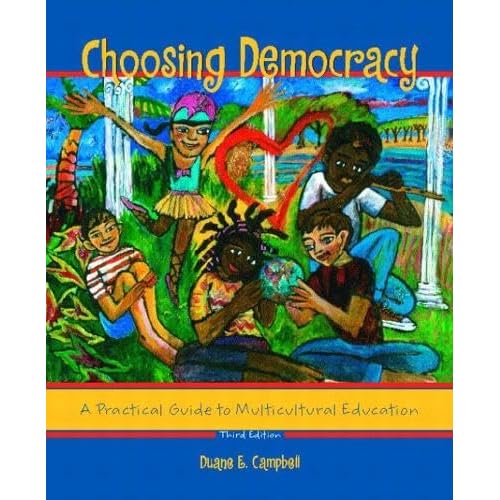
Duane Campbell, activist and author of Choosing Democracy will present a workshop on teaching about Cesar Chavez and the United Farmworkers movement.
The conference is free and open to the public
More info

Thursday, February 08, 2007

Bilingual Education at a Crossroads? A Divided NABE meets in San Jose; Board Further Discredits Itself by Inviting Anti-Bilingual Ed Keynote Speaker

With fresh wounds from its ouster of Executive Director Jim Crawford last year, the National Association for Bilingual Education [NABE] Board further discredited itself with the mind-boggling decision to honor an anti-bilingual education columnist as their 'keynote' speaker for NABE's 36th Annual Conference in San Jose, CA beginning today.
Because of this I had mixed feelings when I was asked to speak on a panel for the conference on Friday with longtime UC Berkeley Ethnic Studies and educational justice scholar Ling-Chi Wang on multilingualism in San Francisco schools for the conference. I decided to attend but to do what I can to be supportive of those at the gathering who will hold the NABE leadership accountable and continue our work, whether in NABE, or our statewide or regional groups to support English Learners and educational justice for all students and communities. I first met Crawford some 10 years ago when he came to visit my organization, the Northern California Coalition for Immigrant Rights, and other grassroots immigrants rights groups in the San Francisco Bay Area in 1998 to learn about our advocacy and organizing approaches in the heat of our battle against millionaire Ron Unz's Prop 227 attacks on bilingual education in CA.

The farce of NABE's Board's choice of San Diego Union columnist Ruben Navarette, an outspoken critic of bilingual education and former media consultant to Ron Unz, as one of their keynote speakers was made worse by NABE board members' apparent attempted coverup of their action of inviting him. See Stephen Krashen and Jim Crawford's summary of the NABE mess and the backtracking and denials by NABE officials on the matter. From Krashen and Crawford:

Navarrette, a syndicated columnist, has built his career by attacking bilingual education. He started out in the 1990s as a media consultant for Ron Unz, the sponsor of anti-bilingual initiatives adopted in California, Arizona, and Massachusetts. Navarrette went on to work for various newspapers but never forgot his English-only roots. Writing in support of Unz's ballot measures, he denounced bilingual classrooms as "linguistic prisons" where children don't learn English but are trapped, against their parents' wishes, by a school bureaucracy that's "addicted to the additional funding provided for bilingual students." (Several of his major works, including "Bilingual Programs Failing" and "It's Time To Dismantle Bilingual Education," can be accessed at Unz's English for the Children web site.) He has also specialized in journalistic assaults on Hispanic leaders, civil-rights advocates, "racist" liberals, and supporters of public education. Not surprisingly, Navarrette has been a big booster of the No Child Left Behind Act. But above all, he has distinguished himself as an enemy of everything NABE stands for -- or, at least, used to stand for -- and as a hero to anti-bilingual crusaders everywhere.
Very embarrassing for the existing NABE leadership.
For more on the future of bilingual education see Crawford's excellent analysis from last Fall -The Decline of Bilingual Education: How To Reverse a Troubling Trend?
He argues for the need to unite advocates for English learners, Bilingual Education and 2-way Immersion programs with teachers, parents and students fighting for authentic assessments and against high stakes testing.

[We must] rally parents against the excesses of high-stakes testing and punitive
accountability schemes – excesses that affect large numbers of students, not just ELLs. ...Yet advocates for bilingual education must avoid the trap of concentrating their efforts on perfecting a misguided accountability system. No Child Left Behind espouses the cruel fiction that ELLs can meet the same levels of proficiency as their English-speaking peers before acquiring English, a standard of progress that dooms all ELL programs, bilingual and otherwise, to failure. The law stresses outputs (i.e., standardized test scores) alone while ignoring inputs such as effective program designs, qualified teachers, professional development, appropriate materials, and other resources. ...

There’s no escaping the reality that, as long as high-stakes testing continues to drive American education policy, the trend toward all-English programs will continue to accelerate.

See also info on Crawfords current efforts with the newly formed advocacy organization - The Institute for Language and Education Policy.

Monday, December 18, 2006

US Schools - Speaking in Tongues - New Film Promotes Multilingualism in San Francisco

The excellent SF Schools Blog points us towards a new NY Times article on the growth of Mandarin language programs in US Schools. Besides serving the needs of newcomer immigrant students, dual language immersion programs can help districts like San Francisco and other gateway urban school districts to attract middle class and white families back into urban schools with the attraction of learning other languages. From 1968-78 nearly 30,000 white and middle class students [about 1/3 of the SF student population] fled the district in the midst of the civil rights, equity and desegregation efforts of that era. We have never fully recovered from the 'white flight' of that period. Perhaps multilingual and other high quality 'magnet' programs may help bring back the families that have abandoned the urban public schools.
Speaking in Tongues!
On a similar note, I am excited about an upcoming film about multilingualism in San Francisco Schools by local independent filmmakers extraordinaire Marcia Jarmel (director, producer, writer) and Ken Schneider (co-producer, editor) who produce films that explore contemporary social issues through intimate character stories. Their award-winning films have been broadcast around the world and have screened at museums, film festivals, schools, universities, public libraries, and for community groups.

KQED will be hosting a previewing of the film in January. I hope it hits the theaters soon as well. More info -

Speaking in Tongues 60 MINUTES, COLOR, DVD & VHS
Alone among the educated world, the U.S. remains resolutely monolingual, despite how decidedly international our world has become. The idea of “American exceptionalism” is in vogue, Congress is once again considering “official English” legislation similar to that already passed in 22 states, and the Education Department’s No Child Left Behind initiative effectively discourages second language learning. Yet, at the same time, the Department of Defense is pouring hundreds of millions of dollars into a K-16 pipeline developing fluency in languages deemed “strategic” and business leaders clamor for bilingual U.S. citizens to engage in the global economy. Children around the world have for decades learned a second and even third language as part of their schooling. In the “flattening world“ described by the writer Thomas Friedman, bilingualism is a survival tool. But are we ready?
Speaking in Tongues documents the experience of one city grappling with the challenge. Amidst the widespread perception that bilingual education, intended as a transitional program, has failed, San Francisco school board will consider a measure to offer language immersion education to all public school students. Unlike bilingual education classrooms, immersion students come from a spectrum of language backgrounds—English learners, native English speakers, and “heritage language learners” reclaiming a family language lost through assimilation. All study at least half of their regular school subjects in a non-English language—in our story Mandarin, Cantonese, or Spanish. As a bonus, every student is exposed to different worldviews, customs, and approaches to problem solving. Data confirm the success of this approach: native English speakers join much of the rest of the world in becoming bilingual, and English language learners do better, have more positive attitudes about school, and are more likely to graduate from high school than their peers in English only classrooms.
Consider the possibilities presented by Alice Fong Yu K-8, the nation’s first public Chinese immersion school. The school’s motto, “Bridging Cultures, Building Community” alludes to both the city and the globe. Immersed in Chinese language and culture, K-3 students study 85 percent of their lessons – math, science, physical education, and social studies-– in Cantonese. By 3rd grade they are fluent. In middle school they add Mandarin as a third language. They also develop English and math skills that place them first among the city’s 72 elementary schools on statewide mandatory testing. By the end of 8th grade they are trilingual and tri-literate, enough to participate in a cultural exchange program where they will attend school and live with a family in Beijing. Six years ago the school was challenged to reach full enrollment. This year 400 parents competed for a mere 28 slots in the entering kindergarten class.
Across the city, in a neighborhood known as much for its projects as its stunning Bay views, Starr King Elementary opened its doors this September to the city’s first Mandarin immersion kindergarten. Asian and white students cross the city to join African American and Latino children from the neighborhood. If 30 years of research is correct, and learning in two languages really does stimulate brain circuitry and enhance academic success for all students regardless of socioeconomics, native language, or cognitive ability, the school can expect its achievement to climb.
Not far away, in the city’s Latino Mission District, Buena Vista Elementary has been educating a mix of native Spanish and English speakers for over twenty years. Through the eyes of a 5th grader and her family we’ll explore what happens when English learners attend a school that values their native language as much as English. The fact that both Spanish and English speaking students here test at grade level or above in both languages—a skill that eludes many Americans in English alone—gives hope that the city might address its shocking 50% drop out rate for Latino students.
Speaking in Tongues is an intimate glimpse into a community squaring the challenges of public education with the needs of a changing culture. As we consider the experiences of parents, advocates for and against, and students engaged in this experiment, we come to see what's at stake—for those involved and for our nation. Will San Francisco’s story be a national model or a cautionary tale? Speaking in Tongues will be available as a DVD toolkit that includes an hour-long public television documentary, a shorter version for education and community engagement, and study guides to support these uses.
Join Patchwork's e-mail list, to keep informed of the film's progress.

More info - Speaking in Tongues

Thursday, December 14, 2006

San Francisco Asian Americans Respond Proactively to Rosie O'Donnell's 'ChingChong' Insensitivity; Reject Right Wing Attempts to Divide Us From Others

- LA Koreatown Mural - Know Your Roots- Darryl Mar/Tony Osumi 1993
Rosie O'Donnell needs to meet with Asian American and immigrant community groups right away to learn about our history of struggle for language rights and equality in the US. O'Donnell's insensitive 'chingchong' comments on national TV have touched off a firestorm of anger and frustration from many Asian American organizations and Chinese groups globally as well.
But is Rosie really the problem?
Or are her recent comments merely the tip of a bigger iceberg of historical language discrimination and English-Only-ism that spread in the 1980's with the passage of California's Proposition 63 [a conservative 'wedge-initiative' which declared English as the Official Language of California] and has intensified since September 11th, 2001 in border areas like Arizona and many parts of the US Southwest. But the anti-immigrant and language intolerance has also become national as well, like it was in the 80's when our Prop 63 passed. This past May 18th the US Senate as a part of the draconian anti-immigrant legislation added an English-Only ammendment sponsored by Sen. James Inhofe (R-OK) which passed by a 63-34 vote, largely along party lines. See Jim Crawford's excellent analysis of English Only and language policies.
Proactive Responses
Reporter Vanessa Hua covers the issue in this morning's SF Chronicle from a community perspective: Asian American advocates decry parody by TV's O'Donnell . And, beyond the demands for an apology by some, San Francisco Schools are proactively promoting bilingualism and multiculturalism as one of the means to combating ignorance of discrimination and language rights struggles in the US:

On Tuesday, the San Francisco school board passed a resolution stating that the district valued multilingualism, and it established a task force to develop a long-term plan to encourage opportunities for all students to learn more than one language. Such policies challenge the ignorance of comedians like O'Donnell, school board member Eric Mar said Wednesday.
Her remarks are a "put-down of Chinese and various immigrants," Mar said. "There's a whole history of subordinating people who are immigrants."

Asian Americans Must Resist Wedge Initiatives and Divide and Conquer Tactics to Harm Alliances we have built with other communities - But despite our proactive efforts to deal with the larger issues, racist and right-wing organizations and talk show hosts like neocon Michelle Malkin seem to be taking advantage of O'Donnell's ignorance too in trying to drive further wedges between the gay community and Asian Americans. It seems to me that we must continute to challenge O'Donnell's insensitivity and urge her to meet with our organizations while also resisting calculated political efforts to divide us from other communities.

Wednesday, December 13, 2006

San Francisco School Board passes historic policy on Bilingualism/Multilingualism for All

SF SCHOOLS PREPARE FOR A MULTILINGUAL AND MULTICULTURAL WORLD

SFUSD forms new task force to plan pre-K-12th grade language programs

SFUSD Press Release - December 13, 2006 – The San Francisco Unified School District hopes to offer every student the opportunity to graduate from SFUSD fluent in English and at least one other language. On December 12, 2006, San Francisco Unified School District Board members voted unanimously for a resolution that will set up a task force to guide SFUSD in preparing students for success in a multilingual and multicultural world.

"This resolution states that our district values multilingualism – and the benefits of having bilingual people in our diverse communities and our City," said Commissioner Eric Mar.

The resolution presented by Commissioners Eric Mar, Dan Kelly and Norman Yee states "Preparing students for our world of multilingualism and multiculturalism has become an integral and indispensable part of any educational process in most developed countries and in more and more developing countries."

Many studies have proven that young children acquire second and third language skills with ease. Second language acquisition does not interfere with their ability to master their native language. Currently SFUSD graduating seniors are required to take only one year of a second language and kindergarten through eighth grade offerings are available in only some District schools.

"It's an exciting time to be a public school parent in San Francisco . This new resolution outlines the district's commitment to multilingualism where all students K-12 will enjoy some language enrichment whether it's immersion or another program," said SFUSD parent Maria Aldaz.

"Speaking as a parent of a 5th grader at Buena Vista , the city's oldest Spanish immersion program, I've experienced first hand the great education public schools offer in multiculturalism and multilingualism."

The 21 member Blue-ribbon Task Force will include parents, language experts, teachers, school planners, employee groups, business and civic leaders.

More info - http://www.sfusd.edu/

------------

San Francisco School Board Notes also published a summary of the Board's historic policy -

Board OKs Sweeping Language Initiative

In an ambitious plan backed by the school board Tuesday night, SFUSD will aim to give very student in the district the opportunity to be a bilingual or multilingual graduate.

The board passed a unanimous resolution calling for the superintendent to draft a 21-member Blue Ribbon Task Force comprising parents, teachers, school planners, language experts, employee groups, business organizations and civic leaders to develop models for achieving this goal. The resolution also calls for the superintendent to use these findings to develop a plan for multilingual education, which will be presented to the board by Oct 1 of next year.

"This would not necessary be an all-immersion model," said Commissioner Dan Kelly, who authored the resolution along with Commissioners Norman Yee and Eric Mar. Immersion programs are expected to play a big part, however. The resolution builds on one passed earlier this year that called for expanding the district's popular two-way immersion programs and creating programs that could serve upper as well as lower grades.

The initiative approved Tuesday seeks not only to serve native English speakers, but also to help non-native speakers become English proficient while receiving a level of instruction equal to that of their English-speaking peers. The task force will work in concert with the district's Bilingual Community Council, which recently issued a report saying that English language learners are not being adequately served by the district's programs.

The move, board members said, could be an opportunity for the district to create a model for multilingual instruction with wide-ranging influence. "This is really cutting against the grain of an English-only wave that is going on in this country," Mar observed.

An obvious obstacle is funding such a large-scale effort at a time when the district faces dire budgetary constraints. "We're going to aggressively seek out external funding sources," Mar said. "We'll use every means at our disposal to find funds to pay for this program."

More from SF School board notes

Click here to access SF Board of Education Resolutions/Policies
Thursday, November 30, 2006

SF Today - Senator Jackie Speier exits public office, CA School Board Members shmooze in a Chilly San Francisco

The blogging life of a school board member in San Francisco is never dull. 5000 or so school board members from all over the state [there are some 1000 school districts represented] are meeting here for the 75th Annual California School Boards Association conference.
After patting my sleeping daughter on the head at 7am and kissing my elementary school teacher wife goodbye I headed out for the CSBA delegate assembly meeting. We are the 200 or so person policy setting body for CSBA. One of our veteran board members Jill Wynns is our region's representative to the CSBA Board of Directors and I serve on the CSBA delegate assembly.

FAREWELL TO SENATOR JACKIE SPEIER
We voted on our new CSBA officers and heard from Senator Jackie Speier on her last day of her 25-year service in public office. Speier had just lost a close race on Nov 7th for Lt. Governor and is now termed out of office.
"Leadership is tough," she said.
"You are not there to rubber stamp. Work to craft new opportunities for the children. If you are not standing on the edge, then you're taking up too much room," she said to a standing ovation of school board delegates.
WORKSHOPS; CHALLENGING ENGLISH ONLY TESTING
Afterwards I went to uesful workshops on parcel tax campaigns [Larry Tramutola and Associates], reflections on governance team: the superintendent's perspective, superintendent searches, and an informal 'table talk' on the do's and don'ts of blogging.
During lunch I had the pleasure of chatting with Pajaro Valley Unified school board members who are part of a 10-district Californians Together lawsuit filed last year against the state of California challenging the state's English-Only testing system and NCLB.
Coachella Valley Unified School District, et al v. State Of California, et al,
I will be having dinner with one of the lawyers in the case this evening to hear an update as well. The conference continues through Saturday afternoon.

Friday, September 29, 2006

Arizona schools - Goldwater Country - RIP bilingual education?

In 102 degree weather...deep in the heart of Goldwater country - Phoenix, Arizona - I am visiting schools, dialoguing with hundreds of other school board members, Superintendents and policy wonks at the Council of Urban Boards of Education's 38th Annual Conference.

Despite the passage of Arizona's anti-bilingual education Proposition 203 in 2000 and the rigidity of NCLB some schools keep trying to strengthen bilingual education and arts and music programs here in the greater Phoenix metropolitan area. Only 7 dual language immersion programs remain according to local advocates.

For more history on what school desegregation activist/scholar Angelo Ancheta calls the "intersection of nativism and racism" in education policy - see former Education Week reporter and NABE director James Crawford's language policy website.

To beat the blistering heat early this morning about 20 of us visited the 50 year old Valley View Elementary School [K-8] in Phoenix's Southern Mountain area. This heroic school has managed to continue its dual language immersion programs despite Prop 203 by offering Spanish as a foreign language to all its K-3 students and then offering to its 4th to 8th graders an excellent "delayed entry" dual language immersion program. The school is 85% Latino, 13% African American, and 50% English learners.
I was also impressed with the principal and teachers' focus on using achievement data as a diagnostic tool to support student learning with a tool called Data in a Day and a child-centered approach to school reform. The school's integration of music and arts into the curriculum and various partnerships with businesses and community partners were outstanding as well.

Lastly, I snapped the self-portait photo above in a bar near my hotel - the GOP and Goldwater icons at first made my skin crawl - but it made me realize how deep I am in the birthplace of one of our country's historical bastions of conservatism, but also the base of our current day gun-toting vigilante 'minutemen' and Sen. John Kyl who are carrying on the bigotted Goldwater tradition. "In my heart"... I know they are wrong - and from my discussions with the students, parents and teachers at Valley View, I know we have to keep up the fight for human rights for immigrants, for adequate funding for our schools, and for educational justice for everyone.