Our members and the 40 million workers in our industries are real people who work hard picking the crops, stocking the shelves, preparing and serving our food, building, cleaning and guarding the skyscrapers of our big cities. They drive our buses and trucks.
They care for the sick and elderly and help us raise our children. They are the infrastructure of our society
For them, this election is about changing America to win a better future for our children.
We want a president who shares our vision and is committed to a practical program to translate that vision into action.
Action that will fix what happens at work by:
Protecting the right of workers to have a voice in their workplaces
Health care for every man, woman and child in America
Fair trade policies to promote job growth
Creating good jobs through rebuilding and expanding our nation’s infrastructure
Most importantly, we want a president who shares our dream and unites Americans in building a movement for change. ….a movement with the power to turn that dream into reality.
Today, Change to Win is proud to endorse Senator Barack Obama.
Tuesday, February 26, 2008
Labor/Change to Win - Fired Up and Ready to Go with OBAMA
Friday, October 19, 2007
SF Chinatown Educational Justice Victory - new community college campus
Early this morning many students, teachers, parents, Chinatown and other immigrant communities celebrated a major victory in our 30 year fight for a high quality community college campus in Chinatown.
With other SF State and City College teachers, students and leaders, my colleagues from the Chinese Progressive Association and Chinese for Affirmative Action and the SF Labor Council, I waited along with dozens of my SF State students for the outcome of the long college board meeting which began at 6pm at the Chinatown/Northbeach campus. At 1:30am the college board finally voted to approve construction of a permanent City College Campus in Chinatown! Key to the victory was massive community support: over 25,000 petition signatures, 10,000 individually completed postcards, and 3,500 emails sent in three days.
The new Chinatown/North Beach Community College campus will be constructed next door to the historic I-Hotel site which was rebuilt in 2005. We just celebrated the 30 year struggle to rebuild the I-Hotel and the Manilatown Center. So, the new Chinatown College Campus which is scheduled to open in 2010 will be a nice addition to our community.
Summarizing last night's victory Keith Kamisugi of the Equal Justice Society wrote:
This represents a major win for a broad coalition, coordinated by Vin Pan and Susan [Hsieh] at CAA, of over 100 community organizations and leaders in support of the campus has collected over 23,000 petition signatures and over 10,000 individual postcards demanding appoval last night.
While many longtime activists were involved in the coalition like Henry Der and Ling-Chi [power to the people] Wang, I developed tremendous admiration and respect for City College leaders in the CCSF Asian Coalition and folks like Prof. Minh-Hoa Ta and Andrew Hom for their tremendous leadership as well.For over 30 years, the San Francisco Chinatown community has fought for a permanent campus to provide generations of immigrant students with equal access to educational opportunities, such as learning English, preparing for citizenship exams, and acquiring job skills. Classrooms are currently scattered throughout a dozen deteriorating and inconvenient spaces, and at the primary location, students and faculty suffer debris falling on their heads and are forced to use child-size toilets.
Unfortunately, owners of the nearby Hilton Hotel, desperate to preserve their guest-room views, continued to dispatch high-priced lawyers and lobbyists in a ruthless campaign of opposition. Long on cash and short on scruples, they proclaimed “support” for a campus, while at the same time financing endless schemes to derail its progress.
More info: Friends of Educational Opportunity in Chinatown
FEOC has a Good Media List of Articles on the issues .
Also see: Chinatown Campus – One Building or 2 Buildings? Samson Wong Asian Week 10/12/07
CAA Director Vincent Pan – from the SF Chronicle 7/30/07
Friday, September 07, 2007
More Tributes to Bill Sorro and his legacy in building the "other San Francisco"
We at CPE honor and celebrate the life of Bill Sorro, a comrade that will truly be missed.
San Francisco has lost a precious treasure. Not the San Francisco of downtown business interests, or of the dot-com craze, or of the waves of "young urban professionals" moving into the city's overpriced live-work lofts or condominiums. No, we're talking of the San Francisco struggling, on a day-to-day basis, to maintain its very existence: of Pilipino families and elderly in South of Market, of African American residents in the Fillmore, of tenants in SRO hotels, and of immigrant Latina/o workers in the Mission. In the early morning hours of Monday, August 27th, this San Francisco lost veteran activist Bill Sorro.
Bill passionately fought for this "other" San Francisco.
Born in 1939, Bill Sorro grew up in San Francisco's working class and predominantly African American Fillmore District, long before working class folk were pushed out by Justin Herman's notorious redevelopment schemes. Coming from a family that suffered as a result of anti-miscegenation laws [his Pilipino father was arrested and jailed for marrying a white woman], Bill consistently sought to connect the struggle against class exploitation to that of racial oppression.
Nowadays people in progressive circles often discuss ways to decrease ones footprint in the world; it can truthfully be said, however, that Bill Sorro left a tremendous footprint in peoples' lives and in their collective struggles.
Recently, he became an inspirational anchor for a growing housing justice movement in San Francisco, from the Mission Anti-displacement Coalition to the South of Market Community Action Network (SOMCAN).
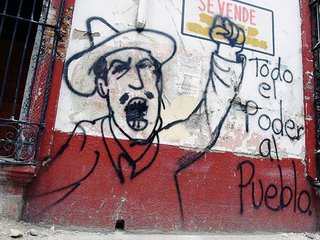
Compañero Bill, however, leaves a much deeper and longer legacy: most obviously, for Pilipinos (as a leader of the famed International Hotel struggle, as a member of the Kalayaan Collective and, later, of KDP-the Union of Democratic Pilipinos, as a founder of the Manilatown Heritage Foundation, and as mentor for countless Pilipino youth), but equally for communities of color in general, for the working class in particular (as a long-time union activist and committed socialist), and ultimately for all that suffer and struggle against the indignities of oppression and exploitation ... whether it be here in the belly of the beast or across the globe. Standing in solidarity with anyone fighting for justice, Bill embodied the often-quoted, but rarely lived, notion that the essence of any true revolutionary is a profound love for the people! And, man, Bill loved the people! Right on, brother! All Power to the People!
He stands in that long tradition of individuals like Philip Vera Cruz, Paul Robeson, Dolores Huerta, and many others who made enormous contributions to history. But Bill made history by believing in and nurturing the leadership of others, by supporting the insights and wisdom, the creativity and resourcefulness of everyday people. He believed power truly existed in the people themselves; they need not look outwards for salvation, only into the mirror. Bill made societies most discarded people-the elderly, the homeless, the immigrant, queer and transgendered people, individuals with substance abuse issues, youth of color-count and believe in themselves.
Bill leaves behind a tight knit family-his wife Giuliana, who he met on the 2nd Venceremos Brigade to Cuba and subsequently married at the I-Hotel, and children Desu, Daphne, Danae, Django, Giulio, Joachin, and Jordan-as well as one that expands to include literally hundreds of community activists and friends, all who feel a part of the Sorro family. This broader family-one that includes many who may never have even met him-continue to organize and fight to realize Bill's dream: a world in which people matter more than profit and property. And we collectively dedicate ourselves to fight for that future described in Bill's favorite song: Donny Hathaway's "Someday We'll All Be Free."
By Jason Ferreira, Assistant Professor, College of Ethnic Studies, San Francisco State University; and
Eric Quezada, Mission Anti-Displacement Coalition, and Executive Director, Dolores Street Community Services.
--
The Center for Political Education: Dedicated to building strong movements and the left through education, analysis, theory, dialogue and activism
Tuesday, August 28, 2007
Bill Sorro Presente! Longtime San Francisco Movement Leader Leaves Tremendous Legacy of Struggle
Strength to Bill's partner Huli, and his children Desu, Daphne, Django, Giulio and Joachin and the family that Bill and Huli built. We will make sure your legacy and spirit live on - Long Live the International Hotel and the Fighting Spirit of Bill Sorro!
Tuesday, June 12, 2007
David Bacon: Who Killed the Immigration Bill, and Who Wants it to Come Back?
In San Francisco alone, seven were arrested in the office of Senator Diane Feinstein, during the recess that preceded the June 7 vote. Dozens more debated the senator in front of her home the morning after the arrests. Around the country, similar demonstrations did what they could to kill the bill. The National Day Labor Organizing Network called it a "cynical and mean-spirited effort of those Senators that seek to poison the immigration reform debate yet again," and warned, "we are fearful that an insufficient Senate bill cannot be adequately repaired in the House of Representatives or in a conference session." It was no surprise that many greeted the (perhaps temporary) death of comprehensive immigration reform as a necessary move to protect immigrants themselves. These groups saw in the bill a threat of more contract labor programs, more enforcement and raids, greater militarization of the border and erosion of basic due process rights.
Filipinos for Affirmative Action, voicing a criticism common in Asian American and Latino communities, said the bill "moved away from permanent, family-based immigration toward a temporary employment system." As debate in the Senate proceeded, even the bill's promise of legalization for the nation's 12 million undocumented residents proved so restrictive that only a small percentage eventually would have qualified. Migrants without status would have had to place their families in jeopardy just to apply.
After the vote in the Senate defeating cloture, killing the bill at least for the moment, John Sweeney, head of the AFL-CIO, declared it "plagued by anti-family, anti-worker provisions," and called it " doomed at the onset. The bill abandoned long-standing U.S. policy favoring the reunification of families and failed to protect workers' most basic rights." Despite the fact that the bill was brokered by the Bush administration, many of its proponents were not Republicans, but liberal Democrats, most prominently Senator Edward Kennedy.
Supporting it was a network of lobbyists referred to in the press as "immigration advocates," large employers, and conservative think tanks. For two years this alliance advocated a strategy of trading legalization of undocumented immigrants for increased immigration enforcement and guest worker programs. The National Immigration Forum and the DC umbrella group it initiated, the Coalition for Comprehensive Immigration Reform, were key players in this strategy. Behind them was the Essential Worker Immigration Coalition, which brought together over 40 of the largest corporate trade and manufacturing associations in the country, under the aegis of the U.S. Chamber of Commerce. EWIC head John Gay, also head of the National Restaurant Association, chairs the NIF board.
These Washington groups supported all the compromise bills embodying the legalization/enforcement/guest worker tradeoff, beginning with the original Kennedy/McCain bill in 2005. The same argument was used to justify them all: "It's not possible to get legalization without including more enforcement and guest worker programs." While the groups occasionally disagreed with individual provisions of the proposals that followed, they not only agreed with the basic structure and architecture of these bills, but became their ardent advocates in meetings around the country.
As the proposals moved through negotiations with the administration and Congressional Republicans, legalization schemes became more restrictive, enforcement provisions more ferocious, and contract labor schemes more extensive. Yet the recently defeated Senate compromise was greeted as a "good starting point." Even at the end, the DC groups called on immigrant communities to urge defeat of "bad" amendments to it, while continuing to urge Senators to support the comprehensive immigration reform, or tradeoff, framework.
While Congress considered this series of proposals, the Bush administration embarked on a series of highly publicized immigration raids and workplace firings, to put pressure on immigrant communities and unions to accept its reform program. The bills themselves called for giving the Immigration and Customs Enforcement agency, part of the Department of Homeland Security, more enforcement authority to conduct these raids. The administration, for instance, proposed that employers be required to fire any worker whose Social Security number didn't match the agency's database. Although Bush never actually issued this regulation, and the bills obviously hadn't passed, ICE and employers began using it as the basis for enforcement actions.
Workers at the Woodfin Suites in Emeryville, California, were fired after they tried to enforce the city's living wage ordinance. At the Smithfield pork plant in Tar Heel, North Carolina, hundreds were fired, and many then deported, during the hardest-fought union organizing drive in years. Similar raids and firings swept the country, as the administration set ICE loose on immigrant communities, implementing the very language in the comprehensive reform bills. Beltway lobbying groups often expressed alarm over the raids, but didn't withdraw their support for bills that would have made such raids more widespread.
After coordinated raids at Swift meatpacking plants in November, in which over a thousand workers were picked up for deportation, Homeland Security Secretary Michael Chertoff told reporters the enforcement actions would show Congress the need for "stronger border security, effective interior enforcement and a temporary-worker program.'' Bush wants, he said, "a program that would allow businesses that need foreign workers, because they can't otherwise satisfy their labor needs, to be able to get those workers in a regulated program." Within weeks of Chertoff's statement, the Southern Poverty Law Center issued a report, "Close to Slavery," which provided exhaustive documentation that current guest worker programs, like those the administration proposed, systematically violated workers' rights. Abuse in H-2 programs was so extensive, and government enforcement of existing labor protections so completely absent, that SPLC called them "fundamentally flawed."
The SPLC and other exposes gave guest worker programs such a bad reputation that DC-based groups took pains to disassociate themselves from the term. The bills they supported would "break the mold," they claimed, by creating contract labor programs that wouldn't exploit workers. They invented new terms: "essential worker" or "new worker" plans. Behind the semantic fog, however, the bills preserved the two crucial characteristics of all employment-based guest worker schemes: new migrants could only come if recruited by an employer or labor contractor, and people had to remain employed to stay. Migrants losing a job and unable to find another within a short time would be deported.
To justify contract labor programs, the DC coalition asserted constantly that U.S. corporations face dire labor shortages. The Bureau of Labor Statistics, however, estimates the May, 2007 unemployment rate at 4.5%, and says over 7 million workers were unemployed in 2006. Most unions believe these are serious undercounts. Unemployment in African American and Chicano communities is much higher, over double digits even during economic booms. Yet instead of raising wage and benefits to attract workers, or paying more taxes to improve education and training in working class communities, employers held that only huge guest worker programs could meet their labor needs. In an joint oped piece for Politico.com, Thomas Donahue, CEO of the U.S. Chamber of Commerce, and Andy Stern, President of the Service Employees International Union (one of two unions that supported the tradeoff bills) stated that "we need legislation that will create a carefully monitored essential worker program," and called it "a system that provides U.S. businesses with the workers it needs."
Meanwhile, legalization proposals in the same tradeoff bills were presented as the payoff for immigrant communities. Yet many of the legalization schemes threatened to disqualify immigrants guilty of document fraud. ICE now says this includes anyone who's given a false SS number to get a job, something almost all undocumented workers have done. Other proposals would have imposed employment requirements, imposed high fines difficult for most working families to pay, and required people to take an undetermined amount of time off work to return to their home countries to apply for readmittance, with no guarantee they could pass a host of bureaucratic checks. Most proposals would have had people wait at least a decade before they could get a green card for permanent legal residence (not citizenship). Legalization programs wouldn't even take effect until the U.S. gained "operational control" of the border, leaving the door open for years of increased enforcement with no change at all in the status of the undocumented.
Many organizations outside DC did not support this approach to immigration reform. Instead they called for a positive agenda focusing on human and workplace rights, legal status and equality. They proposed reforms that didn't criminalize migration, work or the border itself, and that instead protected families and communities. The National Network for Immigrant and Refugee Rights urged that "we work for a different "starting point" for immigration reform that protects the rights of all immigrant families, workers and communities."
The beltway lobbying strategy started by asking what employers and a Republican administration would be willing to accept. Groups like NDLON, however, proposed building a popular movement to change the political terrain in Washington, like the civil rights movement of the 1960s. Responding to lobbyists who called the Senate bill the only chance to reform immigration law for years, NDLON said "We know the struggle for justice and immigration reform requires a long view of history, and we will not be pressured into accepting an insufficient compromise simply for sake of political expediency. We owe it to this and future generations to pass a bill that we can all be proud of."
"The best way to guarantee the rights and wages of all workers in this country," added the AFL-CIO's John Sweeney, "is to give every immigrant the opportunity to become a citizen, with all the rights and duties that entails. At the same time, Congress must revise our immigration system so that in the face of labor shortages, future foreign workers may enter this country not as dispensable units of production but as permanent residents with the same rights and protections as all other U.S. workers."
Basic differences have divided the immigrant rights and labor movements, not just over tactics and strategy, but also over goals. Should immigrant rights groups and unions support increased enforcement? Should they allow employers to recruit hundreds of thousands of workers a year, on visas which condition their right to stay in the US on continued employment? Should temporary or contract labor programs be the condition under which the undocumented are allowed to stay?
This division, between Washington-based organizations, and grassroots coalitions outside the beltway, has existed for over a decade. In 1996 many community-based coalitions around the country withdrew from the National Immigration Forum when it insisted it was not possible to save the rights of undocumented immigrants in the Clinton-backed immigration bill. The DC-based strategy tacitly called for saving the rights of legal immigrants by telling Congress that while the country needed to do something about illegal immigration, legal residents shouldn't be punished in the same bill. The strategy failed, and according to Filipinos for Affirmative Action, "the Illegal Immigration Reform and Immigrant Responsibility Act undermined the basic rights of all immigrants, denied their right to due process, and expanded the reasons for detention and deportation." The starting point for immigration reform should be instead an agreement that "all immigrants have a right to be treated equally, with full legal, employment, human and civil rights."
Today's disagreements are similar. They are in part over strategy and tactics, but also raise a deeper issue: Should U.S. immigration policy become a labor supply system for corporations, or should it support families and communities? In the mainstream press, this question gets little coverage because the framework proposed in Congress so heavily sets the media agenda. Anger over exclusion from the debate provoked the Mexican American Political Association to declare that "We are totally opposed to the off-handed declarations made by compromising individual Latino television commentators or organizations that advocate - NOTHING IS WORSE [than failure to pass an immigration bill]. In fact, NOTHING WILL BE WORSE [than the proposed Senate legislation] in terms of the millions of individuals and families who will be criminalized in perpetuity."
Moving from an effort to defeat anti-immigrant legislation to an agenda that can win more progressive reforms requires an open debate over those disagreements. As Silicon Valley and other employer groups move to bring the Senate bill back, that discussion is more urgent than ever.
Monday, May 28, 2007
SF Progressives Gear Up for '07 Mayoral Race and the Future of our Communities
Next Saturday I and other progressive activists and organizers are mobilizing for a major progressive summit at our Tenderloin Community Elementary School. We are trying to reinvigorate the spirit of the 1974 San Francisco Community Congress efforts in neighborhoods throughout the City. On June 2nd progressive elected officials and grassroots activists will join together to plan for the November 07 elections and beyond.Former Mayoral Candidates Matt Gonzalez and Tom Ammiano and Supervisors Chris Daly, Aaron Peskin and Ross Mirkarimi may address the convention sometime after 2pm along with Board of Education President Mark Sanchez and me.
Please join us!
----
Dear Progressive Friends and Allies,
Please reserve Saturday, June 2nd on your calendar for the most important progressive gathering of the year.
To set the stage for our progressive campaigning this summer and fall, we will be convening to consolidate our platform, train in the nuts and bolts of electioneering, launch our candidate(s) for Mayor of San Francisco, and have lots of fun!
Saturday, June 2, 10-5
Tenderloin Community School
627 Turk Street (Van Ness), San Francisco
Monday, April 30, 2007
Repressive ICE Raids create fear in immigrant communities; civil and human rights violations growing
From the SF Chronicle:
The human face of immigration raids in Bay Area: Arrests of parents can deeply traumatize children caught in the fray, experts argue:
...Victor and Elvira Mendoza were detained for weeks after agents arrived at their San Pablo home in January to serve a warrant for someone who didn't live there. The brother and sister had come to the Bay Area from Mexico in 2003 to be reunited with their parents, legal U.S. residents, whom they had last seen when Victor was 13 and Elvira 9. In a crackdown begun last May against illegal immigrants who ignored deportation orders, including convicted criminals, U.S. Immigration and Customs Enforcement agents arrested 18,149 people by Feb. 23.
Immigration agents arrested siblings Victor and Elvira Mendoza, 21 and 17, when it turned out the fugitive they were looking for no longer lived at the Mendozas' home. Officers detained 6-year-old U.S. citizen Kebin Reyes for 12 hours when they arrested his father as an illegal immigrant.
These and many other families across the Bay Area and the nation were turned upside down this year by Operation Return to Sender, a federal immigration crackdown begun last May. The raids focus on illegal immigrants who have ignored deportation orders, but 37 percent of the 18,149 people arrested nationwide through Feb. 23 were not wanted fugitives.
Mental health experts say the raids are traumatizing children. Legal scholars and public officials are raising constitutional questions about the way the raids are carried out and about their impact on communities as a whole. And immigrant advocates say changes in immigration law -- including tougher provisions enacted in 1996 -- leave little room for illegal immigrants to correct their status.
...The American Civil Liberties Union and the Lawyers' Committee for Civil Rights sued federal authorities in San Francisco on Thursday on behalf of Kebin Reyes, now 7, saying agents violated the child's civil rights when they took him into custody. Attorneys charge that the federal government violated Kebin's Fourth and Fifth Amendment rights to liberty and to being secure in his own home.
When agents arrested his father, Guatemalan-born Noe Reyes, on March 6, they would not allow him to call relatives who could take charge of Kebin and instead held the boy until an alarmed uncle heard about the arrest from neighbors, Noe Reyes and his lawyers said Thursday. "He went with his dad so he wouldn't be left home alone," said immigration agency spokeswoman Lori Haley. "We work with the families to find someone to take care of the child."
Noe Reyes, the boy's sole parent in the United States, who was released April 18, said Kebin has been fearful and withdrawn since the arrest and suffers recurring nightmares....
"Just because someone is Latino or has an accent doesn't mean an officer has reasonable suspicion they are undocumented," said Lawyer's Committee staff attorney Philip Hwang. "Even being in the household where one occupant is undocumented doesn't create reasonable suspicion, because there are legion mixed-status households."
...Bay Area residents have said farewell to devoted parent volunteers, talented soccer coaches and close friends. Scores of Berkeley residents mourned the departure of Felipe and Norma Espinoza, who lived undocumented in the United States for two decades and built a much richer life for their three boys than they would have had in their hamlet in Michoacan, Mexico.The Espinozas were placed in deportation proceedings before the current federal campaign. They hired a lawyer to try to gain legal residency, but the lawyer -- later disbarred -- didn't show up for court appearances after he took their money. In February, the couple told their sons to say goodbye to their classmates and pack their bags. The court had ordered them deported and the family returned to the two-room house where Felipe was born.
Felipe, a former steelworker, said in a phone interview that he hasn't yet found work, even as a field hand. Felipe Jr., 14, said he is studying math two years behind the geometry class he left at Berkeley High School and wishes he could return to the Bay Area, even without his parents.
Child psychology experts say children suffer most from the disruption of armed agents coming into their homes and taking away their parents -- and sometimes themselves. Children can experience stress, depression and anxiety disorders, said Amana Ayoub, a psychologist at the Center for Survivors of Torture, located in San Jose, who is familiar with Kebin Reyes' experience.
Psychiatrist Dr. Alicia Lieberman, director of the Child Trauma Research Project at UCSF, said children who witness their parents being taken into custody lose trust in their parents' ability to keep them safe and begin to see danger everywhere.
"Over and above the sense of terror about, 'What will happen to my mommy and daddy and what will happen to me?' the common thread is, 'We cannot trust the authorities,' " Lieberman said.
Many adults have responded the same way, said Evelyn Sanchez, advocacy coordinator with the Bay Area Immigrant Rights Coalition.
"We've been in touch with a lot of families that have been affected by the raids, and understandably they are scared," Sanchez said. "Being undocumented is no light matter anymore, and they are really taking cover."
...Rocío Avila, a lawyer for La Raza Centro Legal in San Francisco, said an adult client of hers was detained during a raid even though he is a U.S. citizen."He attempted to let them know he was a U.S. citizen, and they didn't initially believe him," she said. "He asked, 'Who are you here to see? Do you have a warrant?' They handcuffed him immediately and put him on the floor."
The man, fearful of publicizing his name, is considering legal action.
Elizabeth Larose Dunn, who leads Marin Montessori School, said a sixth-grade student whose parents were arrested in immigration raids in March and did not want to be identified by name is a high achiever and "beloved in the school."
"This is America, a place we'd like to think all of our children are safe," she said. "I'm so sad about this on a personal level."
Tuesday, April 03, 2007
California Faculty Union Victory! Settlement Reached 21% salary increase over 4 years
"CFA and CSU reach deal in principle on contract/Two-day rolling walkouts put on hold while deal is finalized/CFA and the CSU administration have reached a tentative contract agreement and the union’s Board of Directors has voted unanimously to postpone rolling walkouts pending finalized contract language.
Tentative agreements have been signed on the issues of salary, workload, grievances, parking and appointments which have been the most contentiously debated topics in this round of bargaining. The accord was reached using the recommendations of neutral fact finder Sylvia Skratek as framework for the deal.
“We have a tentative agreement that will be good for the CSU, good for our students, good for the faculty,” said CFA President John Travis. “Through this agreement faculty will make real progress toward closing the pay gap between us and our colleagues in other states.”
Should an unforeseen breakdown in these latest talks occur, faculty remain prepared to initiate job actions. The new contract will likely be sent out to the membership for final ratification in late April. Updates will be made to this page as the contract becomes final. "
Here's the info shared by SF State President Corrigan:
April 3, 2007 – The California State University (CSU) today announced it has reached a tentative agreement with the California Faculty Association that provides all CSU faculty with base pay increases of 20.7 percent over a four-year period, as well as step increases for those eligible, making the package worth 24.87 percent.This tentative agreement must be ratified by the membership of the California Faculty Association. Then it will be submitted to the CSU Board of Trustees for approval. What a relief!
In addition to these increases, $28 million will be provided in the form of merit and equity increases that will provide raises for senior faculty who have reached the top of the pay scale, as well as boost junior faculty compensation. The CSU will seek an additional 1 percent increase for all employees’ compensation in state budget funds in each of the next three years.
The total pay package, which will cost the CSU more than $400 million over four years, breaks down as follows:
20.7 percent in guaranteed salary increases for all faculty in the form of General Salary Increases; 1 percent step increase (“Service Salary Increase”) in each year
of the contract; because these increases are only paid to approximately one-third of all faculty members each year, these individuals will receive an additional 2.65 percent boost to their salaries when eligible; $28 million set-aside to provide two new merit-based pay programs targeting both junior and senior faculty, and
An additional 1 percent in each of the last three years of the contract, contingent on receipt of additional state budget funds.
The CSU also accepted the fact finder’s recommendations to establish a salary structure committee to examine faculty compensation issues and to increase faculty parking fees commensurate with their General Salary Increases in each year of the agreement.
Bravo to our CFA bargaining team and to management's team as well for reaching this agreement and a new 4-year contract for our faculty throughout California!
Friday, March 30, 2007
SF Cesar Chavez Day - Linking Human Rights Struggles Here and Abroad
One of our adminstrators, and former Cesar Chavez Elementary School Principal Pilar Mejia [see photo above] received a rousing standing ovation as she quoted Paulo Freire and asked attendees to support liberatory education and to teach for social justice.
The Coalition on Homelessness, SRO Family Collaborative, and others also linked Chavez and the UFW to the ongoing fight for dignity for the thousands of homeless families in San Francisco. The Chinese Progressive Association, CCDC, Home Away From Homelessness and others also supported the kids and families as they demanded that City Hall fund programs for homeless and near homeless children and families in the City.
Above is Peabody Elementary School parent Jenny Freidenbach who also happens to be the Director of the Coalition on Homelessness speaking out for dignity for homeless children, parents and families at the rally. She said housing rights for homeless people and everyone is a human right.
At Noon, some of my SF State students and Filipino community and anti-war groups also convened a People's Tribunal at the Philippines Consulate to call for an end to US Funding of the human rights abuses in the Philippines.
Donning a black judge's robe community leader Rachel Redondiez read off a number of human rights abuse charges against President Bush and the President of the Philippines. And one by one the crowd gave a guilty verdict. The SF action followed a 13-page verdict read before about 300 people inside a church in the Hague, Netherlands, on March 25 where the Permanent Peoples’ Tribunal (PPT) found both Philippine President Gloria M. Arroyo and U.S. President George W. Bush, Jr. and their respective governments as responsible for gross and systematic violations of human rights, economic plunder and transgression of the Filipino people’s sovereignty. The verdict, read at the conclusion of the five-day second session on the Philippines by François Houtart, Session President, described the extrajudicial killings, forced disappearances, massacres, torture and other atrocities allegedly committed by the Arroyo government as “crimes against humanity”.
Pictured in the photo below is Balboa High School teacher Art Concordia and his son at the San Francisco rally.
Thursday, March 29, 2007
California Faculty Union Preps for Strike - Sets April 9-13 for 6 campuses
As we prepare for the Cesar Chavez holiday and the last week before Spring Break at San Francisco State our student activists are still organizing and preparing for solidarity actions in the event of a possible strike. They are also planning actions to oppose the fee hikes and resist top-down decision-making by Chancellor Charlie Reed and the CSU Trustees. Our union leadership announced today that Cal State Los Angeles , CSU Sacramento , CSU San Marcos , CSU Dominguez Hills, CSU East Bay, and the California Maritime Academy Would be First Campuses Where Faculty Will Strike from April 9-13.
CFA Vice President Kim Geron of CSU East Bay and other leaders of our union will continue working towards a settlement. But if April 6 arrives and we still don't have a fair contract after 23 months of working towards it we will definitely be striking.
If there is no deal, our schedule for the first week of strikes will be:
Tuesday-Wednesday, April 10-11:
Cal State Los Angeles & California Maritime Academy
Wednesday-Thursday, April 11-12:
CSU Dominguez Hills ( Carson / Los Angeles County ), CSU East Bay ( Hayward ), CSU Sacramento & CSU San Marcos ( San Diego County )
Lillian Taiz, CFA Vice President and Professor of History at Cal State Los Angeles stated, “We believe it is in the best interests of everyone, including Chancellor Reed and his administration, to settle this contract. We have the necessary guidance from the fact finding report that we believe makes it possible to reach such a settlement.
“However, we have been disappointed before. We’ve been pushing this rock up the hill for two years. We are 10 feet from the top. We can’t stop now. The Chancellor made a promise; he’s got to live up to it.”
More info - http://www.calfac.org
Friday, March 23, 2007
CA College Teachers Making History - National Labor Coalitions Join in Support
Join the Picket to End Poverty Wages for UC Custodians!
Saturday, March 24, 5:30 to 7:00 PM., Ft. Mason, Buchanan and Marina at the UC’s Annual Gala fundraiser
Join members of AFSCME Local 3299 for a picket against poverty wages at the University of California. Custodians from several UC campuses will converge at the UC’s Annual Gala fundraiser for a picket. Help send the message to UC’s donors that the San Francisco community will not tolerate poverty wages here. Your support on the picket line is critical to bring UC workers out of poverty!
The Gala will be held at at Fort Mason in San Francisco. The entrance to Fort Mason is at the intersection of Buchanan St and Marina Blvd, plenty of parking available on site.
Tuesday, January 16, 2007
Obama Takes Bold Step - 2008 Presidential Candidacy Potential for a New Rainbow Coalition?
The last time I remember as charismatic a strong candiate for president was some 20 years ago when many grassroots activists like me were building the rainbow coalition chapters and diverse labor/community alliances all over the US for the 1984 and 1988 Jesse Jackson campaigns. But Obama critics rightly challenge Obama's relatively shallow, but 'clean' record, while also pointing out his clearly centrist politics. Progressive friends of mine from Chicago and within the old 80's Rainbow Coalition seem to be taking a wait and see approach. How Obama's platform and campaign structure shapes up will be worth watching. And, whether Obama can build strong grassroots labor and community support like Jesse Jackson's 84 and 88 campaigns remains to be seen as well.
SF Story - Last night a small group of people of color working in the SF Bay Area to Draft Obama for President met to discuss ongoing work locally. For more info on the local SF Bay Obama Support group - David Trotman (415) 298-8979 or feets@earthlink.net
Democratic Sen. Barack Obama (news, bio, voting record) of Illinois jumped into the 2008 White House race on Tuesday, promising to "change our politics" with a campaign that could make him the first black president in U.S. history.
Obama, a freshman senator and rising party star, formed an exploratory committee to begin raising money and hiring staff to campaign for the Democratic presidential nomination to succeed Republican President George W. Bush.
He plans a formal campaign announcement in his home state of Illinois on February 10.
"Our leaders in Washington seem incapable of working together in a practical, common-sense way. Politics has become so bitter and partisan, so gummed up by money and influence, that we can't tackle the big problems that demand solutions," Obama said in a video message announcing his bid.
Wednesday, December 20, 2006
Grassroots Resistance to Globalization - from Oaxaca repression to San Francisco Monster Cable Workers
“For the living reappearance of the disappeared, for the freedom of the detained, for the exit of Ulises Ruiz and the federal forces from Oaxaca, for the punishment of those guilty of torture, rape and murder.” - EZLNFrom the Independent Media Center: In defiance of severe repression brought by federal and state authorities, hundreds of thousands of Oaxaqueños took to the streets Dec. 10 for the international day of action for Oaxaca and the Eighth Megamarch. Demanding the freedom of 138 political prisoners, live presentation of disappeared individuals, the immediate exit of federal police forces and governor Ulises Ruiz from Oaxaca, 385,000 people filled the main avenues of Oaxaca city. Updates: APPO Chiapas IMC CML Indybay
The EZLN, which has just wrapped up its national listening tour, has called for international mobilizations in solidarity with Oaxaca on Dec. 22
---------

Locally in San Francisco, other local victims of Globalization here are refusing to give in. Some 120 Monster Cable workers are organizing with the support of the Chinese Progressive Association's Workers Organizing Project, San Francisco State students and others to demand economic justice, a fair severance and workers fund to support local workers impacted by corporations' outsourcing, contracting-out and globalization.
*********************************************
MONSTER CABLE’S HOLIDAY PARTY ACTION! -
FRI, DEC 22ND AT 1 PM IN BRISBANE, CA
*********************************************
Last weekend, over 100 laid-off Monster Cable workers and their community supporters held a press conference and holiday march for justice, delivering candy canes to major electronics retailers who carry Monster Cable Products, such as Circuit City, Cambridge SoundWorks and Guitar City for them to call on CEO Noel Lee’s "holiday spirit" to fairly resolve the concerns of laid-off workers. Thank you for all that came out but its not over, we need YOUR help for our next important action before Christmas.
Noel Lee, the CEO, is having a holiday party at his factory in Brisbane this Friday, December 22nd at 1 pm and we want to crash it! Since Monster Cable Stole the workers’ Christmas, its time to crash his Christmas party. It will be FUN! In the holiday spirit, we will sing Chinese and English Christmas carols and give a nice Christmas gift and card to Noel Lee!
We know the holidays are near and that everyone is very busy this time of the year, but this is the final action before Christmas. Please make it to this important action, details are below –
Date: Friday, December 22, 2006
Time: 1:00 pm – 3:00 pm
Place: Meet at Bayshore Blvd & Geneva Ave (in Daly
City near Brisbane) – we will shuttle people over to
the location – Please Call 510-449-1172 if you arrive
later.
Friday, December 08, 2006
Oakland/SF Bay Area Teachers, Parents, Activists Challenge the Crisis in Public Education
9:15 a.m. - 3:45 p.m
More info - http://www.oaklandea.org
Tuesday, October 31, 2006
SF Halloween protest of Mexican Consulate - the People of Oaxaca are not Alone!
On Halloween San Francisco teachers, parents and students will be foregoing our trick or treating to protest the Mexican Consulate here to condemn the government repression in Oaxaca and call for democracy in Mexico.
From the Mexico Solidarity Committee:
STOP THE REPRESSION IN MEXICO! Emergency Demonstration at the Mexican Consulate in SF to Protest the Political Murders in Oaxaca!
On Friday, the October 27, the Mexican federal police invaded the barricades in Oaxaca to take back control of the city after five months of occupation by APPO (the Popular Assembly of the Peoples of Oaxaca).
As of midnight, 27th of October the death toll is 5 with 30 wounded. Among the dead are New York City Indymedia journalist Will Brad. Among the wounded is a media worker, Oswaldo Ramirez, a Mexican photographer.
We stand with the people of Oaxaca! We Demand: Mexican Federal Police Out of Oaxaca!
For a tribunal to investigate the murders by government troops and paramilitary!
5:00 PM, Tuesday, October 31, 2006
Mexico Consulate General - in San Francisco CA
532 Folsom Street, San Francisco CA 94105
Issued by the Mexico Solidarity Committee
Telephone: 415-864-3537
Email: mexicosolidaritycommittee@yahoo.com
Zapatistas Call for Solidarity and Resistance
A Call from the Zapatistas: Oaxaca Is Not Alone
Shut-Down of Roads, Highways and the Media on November 1; General Strike Called for November 20
The EZLN calls out to the Other Campaign in Mexico and north of the Rio Grande, so that these November 1st mobilizations happen wherever possible, completely, partially, at intervals or symbolically shutting down the major artery roads, streets, toll booths, stations, airports and commercial media.
The central message that the Zapatistas send and will continue sending is that the people of Oaxaca are not alone: They are not alone!
Ulises Ruiz out of Oaxaca!
Immediate withdrawal of the occupying federal forces from Oaxaca!
Immediate and unconditional freedom for all detainees!
Cancel all arrest warrants!
Punish the murderers!
Justice!Freedom!Democracy!From the North of Mexico.For the Clandestine Revolutionary Indigenous Committee-General Command of the Zapatista Army of National Liberation.For the EZLN Sixth Commission.
Subcomandante Insurgente MarcosMexico, October, 2006.
From http://Indybay.org
At 5pm this evening, hundreds will gather to protest at the Mexican Consulate to condemn the repression in Oaxaca. Yesterday many protested around the world to keep Mexican consulates and embassies all over the world from opening.
List
In SF, protesters met at the the Mexican Consulate at 532 Folsom St. at 6:45am ( Photos: 1 2), to tell the government of Mexico "that we will not allow this savage attack on our brothers and sisters in Oaxaca to be taking place and have business go on as usual." People came together again at 4pm. People also gathered at the Mexican Consulate in San Jose (540 North First St.) at 7am on Monday morning.
There was an electronic blockade of Mexican Embassy and Consulate websites on Monday.
A film screening that will be a benefit for the Rebelión Popular will take place at Station 40 (3030b 16th St. in SF) on Wednesday night, November 1st, at 7pm. Monday: Today has been quieter than yesterday. Radio Universidad has called for people to gather to defend the Zocalo and to protect the radio station.
Reports from Oaxaca: Text by Tristan Photos and text by Danielsan
Sunday evening: Tanks and large machinery were used in Oaxaca today in the government's attempts to tear down barricades. Thousands of women, children, and men were protesting in the streets. There are reports that several more protesters were killed by the police, including one child. Many who have been abducted were taken to Ixcotel Penitentary and military camps and are being beaten there. They are also raiding and destroying homes in Oaxaca, as happened in Atenco.
Read breaking news in English y en español en Centro de Medios Libres Live Audio Stream Rough English Translation Of Audio Stream Ongoing coverage: Centro del Medios Libres Indymedia.org APPO UlisesRuizAsesino website, with list of vigils El Enemigo Común
Thursday, October 05, 2006
SF Teachers, Labor leaders and community groups support demands of Oaxacan popular assembly - APPO
The crisis in Oaxaca is heating up as students march on the Anniversary of the 1968 Mexico City massacre, the PRD and others take the APPO demand that the Governor resign to a national level, the "legitimate President" of Mexico and others offer themselves as Human Shields for Oaxaca, and the marines and military are poised to brutally attack the teachers and popular people's assembly of Oaxaca.Mexico watcher Nancy Davies writes:
[PRD Presidential candidate] Andrés Manuel López Obrador... [and other leaders of the] national movement pledged to mobilize their followers around the issue and to go to Oaxaca as “human shields” in the event of a military intervention.
In San Francisco's Mission District last night teachers, students, our SF Labor Council, LCLAA [Labor Council for Latin American Advancement, Open World Conference and many others gathered to meet representatives from APPO and to strategize on how to build solidarity and support.The APPO representatives are on a quick tour of the United States to build support for the people's movement in Oaxaca.
Other great resources for info on APPO, Oaxaca and the fight for a democratic Mexico and global justice -
Department of Citizen Alice

Nancy Davies' reporting has taken a very critical view of the PRD but has been very insightful.
Contra G8 + 5 en Mexico - This blog does a great job linking global justice issues with climate change or "climate justice" as some folks call it. The blog provides great coverage of the recent Climate Justice Dialogue and Convergence Alternative to the G8+5 Climate Summit that just ended yesterday 10/4 in Mexico City.
http://contrag8.revolt.org/en
Sunday, October 01, 2006
Shameful Days of Anti-immigrant policies - Arizona groups struggle for human rights at the Border
In response to the Senate's passage of the "Border Fence Bill" on Friday, the Immigrant Solidarity Network called it "one of the darkest and most shameful days for immigrant and human rights in U.S. history".
Despite repeat appeals from activists, the U.S. Senate, approved the outrageous and racist detainee bill (S. 3930) and another multi-billion dollars for the immoral war in Iraq and Afghanistan (H.R.5631). At the House, they passed the wire tap bill (H.R.Just 2 years ago Arizona voters passed the anti-immigrant Prop 200 [also known as PAN - Protect Arizona Now!] which was a more legally defensible clone of our California Prop 187 which passed in 1994 but most of which was legally struck down in court. [Click here for a good analysis of the struggle against 187 in CA by the amazing Jan Adams ] The fledgling civil rights and human rights groups here are clearly struggling with an apparent juggernaut of rising racism and intolerance. Yet many of the local anti-PAN groups here continue to fight for human rights for immigrants and educational opportunies and social services for everyone, regardless of their immigration status.
5825) and several other anti-immigrant bills (H.R. 4844, H.R. 6089, H.R. 6090 and H.R. 6091).
But the most shameful one, on Friday September 29, the Senate rushed to passed the shameful Border Fence Bill (H.R. 6061), calling for construction a multi-billion dollar 700 miles of fence along the 2,000-mile border with Mexico.
Just a few miles south - local groups like Derechos Humanos this weekend are organizing with other immigrant rights groups and indigenous peoples organizations to strategize about the border and global human rights issues.
The call for the Border Summit of the Americas was issued by the Arizona Border Rights Foundation - Fundación de Derechos Fronterizos de Arizona Tohono O’odham communities, along with Derechos Humanos Coalition, American Indian Movement, International Indian Treaty Council.
The three day Border Summit was facilitated with assistance from M.C., Dennis Banks, and Bill Means. Participants also viewed the film “Crossing Arizona” yesterday. Directed by Joseph Mathew and Dan De Vivo, the film is an up-to-the-moment look at the hotly debated issues of 'illegal immigration' and border security on the US/Mexico border. The legendary Floyd Red Crow Westerman—artist, actor, and songwriter—also performed an evening concert in solidarity with Nations along la Frontera!
"Make your voices be heard!! Immigration policy proposals and homeland security have combined to create a volatile situation along U.S. international borders.The convenors of the Border Summit will be developing recommendations for border tribal governments and other affected parties to communicate with local, state and national as well as international bodies. This effort lays the groundwork for non-violence on Indian land and a more secure border.
Increased law enforcement and vigilantism along the U.S.-Mexico border, in particular, has sparked a wave of reactions across the United States, from massive demonstrations to calls for voter registration campaigns and targeted actions."
More info: Contact Derechos Humanos
Also see Delete the Border.org or nomoredeaths.org
Wednesday, September 13, 2006
SF Hotel Workers Rising! Reach Settlement - No Strike!
Breaking news from Labor Journalist David Bacon:
SAN FRANCISCO, CA - 9/13/06 - San Francisco hotel workers announce that their union, UNITE HERE Local 2, has reached agreement on a new contract with the city's leading hotels.
UNITE HERE Local 2 negotiated for over two years with thirteen San Francisco Class A hotels in the Multi Employer Group, and went without a contract during that time. The union acheived its major goals, including card-check neutrality to make it easier for workers in non-union hotels in San Francisco and San Mateo Counties to join the union. Workers won substantial wage and benefit increases, and defeated an attempt to make them accept a two-tier arrangement giving new workers a lower wage and benefit standard. The union accepted no concessions.
Negotiations are part of a national campaign, Hotel Workers Rising, in which hotel unions in many cities are negotiating new contracts this year. San Francisco workers took a strike vote in August, along with workers in Hawaii, Chicago, Toronto and Monterey. When the Local 2 contract expired two years ago, the union wanted a new agreement that would expire this year, so that it would be able to negotiate at the same time other hotel locals were bargaining in other cities. The MEG refused, and Local 2 struck four hotels for two weeks. The MEG then locked workers out of all its hotels for nine weeks.
Employers were finally forced to lift the lockout, with the intervention of Mayor Gavin Newsom, but the union had to continue to work without a contract until the completion of the new agreement. Local 2's bargaining committee recommended the contract unanimously, and the membership is expected to ratify it by a large majority.
Contracts have also expired in over thirty other SF hotels, covering over 5000 workers, and negotiations there are continuing. The union says it will not accept a lower standard in those hotels. More from David Bacon