Tuesday, March 21, 2006

Jazz legend Keith Jarrett, 'stirring the pot', and educational justice

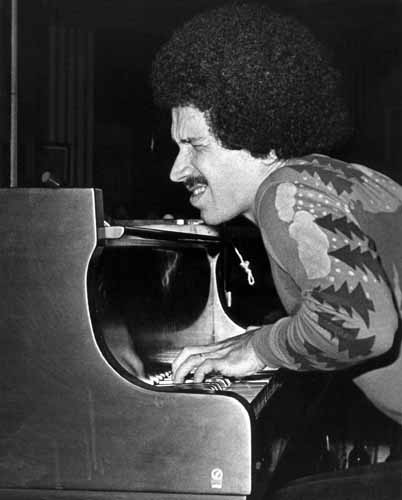
At the SF War Memorial Opera House on Sunday evening I was one of the few lucky people in the world! that experienced a rare solo performance by pianist extraordinaire Keith Jarrett. My older brother Ryan had seen a much younger Jarrett with the Miles Davis group in 1970 in Monterrey and again at the Winterland in SF. Besides Miles' band, he said the Grateful Dead also performed an amazing set that evening as well.
I remember my twin brother Gordon, an alto sax player in high school and college, turning me on to Jarrett’s My Song album way back in 78 while we were both aspiring jazz musicians at McClatchy and Kennedy high schools in Sacramento. The folksy ‘country’ and the beautiful ‘my song’ were my favorites from on that incredible album.
But what’s in my CD machine these days is Jarrett’s 1999 ballad album The Melody at Night With You that he dedicated to his wife Rose Anne with familiar standards like Someone to Watch Over Me, Shenandoah, and my 5-year old daughter’s favorite I Loves You Porgy.
I understand Garrett suffers from Chronic Fatigue Syndrome and struggled to put that album together while recovering from CFS. It is inspiring that he manages to perform and tour despite his CFS.
But the now 60 year old Jarrett played his heart out Saturday night with an amazing mixture of his new totally spontaneous ‘radiance’ music to tin pan alley-ish pieces and gorgeous ballads.
The audience was so appreciative that Jarrett did 5 encores – which included standards like As Time Goes By and It Might As Well Be Spring!

Jarrett’s self-reflection and constantly changing approach to his compositions and performances makes me think about the need for social justice activists and organizers to also constantly reflect on our practice and method as well.

SF Chronicle jazz writer David Rubien Chronicle Interview
did a great interview of Jarrett a week ago -
"Here I am a kind of mainstream accepted entity -- I have a big audience," Jarrett says. "Who else could take on the task or responsibility to try to burst another bubble that has been taken as reality? At the same time, I can explode my own myth.
"It's like a pot of soup on the stove. If you don't stir it occasionally, stuff sinks to the bottom and burns. Just for a brief time, I think I can be the person with the spoon who stirs the soup."
I think those of us working for educational equity and justice need to think and act like Keith Jarrett by always ‘stirring the pot’ and helping others, like students and parents to stir more from the bottom of the pot as well.

Friday, March 17, 2006

Chicago to SF - Immigrant community resistance growing

On March 10, 2006, hundreds of thousands of immigrant community members and grassroots organizations marched and rallied in Chicago to demand Immigrant Rights and Dignity now. On February 25, 2006 hundreds marched and rallied in Oakland, CA's Fruitvale district as well. People are resisting the Post 911 scapegoating of immigrants and our communities all over this country.
Over 10 years ago I participated with numerous grassroots organizations in an immigrant rights hunger strike in the aftermath of the passage of CA's Prop 187 [1994] and in the wake of the racist federal immigration policy changes [1996] at that time as well.
In San Francisco today, many of my comrades in the immigrant rights movement - from groups like the SF Day Labor Program, Chinese Progressive Association, Filipinos for Affirmative Action, Asian Immigrant Women Advocates and others - are supporting a new hunger strike beginning on Tues March 21 at the Federal Building in San Francisco.
More info on the anti-immigrant bills.
Please do what you can to help spread the word - SOLIDARITY NOW.

Hunger Strike for Immigrant rights - Join Asian American/Pacific Islander Contingent

March 21, Tuesday, 5 pm - Opening March, Dolores Park to Federal Building, SanFrancisco

March 22, Wednesday, 12pm the Chinese Progressive Association (415-391-6986) is coordinating participation of the May 1st Alliance, a multi-ethnicalliance of worker-based organizations, and the PressEvent in front of the SF Federal Building connecting African American and immigrant struggles and spotlighting the bills' impact on workers.

March 27, Monday, 11am Filipinos for Affirmative Action (510-465-9976) is coordinating the March toSenator Feinstein's office (Montgomery & Market) and the Press Event. You can also contact FAA if you want to volunteer to be a hunger striker.

For more information re the API Contingent at theMarch 21st Opening March, contact: Miriam Ching Yoon Louie (chinglouie@igc.org) and Elisa Gahng theangelswereastronauts@gmail.com) , Korean Youth Cultural CenterEunice Cho, National Network for Immigrant and RefugeeRights, & Jamae Sori (echo@nnirr.org) Sheila Chung, Bay Area Immigrant Rights Coalition(sheila@immigrantrights.org)

Check http://www.immigrantrights.org for updates about HungerStrike Action Week


SF and Bay Area Teachers are mobilizing to support the hunger strike -

This is from Karen Zapata of Teachers for Social Justice -
Hi all! At our last meeting we decided to mobilize tosupport the actions of the Bay Area Immigrant RightsCoalition in the fight against HR 4437*. Let’s get ateacher contingent out to make a statement againstthis attack on immigrant rights! (visithttp://www.immigrantrights.org/ for more info on the weeklong events they have planned)

RALLY: Saturday, March 25th, 2006, Noon at the FederalBldg. (Golden Gate and Larkin, SF) Teachers 4 SocialJustice will have a banner, RSVP if you can make it!
If you are interested in hunger striking, even for 1day (Friday eve till Saturday eve for example), pleasego to their planning meeting: Monday, March 20 from5-8pm, St. Peter’s Housing– 474 Valencia St., Room120, SF
*The Sensenbrenner Bill (HR 4437) would:
• Turn any person or organization that helps, employs,or provides any service to an undocumented immigrantinto a criminal, including family members.
• Promote collaboration between federal immigrationagents and local police agents, promote the use ofstereotypes and discrimination against anyone that“seems” or “sounds” foreign.
• Promote racial discrimination in employment,housing, and facilitate retaliation against anyimmigrant that defends her/his legal rights.
• Militarize the border even more, which doesn’taddress the root causes immigration, but has causedmore than 4,000 deaths since 1994.
• Will make it illegal to enter this country withfalse documents, which puts refugees and asylumseekers at risk, among others.

for more info visit http://immigrantrights.org/

Thursday, March 16, 2006

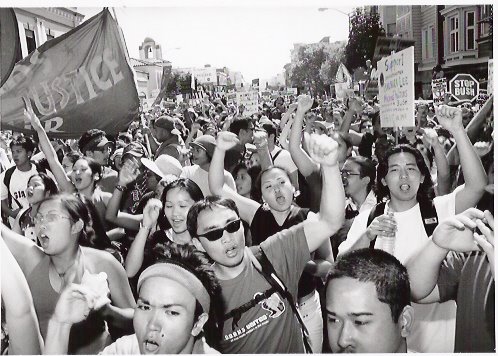
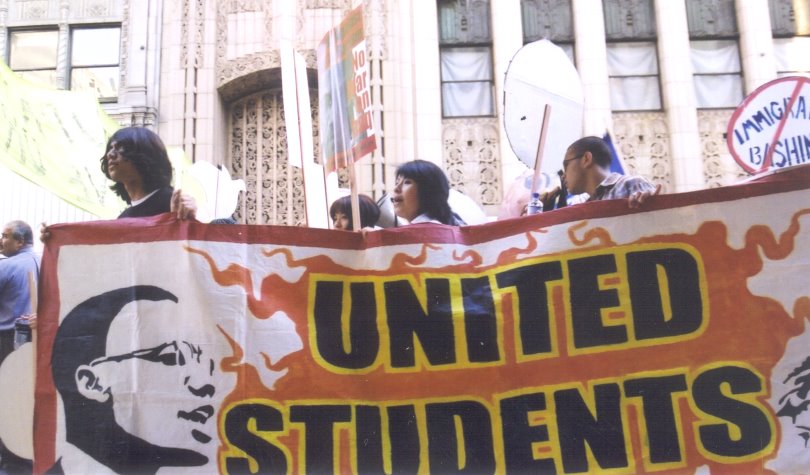
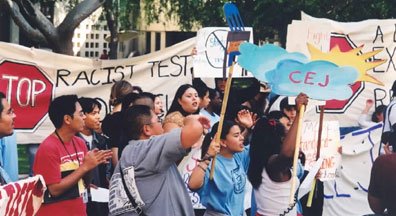
Strength in Unity - Global Days of Action Against War and Racism - SF March 18, 2006

JOIN US and millions of others around the world on the Third @!#$$^ Anniversary of the War on IRAQ - March 18, 2006
Strength in Unity Contingent!
Saturday, March 18, 2006, 10am
Assemble at Powell and MarketDowntown San Francisco
People of Color Solidarity Program at Powell and Market then march to Civic Center where we will join thousands for the ANSWER National Day of Action

Strength in Unity Contingent is sponsored by: International League of People's Struggle (ILPS) Bay Area, Asian Pacific Islander Coalition Against War (APICAW), BAYAN-USA, Al-Awda Palestinian Right to Return Coalition, Alliance of South Asians Taking Action (ASATA), American Friends Service Committee (AFSC) / Asian & Pacific American Community Program (APAC), AA Movement / Ezine, Asian Prisoner Support Committee, Asian Youth Promoting Advocacy and Leadership, babae, Chin Jurn Wor Ping, Chinese Progressive Association, Collision Course Video, Free Palestine Alliance, Korean Americans United for Peace, League of Filipino Students, Malcolm X Grassroots Movement and a growing list of allies and supporters against imperialist war and occupation.
LONG LIVE INTERNATIONAL SOLIDARITY!
WE GOT TO RAGE AGAINST THE BUSH MACHINE!
FROM IRAQ, PALESTINE TO THE PHILIPPINES!
For more information: http://www.apicaw.com

SF School of the Arts Student Assembly on ending racism

JOIN US! MARCH 18, 2006 - 10AM SF's Powell & Market area [look for the red flags]
STRENTH IN UNITY CONTINGENT FOR Global Day of Action to Stop the War and End Racism

One of the best things about being a San Francisco school board member is participating with teachers and students in days of reflection and action like today's School of the Arts Assembly on ending racism.

My friend Lani Silver, the head of the James Byrd Anti-Racism Oral History Project [Byrd was the African American man brutally killed in Texas in 1998], invited me and Public Defender Jeff Adachi to speak to the assemblies of hundreds of SOTA and SOTA Academy students.
Many students spoke, including my colleague on the SF Board of Education, student delegate and SOTA student Jason Wong, on their experiences with racism and how it has impacted their lives. The amazing SOTA orchestra and concert band performed Chick Corea's Spain and a version of Rodrigo's beautiful Concerto De Aranuez. The jazz ensemble directed by Melecio Magdaluyo also performed a Stevie Wonder tune Too High. I told the students that they made me feel so 'at home' with their comments and their amazing performances.

Below are some excerpts from my remarks -


Thank you to my friend Lani Silver and Principal Donn Harris and all of you for inviting me this morning!

I have one thing to confess first – When I was your age [30 years ago] at McClatchy High School in Sacramento [that’s where tomorrow’s speaker Jeff Adachi also went to school] – I wanted to be the next Miles Davis – I was a trumpet player – I did all the school musicals, and my life was music. Some of my heroes today are your teachers like Melecio and others who are trying to encourage and nurture the artists and leaders like you for our future.
Some of miles davis’ bands and ones that were inspired by him were great examples of multiracial unity AND creativity.

Racism and me – Growing up in Sacramento racism and my family’s internalized racism impacted me – part of the racism was the overt racism. Growing up in Sacramento in the 60’s and 70’s – very segregated; lots of racial violence towards Asians, Latinos and African Americans as I was growing up. But there was also the racism from school and the music industry that was not accepting of Asian American jazz musicians, or artists at the time.
Also our urban school districts did not have the resources that other wealthier communities had as well – I call that institutionalized racism in the defunding/underfunding of our schools and public education in general.
And lastly, there was the internalized racism in my family where family members refused to accept that I wanted to be - a jazz musician, not an engineer or a scientist - and that it was ok for young people like me to follow my dreams and to pursue what profession or career that would eventually make me happy.

You and Activism – As you discuss how racism or other forms of oppression have impacted you personally I want you also to think about how you can become [more] active to address the inequalities that surround us as well.

I didn’t really understand racism or racial oppression until I became a student activist in the 1980’s.

College at uc davis and later at sf state helped me understand that racism is institutionalized and pervasive and imbedded in our US culture and it will take every one of us to identify, address and dismantle and change the institutions that perpetuate it.

Drawing from one of my mentors Glenn Omatsu who teaches at CAL State Northridge, I always try to encourage students to learn about their history and to become involved in student and community organizations and movements.

Learning the history of how students have been the main voices for social justice in America and throughout the world is key. If we have any hope of ending racism and building strong anti-racist movements for the future – you folks will have to take the responsibility to lead those new movements.

Students like yourselves have always been the main proponents of social change in America - whether it was students in East LA high schools in the late 60’s fighting against racism, police brutality and racist conditions in the schools [check out HBO’s walkout [Edward James Olmos] later this week], or African American students challenging school racism and segregation throughout this country and in the Feb 1960 student sit-in movement and the Freedom Rides of the 60’s [Lani’s generation], or the 1968/69 Third World student strikes at SF State and UC Berkeley that opened the doors of higher education to me and millions of working class and students of color to learn about our true history and to use our education to serve our communities.

You stand in the shoes of those students that came before you and have a responsibility to carry on in that tradition.

I also brought up some quotes from one of our Asian American elders Yuri Kochiyama, a friend of Malcolm X, to encourage the students to learn from the rich history of multiracial justice movements and to realize their important role in changing history and serving their communities. And, as I usually do, I encouraged them to join me and many of my SF State Students in the Strength in Unity contingent for the upcoming

March 18th Global Day of Action to Stop the War on Iraq! Bring the Troops Home Now! End Colonial Occupation from Iraq to Palestine to Haiti… From Iraq to New Orleans, Fund People’s Needs Not the War Machine!

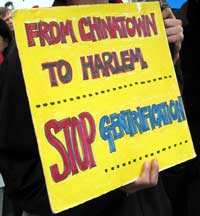
and to support local struggles like the African American community's efforts to resist the new gentrification and redevelopment of the Bay View Hunters Point neighborhoods, the efforts of some of my SF State students to prevent the 'sale of Japantown' to corporations and the destruction of that commuity, and lastly the work of a number of local SF immigrant rights organizations who are holding a hunger strike for immigrant rights at the Federal Building in SF from 3/21-27.

The students and teachers are amazing at SOTA, but also at all of our high schools throughout the district. They are the leaders for our future.

For more info on Lani Silver and the James Byrd Jr. Racism Oral History Project, or to request a brochure, please write to P.O. Box 27333; San Francisco, CA 94127 or call (415) 415-485-4208. The oral history project can be reached at mailto:%20Byrdproject@aol.com. If you would like to reach the Byrd Foundation for Racial Healing write to: 12180 Greenpoint Drive, PMB #244, Houston Texas 77060. You can e-mail the Foundation at Byrdfound@juno.com or call (888) 856-6414.

Monday, March 13, 2006

SF to LA - building youth leadership and linking to Ella Baker and the history of the civil rights movement

One of the most rewarding parts of teaching at San Francisco State University and serving on the school board in San Francisco Unified School District is working with and supporting the new generation of youth leadership in our communities.
I have just posted in the links section of this blog a number of youth groups from LA to SF and Boston to San Diego! - many of these groups are currently working to build stronger youth and community movements for social and economic justice - through their organizing and advocacy work.

Coalition for Educational Justice – Los Angeles
Californians for Justice
CAPAY – Coalition for APA Youth - Boston
Chinese Progressive Association - SF
AYPAL – Oakland
Youth Together – Oakland
LEJ – Literacy for Env Justice
Inner City Struggle – East LA
Adopt-An-Alleyway Project- SF
Y-MAC –Youth Making A Change -SF

One of my friends SF Freedom School teacher Kathy Emery reminded me recently of the great lines from Ella's Song by Sweet Honey in the Rock [Bernice Johnson Reagon and former SNCC freedom singers] which emphasizes Ms. Ella Baker's nurturing of youth leadership -

That which touches me most is that I had a chance to work with people

Passing on to others that which was passed on to me

To me young people come first, they have the courage where we fail

And if I can but shed some light as they carry us through the gale

The older I get the better I know that the secret of my going on

Is when the reins are in the hands of the young, who dare to run against the storm


YouThink has done a good lesson plan for using Ella's Song in the classroom
LESSON PLAN

Friday, March 10, 2006

Students/Parents Challenge Discriminatory California High School Exit Exam

A huge legal battle will be unfolding in the next months as the CA state board of education has failed this past week to provide alternatives to the CA High School Exit Exam [CAHSEE] and tens of thousands of seniors, mostly low income and Black, Latino, ELL's and special education students face being denied diplomas at the end of this year.

Sacramento State University Professor Ken Futernick got it right in his opinion piece in the Oakland Tribune -

There is just one way out of this dilemma. Lawmakers must agree not to deny a diploma to students unless the state can verify that most of their teachers were adequately prepared and that their school environments have met accepted standards. Yes, some graduates will be less prepared than we'd like, but until the state holds up its end of the education bargain, it is we who must shoulder the cost of this inequity, not our students.
The vast majority of the hundreds of San Francisco public school seniors who face denial of their diplomas are low income, English learners, Special Education, African American or Latino students. The lawsuit brought by Richmond High School senior Liliana Valenzuela and hundreds of other students and their parents and supported by attorneys at Morrison & Foerster [Valenzuela v. O'Connell] will force the court to consider questions about inadequate funding, unequal opportunities to learn, and inequity for the vast majority of students in our urban school districts.

For a great source of information on the now landmark Williams v. California educational equity case and ongoing updates on the legal and political challenges to the distriminatory CAHSEE see
Just Schools California
Here's a sampling:

Who’s really flunking California’s high school exit exams?
Opinion by Ken FUTERNICK/Oakland Tribune
Ken Futernick, Ph.D., is professor of education at Sacramento State University.
COME THIS spring, tens of thousands of high school seniors in California will, for the first time, be denied diplomas for not passing the state-mandated California High School Exit Examination. Exam proponents argue that unless students are held to minimum academic standards, diplomas will have little value to employers, colleges, and others who use them as a screening device.

Exit exam option fails
State board rejects alternatives for ‘highly proficient.’By Laurel Rosenhall/Sacramento Bee
The State Board of Education voted unanimously Wednesday to reject alternatives for "highly proficient" students who fail the California High School Exam, echoing state Superintendent Jack O’Connell’s staunch support of the test. "If a student were highly proficient in both math and English, it would be a travesty if they could not pass this test because this test is very simple," said board member Donald Fisher, chairman of the Gap clothing company.

State school board gets behind exit test
Members reject alternatives; students’ fate in judge’s handsBy Jill Tucker/Oakland Tribune
Only a judge can stop the exit exam now. The state Board of Education unanimously rejected any alternatives to the California High School Exit Exam on Wednesday, as recommended by state Superintendent of Public Instruction Jack O’Connell. A pending lawsuit is the last-ditch diploma hope for an estimated 50,000 to 100,000 seniors in the class of 2006 who have yet to pass the test.

Wednesday, March 08, 2006

Farewell Sister Anne Braden - don't mourn, ORGANIZE!

Longtime southern organizer Anne Braden has just passed away. See the memorial on the National Organizer's Alliance Website at NOA on Anne.
Here also was one of Anne's last articles on ending racism in the aftermath of Hurricane Katrina - BRADEN article
For more info - Kentucky Alliance Against Racist and Political Repression

National Organizers Alliance statement on Anne Braden
Anne Braden, a NOA member since 1995, died early Monday morning, March 6th at the age of 81. Anne started organizing in 1948 in Louisville, Kentucky. At one time she told NOA that she started organizing because she grew up white in a racist society, and privileged in a classist society. We invite you to view or post public messages in the Guest Book.
Information on the March 10th Funeral and the April 23rd Memorial, as well as information on where to send gifts in honor of Anne Braden can be found on the webpage of Kentucky Alliance Against Racist and Political Repression.
Anne was on the Firestarters panel at Gathering V. As a veteran anti-racist organizer she talked about the future of the movement. She said, "For white people we have an overwhelming challenge right now. White supremacy, I like that term better than racism, it's more descriptive of what we mean and you don't have to get into endless arguments about whether people of color can be racists. I'm really totally convinced if it weren't for the hold that white supremcay has...this revolution would have happened a long time ago."

Tuesday, March 07, 2006

Students Organizing in Oakland for better schools and a just society!

Hot off their 'wins' with their campaign against deportations and other work Oakland's youth organizing group AYPAL is busy organizing for better school conditions in Oakland schools along with their allies Youth Together. Please join them on Saturday March 11th in Oakland!

Get Hyphee For Education:
I Gotta Testify, My School Needs Some New Supplies!!


A Community Fair
Presented by AYPAL in unity with Youth Together


Saturday, March 11, 2006
Time: 11:00AM-3:00PM
Location: Fruitvale Transit Village (34th and International Blvd.)


***Live Performances and Music by***
* Kiwi and DJ Phatrick
* Brown
Buffalo Project
* Chino Flaco and Young Tey
* Airstep Breakin’
Crew
…and more!
Tell'em What You Want What You Really Want:
AYPAL's Campaign Demands:
§ Fully Funded Schools
§ Equitable Resources across School Sites
§ Full compliance with the William's Case Settlement

Background on Williams VS. California
Williams vs.. California was a class--action lawsuit on behalf of thousands of public school children denied basic educational necessities.
Filed on May 17, 2000, on behalf of Eliezer Williams, a middle school stud ent in San Francisco, and thousands of public school children.
Challenged the State's failure to provide all Californi a students with basic educational necessities.
Claimed that the state is Violating the California Constitution by failing to ensure the plaintiffs are receiving basic educational necessities enjoyed by most children across the State.
The lawsuit focused on: Inadequate learning facilities, lack of textbooks and instructional materials, lack of access to qualified the teachers.
After over four years of litig! ation, the State (under the leadership of Governor Schwarzenegger) agreed to the settle the lawsuit on August 13, 2004
Last year, the California Legislature and the Governor passed laws to implement the settlement.
State agencies have also issued new regulations to comply with the term of settlement.
Williams Settlement provides up to $1 billion
P $800 million for emergency facilities repairs for the years 2004-2008: API Deciles 1-3
P $138.7 million for textbooks for the lowest performing schools: API Deciles 1-2
P $50 million to implement the settlement in 2004-05, including $25 million for a first time, statewide facilities inventory of the lowest performing schools
P Continue the High Priority Schools Grant Program maintaining $200 million a year
P Make it easier for credentialed teachers from other states to gain a California credential

What can I file a Williams complaint about?
Complaints can address instructional materials, teachers, and school facilities. Some examples:
P You are missing textbooks to use in class or at home, or your textbooks or ! materials are unusable due to damage.
P You are in grades 9-12 and your science lab does not have working equipment.
P You have a long-term substitute teacher from the start of the year.
Your teacher is not trained in his or her subject or is not trained to teach English Language Learners, even though ELL students make up 20% or more of the students in your classroom.
Your school facilities are hazardous, have rats or roaches, or need emergency repair.
********************
More info: Tiffany Eng AYPAL Site Coordinator and OASES Program
Director, Oakland Asian Students Educational Services (OASES)
196 10th Street, Oakland, CA 94607
Tel. (510) 891-9928 x16
----------------------------------


For more see John Fong's summary of AYPAL's immigrant rights/anti-deportation campaign -
One Love, One Nation, Stop Deportation
AYPAL and DataCenter document devastating impact of deportations on immigrant families
by John FongAsian/Pacific Islander Youth Promoting Advocacy and Leadership

Over 400 people showed up to a rally at the Oakland, California Federal Building on March 22, 2004 to call on Congresswoman Barbara Lee (D-Oakland/Berkeley) to take a lead role in sponsoring legislation to stop deportations that are devastating hundreds of thousands of immigrant families every year.
The rally also featured the release of the report Justice Detained, produced by the DataCenter and Asian/Pacific Islander Youth Promoting Advocacy and Leadership (AYPAL) to document the hardships that the deportations cause. (download report)
The report release and community rally followed an 18-month, One Love, One Nation, Stop Deportation campaign organized by AYPAL, an Oakland-based, 300-member youth organization seeking to change the relationship of power between young people and policy makers.
The campaign aims to reform and repeal the harshest elements of the 1996 Illegal Immigration and Immigrant Responsibility Act (IIRIRA), which mandates the detention and deportation of non-citizens convicted of crimes with sentences of one year or more of jail and/or probation combined. ...
As in all AYPAL campaigns, high school age youth have made all strategic decisions and done all the work for the Stop Deportation campaign, including working with the DataCenter's Youth Strategy Project to do research. Realizing that in order to move Congress, they would have to appeal to a much larger community base than in their previous, mostly local, campaigns, the AYPAL youth activists spent months finding families directly hurt by IIRIRA deportations and willing to share their stories, and to statistically document the wide-ranging impact of the unjust legislation. ...
VICTORY -
In May, AYPAL achieved a victory when Barbara Lee agreed to co-sponsor legislation that addresses almost all the group's demands. The Keeping Families Together Act, introduced by Rep. Bob Filner (D-San Diego), would repeal IIRIRA's loose definition of what counts as an "aggravated felony" and restore residency or status rights to immigrants who have been affected.
for further information contact:
John Fong, Asian/Pacific Islander Youth Promoting Advocacy and Leadership (AYPAL), 310 8th Street, Suite 201Oakland, CA 94607, tel: 510-869-6062, fax: 510-268-0202.
to check out the Justice Detained report by AYPAL - click here
other articles regarding AYPAL advocacy and organizing -
International Solidarity and Peace with Korea
Mapping the impact of deportations
Fighting for Ethnic Studies in the High Schools
Dismantling the CA Youth Authority and youth prisons

Monday, March 06, 2006

Improving Teacher Quality - Rethinking Schools 2006

Rethinking Schools in its Winter 2006 issue - hits it right on the head again with their great special issue on school reform strategies aimed at improving quality teaching, especially in urban school districts like San Francisco, Los Angeles, and Cincinatti.

"Districts, schools of education, unions, and legislatures all have a role to play in improving teacher quality. The time has come to stop viewing teachers as a problem and instead treat them as professionals deserving of respect, with important insights in how to improve the classroom.

One thing is certain: Unless this country addresses the vast racial and economic inequities that plague our schools, no one's definition of quality will be reached."

The editors point to the importance of teacher education programs around the country and urge them to "equip prospective teachers with a vision of what's possible as well as with the tools to dismantle the unjust."

Schools of education can also enhance quality by providing ongoing support for their graduates — whether through collaborations with
district and union mentoring programs, or through independent social justice teacher organizations...

The editors from Rethinking Schools also point out the important role of teachers unions in improving and reforming our educational system:


Teacher unions also can provide leadership. They are ideally situated to sponsor
curriculum libraries, ongoing seminars, and teacher work groups. They can also be a forum for teachers to discuss how to address and resist federal and district mandates that negatively impact teaching. Too often teachers rely solely on school districts to design curriculum and strategy workshops, but teacher unions could create their own collaborative communities of study and see their missions as developing an expanded professional capacity and sense of responsibility among their members.

In conclusion, they say that we must move beyond the 'silver bullet' approach to school reform:

School districts and individual schools must provide ongoing, embedded professional development and move beyond episodic visits of consultants and "teacher-proof" programs. School districts need to take a leading role in facilitating processes where teachers can share their expertise through districtwide curriculum conferences, ongoing classes, mentoring programs, and inservices that model outstanding teacher practices.

A number of the changes outlined above can be implemented even within our current and completely inadequate levels of school funding. But all of the changes require a radical shift in thinking and an acknowledgement that the knowledge and leadership of classroom teachers are the bedrock of improved teacher quality.
In the long run, addressing the crisis in teacher quality requires a multi-faceted mobilization that demands adequate state and federal resources for our public schools. To be most effective, this mobilization must include teacher unions, parents, and community organizations in alliance with local school boards and district administrators.
Improving teacher quality is key to building a better public school system. But it is not a matter of exhorting educators to do more with less, securing more teacher-proof curricula, or making test-driven threats. It's a matter of reform grounded in the classroom, of respect for teaching as a profession, of a broader vision of social justice, and of improved organizing and collaboration.
All of us — teachers, parents, and union, community and school leaders — have a role to play.

For the full editorial and some online articles from the recent Issue of Rethinking Schools
click here
http://www.rethinkingschools.com/archive/20_02/edit202.shtml

Saturday, March 04, 2006

Parents & Teachers support language equality, bilingual education & HBO's Walkout

This week at the CABE [CA Assn for Bilingual Education] gathering in San Jose, CA parents, students and teachers cheered the premiere of the upcoming film Walkout.

[See CABE's great comments on the recently released AIR/WestEd study of Post Prop 227 education for English Learners]

CABE parents, students and teachers said that we need to understand our history of youth movements and community movements so that we can more effectively build new movements to change our society and school system today.
------------------

Wednesday evening I also worked with the SF Freedom School and Mission High School teachers to view and discuss the great film With All Deliberate Speed [by the director of Hoop Dreams] which highlighted the African American led community movements that emerged to create equality in schools and communities throught the 50's, 60's and 70's.

Understanding the lessons of the Chicano movement, the Civil Rights and Black Liberation movements are key for teachers and youth to help point us towards new strategies for educational justice today.

------------------
JOIN US!
On March 9 [Wed evening] Please join the SF Freedom School with another great film, dinner and a discussion on the importance of the labor movement in the fight for better schools -

The special guest will be Lawanna Preston, political director for SEIU Local 790, and a parent and longtime social justice leader.

MARCH 9 Black Labor History: the politics of divide and conquer
Film: Struggles in Steel (58 min, 1996)

Struggles in Steel documents the shameful history ofdiscrimination against black workers and one heroic campaign where they won equality on thejob.Interviews with more than 70 retired black steelworkers tell heart-rending tales of struggles with thecompany, the union and white co-workers to break out of the black job ghetto.
http://www.educationanddemocracy.org/ED_SFFS.html

Monday, February 27, 2006

Big Business Agenda of Mayoral Control of School Boards creeping into San Francisco and Los Angeles

Despite what some anti-democratic supporters of Mayoral control have said, the record in New York City seems a mixed bag. San Francisco and Los Angeles parents, teachers, advocates of public education are looking closely at some of the big-business driven efforts to curtail democratic participation in school board elections in other big cities...

- see LA Times writer Duke Helfand's excellent piece from today's LA Times - LA TIMES reporter Duke Helfand's piece from 2/27/06

The ABCs of Mayoral Control of Schools
New York's Bloomberg has powers Villaraigosa seeks, but his changes offer a lesson in conflict.

February 27, 2006NEW YORK — Mayor Michael R. Bloomberg won control of this city's schools nearly four years ago and swiftly unleashed a dizzying string of reforms.Bloomberg and his schools chancellor, former federal prosecutor Joel I. Klein, slashed administrative jobs, ordered uniform reading and math programs and hired parent coordinators for New York's 1,400 schools.The pair converted warehouse-like high schools into smaller campuses and ended the practice of promoting failing students to the next grade. Their underlings even dictated how teacher bulletin boards should be designed.But the top-to-bottom overhaul came with a cost: The mayor and his schools chief have alienated teachers, parents and administrators, leaving many in the nation's largest public school system feeling disenfranchised and afraid to challenge City Hall.

The changes in New York — and the stresses they have exposed — offer possible warnings to Los Angeles Mayor Antonio Villaraigosa as he weighs his own takeover of the Los Angeles public school system.

Bloomberg, a billionaire businessman, is unapologetic about his policies and his hardball style of governing the school system, which has 1.1 million students. For the first time in years, he said in a recent interview, New York's schools have a clear line of authority with a single public official accountable for results."I don't think any serious person would suggest that we should run this school district by committee or that we should have a referendum on every change," said Bloomberg, 64. "The public said we want a decision-maker to go in there and do it right. You can't please everybody." Whether mayoral control has made a measurable difference in New York is a matter of debate....

the main punch lines of the article:

1. "But the top-to-bottom overhaul came with a cost: The mayor and his schools chief have alienated teachers, parents and administrators, leaving many in the nation's largest public schoolsystem feeling disenfranchised and afraid to challenge City Hall."

2. "Teachers and principals alike said the new top-down organization has fostered a climate of fear and intimidation."

3. "In New York, experts believe that mayoral control has allowed Bloomberg and Klein to push through their student retention policies, for example, because they faced no opposition from elected boardmembers. "

3. "They are able to crack the whip more than is common in most cities," said Jeffrey Henig, a political science professor at Columbia University's Teachers College who studies the politics ofschool reform. "They sometimes have gone in with a bit too much haughtiness … and cut themselves off from parent groups and teacher groups who know a lot from years of experience at the street level."

Latino Voice for Peace March - Mexico Border to the Mission District in SF; Edward James Olmos' Walkout: Based on the East LA Student Protests of 1968

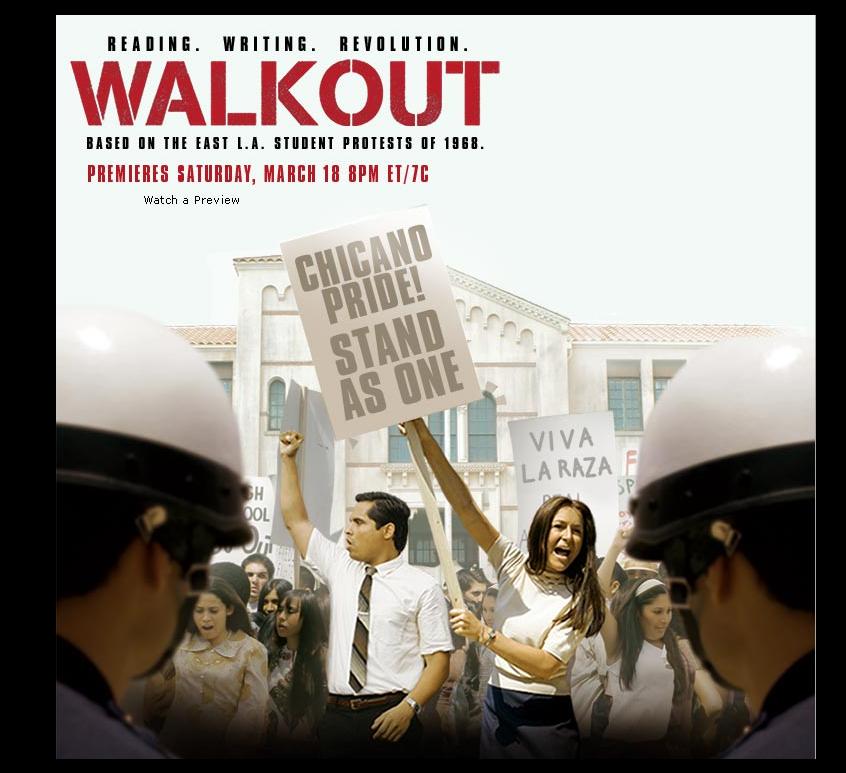
New HBO film about the Chicano/Latino struggle for Self-Determination and Educational Justice in East LA premieres March 18th:
Reading Writing Revolution!
Walkout: Based on the East LA Student Protests of 1968
Edward James Olmos directs this HBO Films drama that tells the true but little-known story of a group of Chicano students who staged a compelling 1968 walkout to protest the injustices of the public high-school system in East Los Angeles. Starring Alexa Vega as Paula Crisostomo, an idealistic honor student who refuses to "play it safe" in a school system that clearly discriminates against Chicanos, instead banding with a group of activists to coordinate a multi- school walkout of students. Mentored by her charismatic teacher Sal Castro (Michael Peña), Paula learns that sometimes the price for progress is high -- but it's ultimately worth paying.
HBO PR for film

Latinos Against the War links:
http://www.latinoscontralaguerra.org/
http://www.thenation.com/doc/20051003/lovato

Connecting the War on Latinos and the Poor today with the Chicano Moratoriums of 1970 - 35 years later -
http://www.fightbacknews.org/2005/05/chicano35.htm
From United for Peace and Justice -
http://www.unitedforpeace.org/article.php?id=188
From Freedom Road -
http://www.fightbacknews.org/2005/04/latinosagainstwar.htm
http://www.fightbacknews.org/2003-2-spring/latinosvswar.htm
----------------------------

MARCH FOR PEACE
Raising Latino Voice of Opposition to the War in Iraq

Objective: A 241 mile march that aims at ensuring thatthe Latino voice of opposition to the War is heard loud and clear across the Americas.
WHAT/ WHEN: Fernando Suarez del Solar, Pablo Paredes,Camilo Mejia and Aidan Delgado will lead a coalition ofthe willing across this 241 mile quest for peacestarting in Tijuana, Mexico, going through Marine Corps Depot Camp Pendleton to the Cesar Chavez burial site inLa Paz, CA, culminating in The Mission district of SanFrancisco with a memorial ceremony and blood drive.
The March will begin on 12 March 2006. The coalition ofthe willing will arrive at La Paz, CA on 22 March 2006 and culminate in San Francisco from 26 March 2006 to 27March 2006.
WHY: Latinos represent nearly 15% of the US populationand 11% of the US military, with many serving in combator hazardous duty occupations. In addition, anestimated 20% of the fallen service members in theearly months of the invasion were Latino. With thecontinued growth of the Latino population and its vitalimportance to the future of this country, it is time for the Latino community to become an active and vocalpart of the 60%+ of US citizens that oppose this War.It is also time to show the Latino community that theyhave a voice and a right to fight for peace andstability. Fernando Suarez Del Solar is committed toself-sacrifice. At 50 years of age he cares more aboutending this war than even his own health. We make thiscall not only to the Latino population but to all thosewho agree with our message "No more bloodshed in Iraq".
About the Route and Structure
Why 241 miles? Last Year was the 75th anniversary of Gandhi's Salt March, one of the most impactful non-violent acts of protest and civil disobedience inpursuit of social justice in history. Gandhi marched241 miles to free India from British imperialism. This legacy has been vibrant in all Latino Social Justice movements. Cesar Chavez was a disciple of Gandhi. We wish to rekindle this tradition and one year after the75th , we wish to put Gandhi's spirit into practicerather than wait for the next milestone to honor hismemory.

About the march leaders:
Fernando Suarez Del Solar Is the father of one of the first Latinos to die in Iraq. He was lied to about his son's death, but found thetruth in Iraq with the help of a well know recentvictim of the war, co-anchor of ABC's World NewsTonight, Bob Woodruff. Fernando's son Jesus stepped on an illegal US cluster bomb. Since then Fernando has been a tireless advocate for peace.
Pablo Paredes Navy warresister who refused boarding an Iraq bound ship on Dec. 6th 2004. He was court martialed, sentenced andnow speaks out for Peace.
Camilo Mejia Served one tour in Iraq and then became a National Guard war resister. He was jailed for nine months for his opposition to thewar and is now a prominent anti-war speaker and memberof Iraq Veterans Against the War (IVAW).
Aidan Delgado Is a Conscientious Objector of the Iraq war. He served at Abu Gharib and now tours the country withslide shows of the prison abuses.

About the march route:
Tijuana - The march from Tijuana across the US-Mexico Border is a symbolic gesture of Peace without borders. As Jesus Suarez del Solar was born and educated in this beautiful city, our marchwill also be born in Tijuana, and we also wish that our gesture serves to educate around border issues andpeace.
Escondido Escondido is the city in which Jesuswas recruited and today is buried. We wish to trace Jesus' steps and then continue his fight for thechildren of Iraq and America in the name of peacerather than war.
Pendleton Marine Corps Depot Camp Pendleton is the place where Jesus and many of ouryouth are trained for war. Jesus deployed fromPendleton to Iraq. We wish to rewrite history with our march and deploy our soldiers from MCD Camp Pendletonto La Paz. La Paz - La Paz translates to The Peace, and is the burial site of Cesar Chavez. We wish to evoke his legacy and lead our coalition to peace.
San Francisco's Mission district is predominantly Latino. We will hold a service in the mission to commemorate Jesus. We will also stage ablood drive. The blood donated will be equally distributed to cope with Iraqi as well as coalition needs.

The March will arrive in all the following cities:Tijuana, San Diego, Escondido, Camp Pendleton, SantaAna, Los Angeles, San Fernando, Palmdale, Rosamond,Keene (La Paz), Fresno, San Jose, and San Francisco.
MORE INFO ON THE MARCH

Thursday, February 23, 2006

Marcus Shelby's Port Chicago

One of my favorite artists in the world is SF bassist and progressive activist Marcus Shelby. He's a true renaissance man ala Paul Robeson - not affraid to speak and write about social justice and to use his art to raise people's consciousness and spirits to struggle for a better world.
I enjoyed a great evening last night at Yoshii's nightclub in Oakland with my school board colleague Mark Sanchez and my 5 year old daughter Jade to hear the Marcus Shelby Orchestra's performance and CD release of his latest 'Port Chicago' which was commissioned by the civil rights organization Equal Justice Society. Thanks to my friend and SF green party leader & school board candidate Kim Knox for introducing me to Marcus. Click here for more info on Marcus Shelby .
Port Chicago - Eric says 3 thumbs up. :-)

From the album notes -

Port Chicago is remembered as the northern California naval base where a devastating explosion in July 1944 killed more than 320 men, predominantly African American sailors, and injured 400 others. The sailors objected to the racial discrimination and manifestly unsafe working conditions at the base where only blacks were assigned to loading ammunition on ships. When 258 of the sailors protested in a work stoppage the Navy called it mutiny, setting in motion the largest mutiny trial in U.S. Navy history. In a sensational court martial 50 young black sailors were unjustly convicted. Thurgood Marshall, then special counsel for the NAACP Legal Defense Fund, flew to San Francisco to investigate the case. He charged that the young sailors were being made scapegoats for the conditions the Navy allowed at the base. Following the military trial, Marshall filed a strong appeal brief on behalf of the sailors, highlighting the racial discrimination at the base and in the trial. Although his appeal was rejected by the Navy Judge Advocate General, the public pressure
generated by a nationwide campaign in support of the sailors compelled the Navy to revamp its policies and begin the process of desegregation-a major civil rights victory. Although the imprisoned sailors were later released under a general amnesty after the war, their mutiny convictions have never been overturned. The injustice of their convictions cries out for redress, and reminds us of the price paid by many unsung heroes in the struggle for civil rights and justice.

http://www.marcusshelby.com/gateway.html

Wednesday, February 22, 2006

SF's John SWETT Elementary School - WE SHALL NOT BE MOVED!

San Francisco Bay Area Independent Media Center - FULL ARTICLE
This School MUST NOT be moved!!!
by Dee Gray and Lisa Gray-Garcia/PNN Wednesday, Feb. 22, 2006 at 10:18 AM

Students, parents and families of the Fill-no-mo/Western Addition face more displacement and removal . This time its from the San Francisco School Board

"I am a member of the get-along club" the excited voice of 17 year old Tamicka Baker, blasted through the phone. POOR staff had been referred to this powerful young African descendent woman by her mother, Anitra Baker, mentor , teacher and paid parent laison at John Swett Elementary School. John Swett, an elementary school located in the Western Addition neighborhood, is one of the schools slated for closure and then subsequent merger with John Muir Elementary School by a 4-3 San Francisco school board vote.
For the many dedicated, involved and engaged, parents, grandparents, uncles, aunties, cousins and friends who make up the innovative, multi-cultural, multi-generational mix that is John Swett, this was more than a blow, this is the devastation of a community.
There are other words that come to mind for the closure of this majority African Descendent school located in ground zero of the Western Addition aka Fill-no-more, which effectively "relocated" and "removed" several thousand of its Black residents not so many years ago under the myth of "redevelopment. Words like Diaspora, descimation and destruction.

As parent and grandparent of a 2 and half year old boy, Dee ( my mother and co-editor of POOR) and I’s worldview is informed by Afro-centric values which means we are already feeling the struggle to be involved and stay involved in the life and education of a child once they enter a Euro-centric (Amerikkkan) public school system. A system based on Western values of separation and independence which inherently does not respect the direct involvement of parents and grandparents in the learning, teaching, and mentoring process of a child while he or she is on school property. A system not based on eldership and interdependence.

John Swett Elementary School is different. Very different. "We are on campus with the kids as paid parent laisons,” said Anitra Baker, “ I teach them dance and music, my husband, Dawayne is a coach, yard monitor and mentor, and then we open our home to kids on the weekend to help them with their homework. The school is an extension of our home.” After Dee read about the slated closure of the amazing John Swett, she was stunned. John Swett, Dee realized, was in fact an example of the Afro-centric “Village” in action i.e., eldership and interdependence of families, children, teachers and community. The “village” that everyone refers to but never really understands. A village that is taking care of its people, its children, its families. A village about to be dismantled. “The older girls who graduated (From John Swett) act as mentors and tutors to the younger kids”, Anitra stated. D

ee spoke first to the dynamic Anitra Baker, who has seven children who are either attending school there or are alumni of the school and continue to act as mentors to the younger children in the Get Along Club, The Little Sisters with Soul and/or the choir that Anitra leads on campus. “Eldership says that everyone older than you is responsible for your well-being and welfare. So it makes no difference whether its your sixteen year old cousin and you are nine, that person is responsible for looking out for you, for teaching for guiding. Everyone in the village is responsible for making sure that the next generation advances to the next higher level, to a person of good character.”

Excerpt from The Nature of Mama an interview with Dr. Wade Nobles from POOR Magazine Volume 4 MOTHERS “Closing this school is a crime” In our search for answers about the closure vote, we sought out San Francisco School Board member Mark Sanchez, who along with Sara Lipson and Eric Mar voted to keep Swett open. Mark outlined the stated reasons for the Muir/Swett proposed merger

It's overall budget cuts and the loss of several thousand students from the system
It’s a proximity issue; there are two schools in the Western Addition, John Swett, a somewhat small school which has an 81% enrollment versus John Muir which is a large school which is under-enrolled with 55% capacity.

Mark went on to describe another more problematic, highly controversial use for the John Swett School, i.e., its proximity to the school board and therefore convenient office space for the School board [or 'school district'].

“If the proposed merger goes through it would be very difficult to replicate the programs and teachers and community that exists now in John Swett, I know of at least one dynamic teacher who is not planning to move to John Muir,” Mark added Mark’s reference to “the programs lost in the merger” would be Swett’s extremely innovative arts-based curriculum, which unlike John Muir is not based on the No Child Left ( Alive) Behind scripted curriculum inspired mandates that many conscious teachers and parents find harmful to students. Mark continued, “Mergers are not the only way to deal with these kinds of issues, for example Ortega and Sheridan were not merged, because they are going to pursue becoming K-8 schools,” Mark concluded, “A sustained amount of protest can urge the board to bring the school up for discussion."
....
FULL ARTICLE

CA - Morales Execution halted

wow! - THIS JUST IN - Morales execution halted [or check here for the National Coalition to Abolish the death penalty]
State of California unable to meet Federal Court order
Religious leaders and protestors join a small rally outside San Quentin prisonto voice opposition to the death penalty. Moments before it was announcedMorales' execution had been halted.

Photo(s) by Luke Thomas - By Pat Murphy and Luke Thomas
February 21, 2006, 7:00 p.m.
The execution of Michael Morales will not occur tonight due to a Federal Court order the State of California certified it could not meet.
Morales, 46, was originally scheduled to be executed by a three-drug lethal injection.
Convicted murderer Morales was scheduled to die at 12:01 a.m. today, but the time was pushed back to 7:30 p.m. due to anesthesiologists' refusal to participate.
Throughout today the State sought permission to administer one five-gram injection of sodium pentathol rather than the usual three-injection series which begins with anaesthesia.
Federal Judge Jeremy Fogel granted the request this afternoon but ordered the injection be administered by medical professionals.
"Accordingly, while defendants may proceed with the execution this evening using only sodium thiopental, they may do so only if the sodium thiopental is injected in the execution chamber directly into the intravenous cannula by a person or persons licensed by the State of California to inject medications intravenously. The dosage used shall be at least five grams of sodium thiopental to be followed by a 20 cc saline flush as provided in Protocol No. 770,'' Fogel wrote in a ruling issued this afternoon.
That requirement apparently spared Morales his life tonight.
Shortly before 6:30 p.m. the California Attorney General's Office announced the State could not assure medical professionals would administer the injection.
Crittendon said San Quentin Warden Steven Ornoski made the decision to indefinitely postpone the execution at about 5:45 p.m.
"After lengthy discussions, the decision has been made that the state cannot proceed with the execution under the conditions set by the district court,'' Ornoski's statement read.
Crittendon said prison officials expect that an evidentiary hearing will take place May 2 or 3 on the constitutionality of the state's lethal injection process.
The announcement halted the 7:30 p.m. scheduled execution now thrown into indefinite delay.
Defense attorneys are expected to appeal to Federal Courts on the basis of constitutionally prohibited "cruel and unusual" punishments. ...
full article with great coverage from Pat Murphy and Luke Thomas - SanFranciscoSentinel.com

Sunday, February 19, 2006

Pinoy Teachers Network - SF's history of Language Equality and Respect for Bilingualism/Multilingualism

Check out The Pinoy Teachers Network - be part of a growing network of Filipino teachers from all over the world. Exchange stories and learn more from each other!
PINOY TEACHERS NETWORK

San Francisco Pilipino communities have historically struggled for educational rights and community empowerment -

Wednesday, February 15, 2006

San Francisco Freedom School - Mission High School Teach Ins March 2, 9, 16, 23

Aint Gonna Let Nobody Turn US 'Round!

Attention public and private school teachers
There will be FREE FREE workshops and discussion to learn and address
"How Social Movements Happen"
Through discussion, documentaries, docu-dramas and guest speakers
A number of like-minded educators will gather to:

->Learn how to integrate Civil Rights history into your curriculum

->Learn how Civil Rights history can to help you understand today’s political and social problems

->Learn how Civil Rights History can provide hope in dark times, and nourishment for depleted activists

Join us!!!
Four THURSDAYS, 5-8PM
Free Food and Drink
Mission High School
Room 213
3750 18th Street, between Church and Dolores Streets
March 2, 9, 16 and 23
(2006)

To get more information and to register, call (415) 703-0465, email mke4think@hotmail.com or go to SF Freedom School
Sponsored by SF Freedom School
and the Liberation Curriculum (King Institute, Stanford University)
2006
Mission High School Teach-In
Come to any of the sessions: they are designed to be independent of each other but also build upon each other. A brief introduction to the Liberation Curriculum at the King Institute will be given at each session with curriculum handouts relevant to that night’s topic.

MARCH 2 Brown v Board and the SFUSD Consent Decree
Film: With All Deliberate Speed (excerpts, 2004) History ignored is history repeated. In the case of Brown Vs. Board of Education that the concept of "separate but equal" school segregation was unconstitutional. But in this landmark ruling, the Justices used a four-word phrase that many believe has delayed the process of change for over 50 years: "With All Deliberate Speed."
Guest Speakers: SFUSD parent Kim-Shree Maufas and SFSU professor and SFUSD board
commissioner Eric Mar

MARCH 9 Black Labor History: the politics of divide and conquer
Film: Struggles in Steel (58 min, 1996) Struggles in Steel documents the shameful history of
discrimination against black workers and one heroic campaign where they won equality on the
job.Interviews with more than 70 retired black steelworkers tell heart-rending tales of struggles with the
company, the union and white co-workers to break out of the black job ghetto.
Guest Speaker: To Be Determined

MARCH 16 Direct Action: key concepts
Film: A Force more Powerful (Nashville selection, 30 minutes, 2000). In the 1960s, Gandhi’s
nonviolent weapons were taken up by black college students in Nashville, Tennessee. Disciplined and strictly nonviolent, they successfully desegregated Nashville’s downtown lunch counters in five months, becoming a model for the entire civil rights movement.
Guest Speaker: Civil Rights Movement veteran Bruce Hartford (CORE, SCLC 1963-67,
Alabama, Mississippi)

MARCH 23 Local leadership: mobilizing a community for social, political & economic action
Film: Standing on my Sisters’ Shoulders, (60 min, 2002)Most of us have never heard of Fannie Lou Hamer, Annie Devine, Unita Blackwell, Mae Bertha Carter, or Victoria Gray Adams. But in a state where lynching of black males was the highest in the nation, a unique opportunity for women emerged to become activists in the movement.
Guest Speakers: Civil Rights Movement veteran and song leader Wazir Peacock (SNCC, Mississippi & Alabama), Civil Rights and Womens’ Movement veteran and Chude Allen (Freedom Summer, Mississippi)

More info - www.educationanddemocracy.org
More info on the Summer 2006 - Freedom School

Tuesday, February 14, 2006

Valentine's Day 2006 - SF Teacher's Need Love Too

Dozens of SF teachers rallied this evening to urge the School Board and New Superintendent Gwen Chan to 'show some love'!
With Valentines, a big kind-of-ugly cupid-guy, candy and big heart shaped signs calling for safer schools, fair pay and equal protection, the teachers and community supporters raised awareness about much needed raises and fair compensation for workers in the school district.
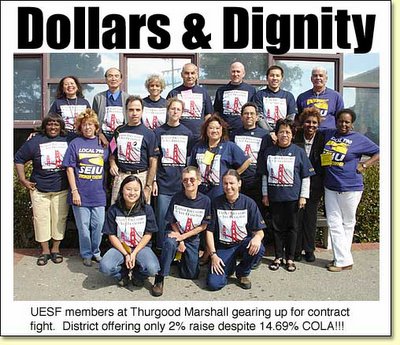
United Educators of SF is fighting for a fair contract within our school district.

Saturday, February 11, 2006

Bush's budget boosting the military while continuing to cut education

Scott Lilly provides an excellent analysis of how the Bush administration has been drastically cutting education and increasing military and 'homeland security' spending over the last several years. The Center for American Progress' Lilly gives a useful historical acount of how Bush has backtracked on education funding. See the great chart for a quick review -

The Bush slogan of “leave no child behind” seemed to imply that he recognized an urgency to the problem that surpassed the commitment of both Clinton and Bush’s 2000 opponent, Al Gore....

...In January of 2003 the President signed the No Child Left Behind Act,” which authorized a more than 50 percent increase in federal assistance to local schools over the course of the next five years. The budget which he presented to Congress a few weeks later funded only part of that increase, but the direction was still upward and real per capita federal spending for education increased to almost $200 in the Fiscal Year 2003 budget. But that is where it stopped. Fiscal 2004 was essentially flat and since then education funding has been in a nosedive....

...But the “reverse” was not complete until this morning, when the President sent Congress his fiscal 2007 budget request. The $54.4 billion that the President this morning asked the Congress to appropriate for the Department of Education for the coming year is $2 billion below the level available for the current year. Real per capita spending under that budget will plummet to $165, or $3 less than the level contained in the appropriation bill signed by President Clinton a few weeks before Bush was sworn into office.
The Bush team will no doubt argue that money can’t fix everything—that there are issues in education that won’t go away no matter how much money you throw at them. That may well be true, but it is also true that you can’t expect class sizes to go anywhere but up and you can’t expect teacher quality to go anywhere but down if you reduce the funds available to local school districts. The burden of the increased testing now mandated by the federal government simply adds to the downward financial pressure.
Even more distressing is the fact that the new Bush budget appears to plan for continued cuts in federal support of local schools for the foreseeable future. All of the increased support of local schools achieved during the Clinton administration (in real per capita spending by the Department of Education) may well be eliminated in the final two budgets of the Bush administration—the administration that used education as a measure of its compassion.
This is necessary to offset a tiny fraction of the debt being created by tax cuts focused on the most well-to-do in our society.


FULL ARTICLE by Scott Lilly.
--------------------------------------------------

For the mainstream coverage of the Federal Budget - see

COMMON DREAMS

Published on Monday, February 6, 2006 by the Associated Press
Bush's $2.77 T Budget Boosts Defense
by Martin Crutsinger

President Bush sent Congress a $2.77 trillion budget plan on Monday that would boost spending in the war against terror but squeeze a wide swath of other government programs to deal with exploding budget deficits.
Bush, hoping to get his domestic agenda back on track after a year of political setbacks, unveiled a budget blueprint with a heavy emphasis on keeping the country strong militarily. It would also make his first-term tax cuts permanent, at a cost of $1.4 trillion over 10 years, and still achieve his goal of cutting the deficit in half by 2009.
Almost one-third of the targeted programs are in education including ones that provide money to support the arts, vocational education, parent resource centers and drug-free schools.
Senate Minority Leader Harry Reid Achieving these two goals constrained Bush's efforts to offer new initiatives although he did put forward a few mostly modest programs to deal with American anxieties about global competition, soaring energy costs and skyrocketing medical bills.
But among the losers were 141 government programs that Bush sought to sharply reduce or eliminate entirely. Almost one-third of the targeted programs are in education including ones that provide money to support the arts, vocational education, parent resource centers and drug-free schools....

FULL ARTICLE
--------------------------

The Center for American Progress's John Podesta, Cassandra Butts and John Halpin have provided a good critique of Bush's overall budget with good suggestions for how to counter the conservative spin on the issues -

http://www.americanprogress.org

More info -
www.americanprogress.org

Thursday, February 02, 2006

Immigrant Communities and Youth Resist Scapegoating

1. Excellent analysis of the ongoing attacks on immigrant communities in the US and our people's resistance to oppression by Lee Siu Hin of the National Immigrant Solidarity Network -
The Upcoming Battle for Immigrant Rights: A War on the Home Front That will Affect Millions of People
2. Immigrant Youth build Bay Area campaign
------------------------------------------

Released 02 February 2006
By Lee Siu Hin - National Immigrant Solidarity Network
The Upcoming Battle for Immigrant Rights
A War on the Home Front That Will Affect Millions of People

For the Full Article

For the past two years, the United States has been quietly pursuing its largest anti-immigrant campaign in 50 years. With the U.S. losing the war in Iraq, President Bush, right wing Republicans and even many Democrats are once again using immigrants as scapegoats (along with promising more money for domestic programs, tax cuts for the rich, faith-based initiatives to attack abortion rights and the rights of LGBT people) in order to secure conservative/right-wing votes for the November 2006 midterm elections.
Attacking recent immigrants is historically nothing new.
Since the Chinese Exclusion Act of the1890's, different immigrant groups have been targeted when they begin arriving in this country: Irish, Jews, eastern Europeans, Japanese, Filipinos have all been the target of attack at various points in U.S. history.
This time the forces of racism are once again spinning rhetoric to blame immigrants (especially the Latino immigrants) for causing all the world's problems--arguing that they could be potential terrorists who wish to harm our country and 'welfare queens' who plan to steal money from our social programs--a potent scare tactic which exploits the fear and anger of the poor and working-class communities, who are the victims of corporate downsizing and the government's budget cuts because of the war in Iraq.
Not surprisingly, the right-wing anti-immigrant forces have been using the Minutemen campaign to exaggerate the so-called "crisis" of undocumented immigrants after September 11.
What happened in 2005 was a chain of events, each one carefully crafted to build to a climax of mindless xenophobia. From the first appearance of the Minutemen in the beginning of the year to the passing of the Sensenbrenner-King Bill right before the year's end, this was a well coordinated plan serving the agenda of the right-wing, racist anti-immigrant forces, and most immigrant, community and social justice activists were caught-off guard.

The Minutemen...
The Passage of the Sensenbrenner-King Bill...

What Should Activists Do Next?
Our struggle will be long and hard, but that doesn't mean we should give up hope. While the House vision of the Sensenbrenner-King Bill has passed, we still can mount a strong opposition against the upcoming Senate version, which will be introduced and debated sometime in February, 2006.
Unity is very important! This is NOT only about immigrant rights--it is also about human rights for everyone. An injury to one is an injury to all!
Why? So far the right-wing anti-immigrant forces have successfully created a "common sense" message of links:
September 11= counterterrorism = anti-immigrants =
invade/occupy Iraq/Afghanistan = tax cut = faith-based initiatives.
They are also calculating that the left will not unify strongly enough to build a broad-based coalition to support each other's struggles.We should prove them wrong! Now that we have finished the holiday season, we should gear up our fighting spirit and channel it into building multi-ethnic community actions against the final passage of the Senate bill early this year. Immigrant groups around the country are beginning to build local coalitions to organize campaigns against the bill, against the passage of another proposed anti-immigrant bill--the CLEAR Act, and against the renewal of the PATRIOT Act.
In addition, we should not underestimate the powerful forces behind the current anti-immigrant movement, and the "divide and conquer" tactics they are using. Minutemen understand they cannot build their movement in the major U.S. cities, so they tactically choose several suburban/rural right-wing, conservative anti-immigrant communities in which to build their base (i.e. Orange County, CA). These are regions where the anti-war/anti-globalization movements generally don't organize, and it is in places like these that the Minutemen enter candidates in elections hoping to win a seat in the local government.
Therefore, activists and organizers have a particular responsibility to point out the links between Katrina's impact, immigrant rights, civil liberties, labor rights and the U.S. war in Iraq.

Understanding the connections between our individual conditions of life and the lives of people everywhere in the world allows us to come together and organize across all borders.

We need to make the connections between: wars in Africa, south America, Asia, Iraq, Palestine and Korea, and sweatshops in Asia as well as in Los Angeles and in New York; international arms sales and the WTO, FTAA, NAFTA & CAFTA with AIDS, hunger, our reproductive rights, child labor and child soldiers; multinational corporations and economic exploitation with racism, homophobia and poverty at home--then we can win the struggle.

Lee Siu Hin is a community organizer with the National Immigrant Solidarity Network (NISN) http://www.ImmigrantSolidarity.org and ActionLA Coalition http://www.ActionLA.org. Please visit NISN's Minutemen Watch http://www.MinutemenWatch.net for more of the latest news on counter-Minutemen campaigns.

For the full article

More on resistance to the attacks on immigrant communities
National Network for Immigrant and Refugee Rights
-----------------

Justice for Immigrant Youth: Speak Out!
Be a part of the movement to educate & advocate forchange
THE REALITY TODAY
About 500,000 young people live in the U.S. withoutlegal immigration status. The only home for most of these youth is here in the U.S., but everyday they face the risk of being sent back to their “home”country. And without legal papers, they have many less opportunities for jobs and an education in the US.
Justice is not given, it’s demanded!
THE REALITY WE DEMAND FOR TOMORROW
Immigrant youth deserve a chance. That’s why somemembers of Congress have drafted a law to help young immigrants get legal status. This bill is called “TheDREAM Act,” and it has the chance this year to become law. We need to mobilize so that the public and government hear us loud and clear: We all deserve to make our hopes into reality, pass the DREAM Act!
HOW YOU CAN BE A PART OF THE MOVEMENT
We are forming a Bay Area campaign to educate andadvocate around the DREAM Act, as well as other issues impacting immigrants and immigrant youth. We are looking for leaders who can help drive this campaign.There will be a leadership group to meet in earlyMarch, to form a strategy for community education,advocating to our members of Congress, and getting theattention of the newspaper, TV, and radiomedia.
Interested? Please contact Anita Sinha at the International Institute of the East Bay
(510) 451-2846, ext. 309 orby email at asinha@iieb.org. You can also drop by our downtown Oakland office, at449 15th Street, 2nd Floor (right off the 12th St/CityCenter BART line).
------------------