Wednesday, May 24, 2006

Finding common ground for small schools in San Francisco - Klonsky, Meier and Ravitch?

We have finally introduced a resolution this week at our San Francisco Board of Education on small schools by design that small schools advocates here hope will get our district back on track in supporting progressive community-oriented smaller learning community reforms like SF's successful June Jordan School for Equity. This dialogue posted on small schools movement leader Mike Klonsky's blog displays the common ground that small schools can bring to the educational reform debate.

From Mike Klonsky's small talk
Meier and Ravitch Find Common Ground
If these two can find common ground, why can't we have peace in the Middle East?

Veteran educators Deborah Meier and Diane Ravitch are usually at odds, philosophically and practically. But they have opened up a dialogue which has led them to common ground. Neither has any tolerance for the current standardized testing madness. The latest issue of Edweek carries their co-authored piece: "Bridging Differences," which reads like a memo of understanding between the U.S. and China.
They still are miles apart on issues of mandated curriculum, for which Meier has no use. Unlike Deborah, Diane has long supported an explicit, prescribed curriculum, one that would consume about half the school day, on which national examinations would be based. Diane believes in the value of a common, knowledge-based curriculum, such as the Core Knowledge curriculum, that ensures that all children study history, literature, mathematics, science, art, music, and foreign language; such a curriculum, she thinks, would support rather than undermine teachers’ work. Deborah, while strongly agreeing on the need for a broad liberal arts curriculum, doubts that anyone can ensure what children will really understand and usefully make sense of, even through the best imposed curriculum, especially if it is designed by people who are far from the actual school communities and classrooms.
For me, the most interesting point of agreement in this amazing dialogue, has to do with small schools. Meier has long been views as the godmother of small schools, the founder of the first of the modern small schools, Central Park East in New York, and a consistant voice in their defense. Ravitch has argued that we should be worried about schools getting "too small" to support her core curriculum. (See my Nov. 9, 2005 blog post: "Diane Ravitch Barking Up the Wrong Tree ").
But they both find common ground in their critical view of the current, often thoughtless, mass-replication approach to small schools.
Deborah is a pioneer of the small-schools movement. Diane, while not an opponent of that movement, has questioned whether such schools have the capacity to offer a reasonable curriculum, including advanced classes. Yet here, too, we both fear that a good idea has too often been subverted by the mass production of large numbers of small schools, without adequate planning or qualified leadership and with insufficient thought given to how they might promote class and racial integration, rather than contribute to further segregation.
Permanent Link

Bombshell - CA High School Exit Exam is back on the table for 2006 graduates, says Superintendent O'Connell

I just received this through the CA School Boards Association - State Superintendent O'Connell has just announced that a CA Supreme Court ruling now allows the CAHSEE [CA High School Exit Exam] to go into effect as planned, despite the Alameda County Court's decision on May 12 that blocked the CAHSEE from implementation this year.

"I am extremely pleased that the Supreme Court has reinstated the California High School Exit Exam as a condition for graduation. As a result, school districts can continue their graduation exercises as planned before this litigation began."I will communicate with districts today to ensure they are aware that the exit exam is a graduation requirement. Students who have worked hard to pass this exam will be given a diploma that signifies their mastery of essential skills in reading and math. I hope that this decision will give students in the class of 2006, their parents, and their schools certainty. "We will not give up on the students who are still struggling to pass. They will continue to be given every option to master those skills theywill need in order to succeed beyond high school."
"In sending this case to the Court of Appeal, the Supreme Court has provided us an opportunity to argue the merits of this case."
The Alameda County Superior Court on May 16th had unfortunately dismissed the other CAHSEE lawsuit called Californians for Justice Education Fund v. the State Board of Education which was brought by the grassroots Californians for Justice and Public Advocates.

But Public Advocates filed late yesterday filed an emergency appeal with the California Supreme Court. Yesterday’s filing asks the Supreme Court to consider and reverse Judge Freedman’s denial of relief on an expedited basis. Given the stay of the Valenzuela injunction, the Californians for Justice case now provides an alternative basis for a delay in the CAHSEE diploma denial penalty.
Click here for the CFJ case brief.

So the fight is still on to ensure an equal opportunity to learn for all students and an end to racist and class-biased standardized tests like the CAHSEE which discriminates against immigrant, ELL, African American, Latino, and Special Education students and causes more drop outs in our high schools.

Tuesday, May 23, 2006

San Francisco Schools coalition urges school board to replace JROTC programs

Today SF Board of Education members introduced a resolution [Introduction of Replacement Program for JROTC] that would replace the JROTC programs in the SF Unified School District with some alternative programs to be developed by a new task force and district staff. Passing the resolution would require at least 4 out 7 votes on our school board. It will likely be voted upon on Tuesday, May 27 at our 7pm Board of Education meeting.
See SFist blog's clever R.O.T.C in the U.S.A posting. See SF Chronicle reporter Heather Knight's piece from this morning.
We also have 2 other very important resolutions tonight that will probably fly under the radar of Fox News and other pro-military propaganda mouthpieces of the mainstream media:
1) A new policy on small schools by design in the SF Unified School District [thanks to June Jordan School for Equity parent and teacher leaders like Matt Alexander and SFOP and the small schools movement in SF for this]; 2) policy to support bilingual education, Mandarin and other language immersion programs and language equality in the SF Schools [thanks to Chinese and non-Chinese parent and teacher organizations and supporters of bilingual education for bringing this forward - the resolution is posted at the bottom of this blog entry].

Below is the language for the JROTC resolution as introduced today. Some of the language is taken from a 1995 resolution by Commissioner Dan Kelly, a co-author to Sanchez's resolution, which failed by a 4:3 vote over 10 years ago. The coalition of teachers, parents and community organizations that have come together to support the Sanchez resolution was initiated at the BASE to Stop the War Teach-in at Mission High School in April. For more information - contact Sandra Schwartz of the American Friends Service Committee in SF - 415-565-0201 ext. 12 or email her at sschwartz@afsc.org.
Here's a link to their resource page re JROTC in schools.
-------------

For more info on the discriminatory policies of the US Armed Services - see "Don't Ask, Don't Tell" Revisited from Gregory M. Herek's website at UC Davis or simply check
TITLE 10. ARMED FORCES SUBTITLE A. GENERAL MILITARY LAW PART II. PERSONNEL CHAPTER 37. GENERAL SERVICE REQUIREMENTS
10 USCS § 654§ 654. Policy concerning homosexuality in the armed forces
-------------

See the DC Anti-war network's current campaign; and Los Angeles' CAMS work with groups like United Teachers of Los Angeles, Coalition for Educational Justice and Inner City Struggle as well. For more info on grassroots efforts to limit or replace the JROTC in schools from Chicago to Los Angeles - see
http://www.projectyano.org/
http://www.rcnv.org/rcnv/co.htm
http://www.militaryfreeschools.org/
http://www.afsc.org/youthmil/default.htm
http://www.afsc.org/youthmil/militarism-in-schools/JROTC.htm
http://www.objector.org/recruiting.html
http://www.youthandthemilitary.org/
http://www.guerreroazteca.org/

-------------

SFUSD Resolution Introduced May 23, 2006
Introduction of Replacement Program for JROTC
--Commissioner Mark Sanchez [with Dan Kelly]

WHEREAS: It is the official policy of the San Francisco Unified School District to oppose discrimination of any kind against any group of people; and

WHEREAS: The District’s opposition to discrimination is articulated in Board Policy 5163, which provides that the San Francisco Unified School District shall not discriminate on the basis of race, religion, creed, national origin, age, sex, sexual orientation, or handicapping condition in the provision of educational programs, services, and activities, in the admission of students to school programs and activities; and in the recruitment and employment of personnel; and

WHEREAS: The San Francisco Unified School District deplores the “Don’t Ask Don’t Tell” policy of the U.S. Department of Defense, which requires the discharge of any member of the armed forces if such service member has engaged in “homosexual acts,” has revealed that s/he is a homosexual or bisexual, or the member has married or attempted to marry a person known to be of the same biological sex; and

WHEREAS: The District believes that the “Don’t Ask Don’t Tell” policy is an unjust, indefensible, unintelligent, state-sanctioned act of homophobia; and

WHEREAS: The San Francisco Unified School District cannot justify committing any funding to a JROTC program because its connection to the U.S. Department of Defense suggests that discrimination against some groups is tolerable.

THEREFORE BE IT RESOLVED: That the Board of Education of the San Francisco Unified School District calls for the phasing –out of the JROTC program of the United States Department of Defense on San Francisco Unified School District campuses; and

BE IT FURTHER RESOLVED: That the Board of Education instructs District staff to provide all JROTC units at SFUSD campuses with one year notice that the programs will be terminated at all SFUSD campuses after the 2006-2007 school year; and

BE IT FURTHER RESOLVED: That the Board of Education calls for the creation of a special task force to develop alternative, creative, career-driven programs which provide students with a greater sense of purpose and respect for self and humankind.
---------

Here's the resolution on language equality, bilingual education which will expand Mandarin and other language immersion programs in the SF Schools -

SFUSD Resolution Introduced May 23, 2006
In Support of Expanding Mandarin and Other Language Immersion Programs in San Francisco Schools
- Commissioner Eric Mar [with Eddie Chin]

WHEREAS: San Francisco Unified School District has a proud history of pioneering, promoting and defending bilingual education and language immersion programs; and

WHEREAS: SF Parent, teacher and education organizations like TACT, LATA, SFABE, ACE, PIE, PPS, Mujeres Unidas y Activas, CAA, CPA, CARECEN, Californians Together and many others have long supported strengthening these programs in San Francisco; and

WHEREAS: The Board of Education in its 1999 Language Immersion Program Resolution [#911-9A7] explicitly called for the development and implementation of a comprehensive, strategic plan to strengthen and expand language immersion programs at all levels (pre-K through 12) throughout the District; and

WHEREAS: The District’s Bilingual and Language Acquisition Task Force in 2002 and Bilingual Community Council each year thereafter has recommended that the District “provide and promote opportunit[ies] for all students to develop competence in two or more languages …and a positive self-image and attitudes toward other cultures” and that the District achieve “racial, linguistic and ethnic integration throughout the District schools and classrooms”; and

WHEREAS: The District’s Multilingual Program has identified 2 of its major program goals as “enhancing multicultural sensitivity and understanding” and providing parents and students the “opportunity to choose Bilingual programs in the major languages of the school district;” and

WHEREAS: San Francisco children and families will benefit from an expansion of Mandarin and other language immersion programs because children who learn 2 languages do better in school; and

WHEREAS: Many City Government and education leaders have acknowledged that increasing our City’s bilingual population, especially in languages like Mandarin, will help improve the quality of community life, foster better economic opportunities for our families in the global economy, and enrich the multiethnic social fabric of our City; and

WHEREAS: Two-way Immersion programs are innovative early-learning models which are designed for a diverse population of English proficient students as well as for English language learners; they provide children the opportunity to develop the ability to speak, read and write in a second language and to become fully bilingual; and knowledge of more than one language and culture allows students to more fully participate in a culturally diverse society and an increasingly global economy;

WHEREAS: The District currently offers 7 elementary [5 Spanish and 2 Cantonese], 2 K-8 [Cantonese/Mandarin and Korean] and 4 middle school [2 Cantonese and 2 Spanish] immersion programs and has expanded also to the high school level in Cantonese and Spanish [2006];

WHEREAS: The District’s Mandarin Curriculum Task Force, working with parent and community members, is continuing its recruitment efforts and curriculum development for the new Mandarin 2-Way Immersion program beginning at Starr King Elementary School in the Potrero Hill neighborhood in the East Side of the City in the Fall of 2006; and

WHEREAS: Mandarin is the most commonly spoken language in the world today; it is the official language of the People’s Republic of China and spoken by 1.3 billion people throughout the world;

WHEREAS: The Mandarin speaking population in San Francisco has grown tremendously and some surveys and reports estimate that the number of native Mandarin speakers is now roughly equal to that of Cantonese speakers and even non-Mandarin speakers in the Chinese and non-Chinese communities in SF are acknowledging the growing international importance of Mandarin and other global languages like Russian and Arabic; and

WHEREAS: A recent demographic review of the Mandarin speaking student population in the District shows that they are spread throughout the City but concentrated not only in the Chinatown/NorthBeach area, but also in the Western Richmond and Sunset Districts and several Southern neighborhoods as well.

WHEREAS: National organizations like the Asia Society and some urban school districts like Chicago, Portland, and Charlotte-Mecklenburg [NC] are now promoting Mandarin and other language education programs as a critical component in preparing their students with a 21st century Education curriculum; and

WHEREAS: Our government from the federal to local levels generally lacks the resources in Mandarin, Russian and other languages to meet its diplomatic, security, economic, and social goals; and

WHEREAS: Mandarin speaking students and other English Learners who speak a language other than English at home - their “heritage language” - often suffer academically because their schools do not provide the adequate support they need to learn academic content through English, their second language; and research shows that these students could benefit from continued development of their native language which would help them develop high levels of proficiency in their native language while also mastering English; and

WHEREAS: A new parent and education group - Advocates for Chinese Education (ACE) - has delivered over 800 signed petitions to the Superintendent and Board and is seeking a demand driven “expandable” approach to improving the District ‘s Mandarin Immersion program, calling for the placement of the next Mandarin Immersion program at either the new Diane Feinstein Elementary School in the Parkside Area of the City or a school in a neighborhood with a strong demand for it, and a strategic and community-oriented process to determine future program placements; and

WHEREAS: A successful Mandarin language program in our District and City will further our position as a national leader in Chinese language education and increase our ability to acquire federal and private sector funding for language development education; and WHEREAS: San Francisco should continue its leadership role in developing a multilingual student body and workforce for the 21st
century.

THEREFORE BE IT RESOLVED: That the Board of Education of the San Francisco Unified School District is fully committed to expanding Mandarin immersion programs and other language programs in our District; and

BE IT FURTHER RESOLVED: That the District staff will develop a more thorough analysis of the Mandarin-speaking population and other language groups in our District and involve community and parent groups meaningfully in District decision-making like program development and program placement; and

BE IT FURTHER RESOLVED: That the District will continue to partner with organizations like TACT, ACE and the Confucius Institute at San Francisco State University to provide professional development opportunities for teachers and administrators and recruit highly qualified staff for our programs; and

BE IT FURTHER RESOLVED: That the District will investigate outside funding sources for the further development of our language development programs; and

BE IT FURTHER RESOLVED: That the Superintendent and staff will work with parent and community groups to develop a comprehensive and strategic plan to strengthen and expand Mandarin language immersion programs in the District and to investigate the possibility of a new Russian language immersion program, and present this plan to the Board by the last meeting in October 2006.
SF Teachers for Social Justice promote Granito de Arena on Mexican Teachers' Movement 5/27


SF's Teachers for Social Justice are holding their major fundraiser this Saturday to raise funds for their annual Teaching for Social Justice conference for Bay Area teachers, parents and communities in October.

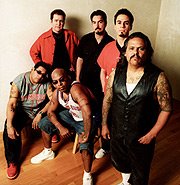
Besides checking out the music of SF Mission District's own Los Mocosos, you can also see the powerful film Granito de Arena which documents the Mexican teachers movement and other social movements for a democratic Mexico. When I met filmmaker Jill Freidberg at the National Coalition of Education Activists conference in Philadelphia in 2004, she had just finished the rough cut of the film which she previewed to the NCEA activists. When she notified me that she was coming out to SF in early January, I worked with the leadership of United Educators of SF, T4SJ and local activists to make sure that we could use the film to bring social justice educators and parents together in SF. Please join us and support Jill and her work.
Award-winning Seattle filmmaker, Jill Freidberg (This is What Democracy Looks Like, 2000), spent two years in southern Mexico documenting the efforts of over 100,000 teachers, parents, and students fighting to defend the country’s public education system from the devastating impacts of economic globalization. Freidberg combines footage of strikes and direct actions with 25 years worth of never-before-seen archival images to deliver a compelling and unsettling story of resistance, repression, commitment, and solidarity.
Fundraiser for Teachers 4 Social Justice and Afterparty with Los Mocosos (free!)
Bay Area Screening of Granito de Arena*
Saturday, May 27th, 2006, 4pm at Roxie Theater, SF
3117 16th Street between Valencia and Guerrero ($8Adult, $4 Senior)
For tickets visit http://www.roxie.com/ or buy at the door*
Granito de Arena is a story of resistance – the storyvof hundreds of thousands of publicschool teachers whose grassroots, non-violent movementtook Mexico by surprise, and who have endured brutalrepression in their 25-year struggle for social andeconomic justice in Mexico's public schools.
Join us afterwards for refrescos and dancing with LosMocosos Live! at New College Cultural Theater – 766Valencia.
This event is free of charge!
This event will benefit Teachers 4 Social Justice and New College Scholarship Program for Bilingual Students. For more information visit http://www.t4sj.org/ or call415-516-0338.
"Exciting, inspiring. An extraordinary account of ordinary people organizing, protesting, resisting, against enormous odds." - Howard Zinn
"Stunning... inspiring... unparalleled. The film calls for a globalization of solidarity,
and for the radicalization of the teaching profession. Granito de Arena will undoubtedly nurture this solidarity."
- Rethinking Schools

See the excellent review from NACLA as well.

Sunday, May 21, 2006

Graduation of new teachers: Sacramento

Spring Graduation. Bilingual/Multicultural Teacher Preparation Program.
CSU-Sacramento.
Shasta Hall Auditorium. 3 .P.M. May 20,2006.
Speaking. Dr. Duane Campbell. This is a speech, not an essay.
Graduation.

To th graduates and their families.

Buenas tardes.
Agradecemos mucho su presencia.

We come here to celebrate your achievement as graduates. We are very proud of you. You have spent over 4 years getting a B.A., and now one year learning to be a teacher. And, now you are ready.

This is an exciting time to be entering teaching.
California, our state, is changing.

On May 1, we witnessed the largest demonstrations in U.S. history. It was the largest demonstration in Sacramento history.

We may now be witnessing the birth of a new human rights movement. Like the African American movement of the 50’s and 60’s, the Chicano movement of the 60’s and 70’s, the feminist movement of the 70’s.

You and I have a choice:
We can join in and make this happen. To make history. Or, we can watch it go by.

Ten years from now when your children ask, teacher, what did you do in the movement, what will you say? Oh. I was too busy getting a new ring tone on my cell phone.

The demonstrations in Sacramento were fantastic.

What can we do: what can teachers do to build this movement?
We can follow the traditional slogan:

Educate, agitate, organize. Si se puede.

What is happening here? California is changing.

The U.S. is changing.
There is a massive migration of people.
What is the cause of this migration? Economics.

The U.S. ruling class, the corporations, have a policy, they call it “ Free trade.”
Its real name is capitalism.

By now, as a college graduate, you should know and understand capitalism. If you don’t, go back to your liberal studies Dean and tell him that the faculty did not do their job to prepare you.

This is both an exciting time, and a difficult time to enter teaching. You need to understand capitalism in order to understand the problems of school reform.

Next year will be a difficult year for you.

We have packed in almost all the information which we could. Now, it is time for you to practice. We learn to teach by teaching.

It is further a difficult time if you believe in teaching for justice and for democracy.

There are many, including our elected officials, who think that schooling is just about reading, writing, and arithmetic.

These are the people who support the current testing mania.
They are the ones who support the high school exit exam which only measures English and math.

These are the people who have been in charge of our school system for the last twenty years while so many of our brothers and sisters have been failed.

But, schooling is also about democracy.

We need to repair our society.
We need to create a multicultural/multiracial democracy; and we are not there yet.

You can participate in that effort as a teacher. You can teach kids to get along, to value school, to work cooperatively with each other.

At the Single subject level, at the high school, we have to teach kids that school matters; that kids can create and determine their own future, that education can serve to mobilize people.

As some of you know, I worked for a time with the United Farm workers union. Cesar Chavez said it well. He said,

When we are really honest with ourselves, we must admit that our lives are all that really belong to us. So it is how we use our lives that determines what kind of people we are. ..I am convinced that the truest act of courage..is to sacrifice ourselves for others in a totally nonviolent struggle for justice.
Cesar Chavez (1927-1993)

This is our task as teachers. Teaching for social justice is a totally non violent struggle for justice.

Please remember, your integrity is a valuable resource.

Be true, be authentic, to what you believe in. Don’t compromise yourself.
Don’t compromise your commitments to justice and democracy.

You may have to use Open Court and Saxon Math, you may have to teach to standards. If you are in high school you may have to teach to the stupid, right wing, ideologically scripted History/Social Science standards which try to make certain that students never study racism, the war, or the economy. But you do not have to abandon your students and the struggle for justice.

Nothing, no dollar amount, no position, is worth compromising your personal integrity.
Yes, we will have to make compromises, but not of our integrity., not of our most basic values.

That is what you have been prepared for, to join in and to continue the struggle for justice in our schools.


We, in BMED, have been engaged for over twenty years now in organizing for social change. We have been organizing for educational justice.
We have introduced you to this project. We invite you to join us in this journey.

You are our change strategy. We prepare teachers and place them in the school. But, you have the hard part. You have to make your classroom a place of dignity, and respect, and justice.

In times of fundamental change, supporting networks are essential.

We also want to support you and to stay in touch with you. Good luck, Please stay in touch.

After a couple of years of practice, we invite you to come back to further develop your skills in our graduate program.

Duane Campbell

Thursday, May 18, 2006

Fighting the English-Only Steamroller in the US Senate and in our local communities

Just as we were distracted by the US Senate's approval of the 700 mile border wall, the assault on the Constitutional right to birthright citizenship, and other wacky efforts to demonize immigrants and undocumented folks, the Senate passed this other ZINGER. Daily KOS reported on the Senate's Vote To Make English The Official Language of America while also comparing the idiotic vote to the real need for educational justice and adequate funding for our schools :-(

The vote was 63-34:

After an emotional debate fraught with symbolism, the Senate yesterday voted to make English the "national language" of the United States, declaring that no one has a right to federal communications or services in a language other than English except for those already guaranteed by law. The measure, approved 63 to 34, directs the government to "preserve and enhance" the role of English, without altering current laws that require some government documents and services be provided in other languages. Opponents, however, said it could negate executive orders, regulations, civil service guidances and other multilingual ordinances not officially sanctioned by acts of Congress.

Here's a bright idea. Instead of wasting time on "symbolic" measures, why doesn't Congress do something about the millions of illiterate Americans who can't read or speak English (and no, Rep. Tancredo, I'm not talking about Mexican immigrants).
Last year, the National Assessment of Adult Literacy found that 11 million adults were nonliterate in English. Another thirty million adults were literate only at the most basic level, meaning they had only the most simple and concrete literacy skills. What's the point of a law mandating all government papers be in English when millions of Americans still can't read or comprehend the document anyway? Oh yeah, I know the point. It's call midterm elections.
If Congress cares so damn much about the English language and having Americans learn English, maybe they should drop "symbolic" measures and start giving our educational system the attention it deserves so that we may finally rid ourselves of this scourge of illiteracy that is plaguing our nation.
Permalink ::

As one of the many immigrant rights activists that fought CA's Proposition 63 way back in 1986 with Californians United Against English Only [Prop 63] [which passed with 73% vote in CA], I worry that the backlash against immigrant communities which in the 80's had started as a fringe racist and xenophobic cult around self-hating US Senators like S.I. Hayakawa [the former president of my university SF State] and population control eugenicists like John Tanton has now grown some pretty hairy legs that stretch now to the highest levels of power in Washington.
For more on the rise of US English, FAIR and other groups in the English Only movement see Jim Crawford's amazing website and Chapter 6 from his Hold Your Tongue book on the English Only Movement. The Southern Poverty Law Center and Political Research Associates also have great background on the radical right wing and reactionary forces behind English Only and anti-immigrant forces in the US. See my Boston colleague Doug Brugge's excellent piece - The Anti-Immigrant Right - from 1995 for the PRA's newsletter The Public Eye.
Despite the backlash, language rights and immigrant rights activists must continue to fight the attacks and push for a proactive agenda in Washington, Sacramento and at the local level as well.
Over 10 years ago, my organization the Northern California Coalition for Immigrant Rights organized a proactive day of celebration, resistance and building power in Sacramento. Next week we continue in that tradition with the 10th Annual Immigrant Day on May 22nd 2006 in honor of California’s immigrants, whose presence and work continue to strengthen our communities and our state. Mobilization at the State Capitol in Sacramento.
Join hundreds of immigrants and advocates in raising our voices on behalf of immigrant families throughout the state. This year the Governor’s budget proposal once again targets immigrant seniors and disabled on CAPI and SSI, families who participate in CalWORKs, child-care workers, and critical health care and human services for low-income families. Immigrant Day 2006 will bring a unified voice to Sacramento in support of immigrant communities and working families. Join us May 22nd in Sacramento!
On a similar note, on Tuesday May 23rd I am introduing a pro-bilingual education/language immersion programs resolution for our San Francisco Unified School District which if passed will expand our dozens of bilingual language immersion programs to include Cantonese, Spanish, Korean, Filipino enrichment, Japanese enrichment, to add new Russian and Mandarin programs as well. My pro-language equality school board resolution was drafted in the same spirit as another document I helped draft some 10 years ago, during our fight against the attacks on Bilingual Education in California and Proposition 227 [1998]. See the 1998 proactive policy statement on Multilingualism and Bilingual Education for the Northern California Coalition for Immigrant Rights. In 1997 we declared:
We see the anti-bilingual Unz Initiative [Prop 227] as an opportunity to increase our political participation as immigrants, to build cross-community alliances, and to bring together all people who believe in the rights and dignity of immigrants and educational equality for all.
While the NCCIR no longer exists, other alliances and coalitions have formed to continue the fight for immigrant rights and language equality in our region. Despite the Senate's English- Only Vote this week, we must continue to seek out the opportunities to increase grassroots political participation, build and strengthen progressive labor/community alliances and advance a relevant proactive agenda for human rights and dignity for all immigrants and all peoples.

More on Villaraigosa

thanks for the lead on the L.A. Weekly story.
Here are some additional thoughts on big city Mayors and schools.
Antonio Villaraigosa, (D) Mayor of Los Angeles, has proposed having the Mayor’s office take over the governance of the Los Angeles school district in response to the persistent failure of the schools. We in Sacramento went through a parallel cycle of Mayor's strong intervention in schools from 1994-1998. Frankly the "reforms" did not change the schools much.
While there may be some advantages to the Los Angeles Mayor’s proposal, it requires a substantive change in governance.
What could a progressive Mayor do to improve the schools that would not require a constitutional change?

Mayors could deploy police and probation to eliminate gang violence around and near the schools. School safety is a major issue.
Mayors could use their political capital to achieve adequate funding of schools. Note, California has under funded its schools for at least twenty- five years. Mayor Villaraigosa was Speaker of the California Assembly, the body which writes the budget. During his time as Speaker, California did not significantly improve school funding.
Mayors could provide safe after school facilities for recreation and home work help.
Mayors could provide safe and modern buildings for schools rather than over crowded temporary building.
Readers are invited to add to this list.
Duane Campbell

SF vs. LA - Mayoral School District Takeover politics

This week's LA Weekly features a fascinating piece on Mayor Antonio Villaraigosa's efforts to take over the LA schools from control by their democratically elected Board of Education.

As Billionaire Eli Broad, Richard Riordan, and other conservative and big business forces pushed for years for Mayoral takeovers of democratically elected school boards in San Francisco, San Diego, Los Angeles and other urban districts, LA has been the recent focus since the Mayor stunned his parent, teacher and progressive allies with his takeover plans this year.
Villaraigosa made a mayoral takeover of the Los Angeles Unified School District — the nation’s second-largest school system — his No. 1 policy initiative. And the opponent in the campaign is no longer Hahn, but L.A. Unified and the powerful teachers’ unions — which strongly oppose mayoral control. City Controller and Villaraigosa aide-de-camp Laura Chick, so effective in her blowtorching of Hahn during the last campaign, has already spent months turning the flame on L.A. Unified administrators, priming them for Villaraigosa’s attack. The sharp criticism has already caused Superintendent Roy Romer to accuse Villaraigosa of “trashing the district” to further his political agenda.
I like how the the Weekly delves into Mayor Antonio's background as a former union and teacher organizer with UTLA [United Teachers of LA] and the current conflict with UTLA and CTA [CA Teachers Asscociation]. But the political intrigue with mayoral campaigning, sound bites, and ongoing shenanigans in Sacramento to push legislation make for the most useful parts of the feature.
Villaraigosa came to the issue of municipal takeover almost by accident, embracing the concept late in the mayoral campaign as he and Hahn were competing to see who could be tougher on education. Yet as a former teachers’-union organizer, he seems almost uniquely qualified to lead such a campaign, the type who could pull a Nixon in China — a phrase he has used to describe himself. Bewildered teachers’ union leaders have offered no angry challenges to his plan, voicing instead a mixture of confusion and disappointment in the man they consider an ally.
Lastly, LA wonks are now looking at San Francisco for some solutions to LAUSD's school funding crisis. Mayor Antonio and his staff are now looking at providing more local resources for Sports, Libraries, Arts and Music programs for their schools San Francisco style! Though our Mayor often tries to take credit for it, our SF $60 million/year local school support initiative was crafted by progressive Mission District Supervisor Tom Ammiano [and his former legislative aide Brad Benson and policy advocate Hunter Cutting] along with school board members like me Mark Sanchez and Jill Wynns, and championed by dozens of grassroots parent, teacher and education groups and passed overwhelmingly by San Francisco voters in November 2003.
District officials repeatedly argue that Los Angeles should model itself after San Francisco, by providing a greater level of city funds to pay for children’s programs, arts activities and school safety. In Los Angeles, the school board held a special hearing to receive testimony from San Francisco city officials, who recently beefed up funding for children, but no one from the media covered the event.
We'll keep our eyes on Mayor Antonio and his efforts to ram through his takeover bill in Sacramento to wrestle control from the LA Board of Education. But luckily there appears to be little support for Mayoral takeovers in San Francisco, a City with a rich history of sometimes wild, but fairly democratic elections. The SF electorate has also tended to support broad electoral reforms like district elections, public financing and instant runoff and choice voting to improve democracy in our City.

Monday, May 15, 2006

Educational Justice - Connecting CA's Valenzuela ruling re Exit Exams with the Williams [2004] and Brown [1954] cases

Nettie Hunt and her daughter, Nickie, sit on the steps of theU.S. Supreme Court in May 1954.Photo by Cass Gilbert/Bettman/Corbis
Wednesday, May 17th - Remembering the anniversary of the 1954 Brown v. Board of Education US Supreme Court decision, the historic 2004 CA Williams case and the Valuenzuela case, decided on Friday, which successfully halted the CAHSEE [CA HS Exit Exam], at least for this year.
The 2004 Williams case and last week's Valenzuela ruling expose the continuing lack of equal educational opportunities for African American, Chicano/Latino, English Learner and low income students throughout San Francisco, California and communities around the United States today.

San Francisco Unified School District Student plaintiff Eliezer Williams, 7th grader at Luther Burbank Middle School in San Francisco's Excelsior District, and his father Sweetie Williams, at an ACLU press conference in 2000. Eliezer's school was infested with vermin and roaches, two of the three bathrooms were locked all day, every day, and children were afraid to play in the gym because they are worried that the cracked ceiling tiles will fall on them during games.

On the 52nd Anniversary of the Brown v. Board of Education US Supreme Court decision Youth Together and Asian and Pacific Islander Youth Promoting Advocacy and Leadership (AYPAL) youth and allies will bring educational inequity issues to the forefront. The youth and their organizations are holding an accountability meeting with State Administrator Randolph Ward who currently 'oversees' the Oakland public schools. Hundreds of Williams’ Settlement complaint forms have been collected and will be submitted to the School District to demand concrete changes in the Public Schools in Oakland. (4:15-5-30pm, Lincoln Recreational Center, 250 10th St., Oakland. Free). More info.

In 2004 Liz Guillen of Public Advocates summarized the Williams case:
The most significant legislation aimed at closing the education opportunity gap was passed in the final days of the 2003-04 legislative session when the California Senate and Assembly passed four bills to fulfill the settlement in the Williams v. State lawsuit. The lawsuit was filed over four years ago, on the Anniversary of Brown v. Board of Education. The plaintiffs are Eliezer Williams and over a million other students trapped in the worst schools with no chance to meet the State’s standards because their schools do not provide basic tools such as textbooks and trained teachers, and their school buildings are overcrowded, dilapidated, filthy and unhealthy. The State spent nearly $20 million to defend and delay the lawsuit, but on August 13, [CA] Governor Schwarzenegger acknowledged that it is ultimately the
State’s responsibility to ensure basic equality in learning conditions. On August 27, the Legislature passed SB 550, SB 6, AB 1550 and AB 3001, defining standards for textbooks, teachers and facilities, establishing an accountability system to make sure schools provide these basic necessities, and providing new money to back it up.
For more on the significance of the Brown case and social movements for educational justice -
http://www.rethinkingschools.org/brown/
www.nea.org/brownvboard/
NEA resources

For more information about the Williams settlement or the legislation, contact Liz Guillen at (916) 442-3385, or John Affeldt and Jenny Pearlman at (416) 431-7430 at Public Advocates, Inc. See our website at http://www.publicadvocates.org/. For a copy of the legislation, go to http://www.leginfo.ca.gov/, click on Bill Information and enter the bill number.

Friday, May 12, 2006

CA's Grassroots Electoral Alliance wins demands in State Budget Battle

The spin of the progressive labor-initiated Alliance for a Better California is that they have leveraged their grassroots electoral power from the 2005 successful battle against Arnold's special elections into today's announcement of the Governor's New Budget Deal with CTA [California Teachers Association] and other education advocates.

VOICES OF TEACHERS, NURSES, FIREFIGHTERS AND EVERYDAY CITIZENS ARE HEARD WITH $5 BILLION FUNDING ANNOUNCEMENT FOR EDUCATION
On the heels of an overwhelming victory for working families in November’s Special Election, today California’s teachers, nurses, firefighters and other concerned citizens scored another big win with a budget announcement that included $5 billion in funds for California’s schools.
Throughout the Special Election campaign, the Alliance for a Better California called on Governor Schwarzenegger to repay the billions he owed California’s schools. After voters rejected the Governor’s damaging agenda, the coalition of teachers, nurses, police officers and firefighters remained together to ensure that the concerns of everyday Californians, like funding public education, remained in the forefront.
In his Choosing Democracy Blog, Sacramento State University Professor and social justice activist Duane Campbell has posted the CTA statement which stresses the impact of the budget deal on low income communities and in urban school districts like San Francisco, Oakland and Los Angeles.
“This is a good thing for our schools and community colleges throughout California,” said Barbara E. Kerr, president of the California Teachers Association. “Having all the money owed to our schools under Proposition 98 and the governor’s agreement of 2004 restored to our students is the news we’ve been waiting for. It is especially good for those students who live in high-poverty areas and who do not speak English as a first language. Using some of the repayment money to improve learning and instruction in our schools of greatest need will help us close the achievement gap.”

CA Judge blocks high school exit exam for this year

CA High School Exit Exam blocked!
SF CHRONICLE ARTICLE
Education reporter Anette Asimov just posted her story -
California's high school exit exam is officially dead for this year -- unless state educators can persuade an appeals court to overturn the final ruling issued today by an Alameda County Superior Court judge.
Asimov didn't mention that the judge's order relies on the historic Williams case [2000-2004] which highlights the unequal conditions and lack of equal opportunities to learn for many low income immigrant and students of color throughtout California. More on the Williams Case

It's an 11th-hour upset victory for thousands of low-income students and English learners who sued the state on February 8, claiming that many students have not had the opportunity to learn the material on the exit exam because they went to substandard schools with unqualified teachers, insufficient textbooks, and squalid conditions.
This is a tremendous victory for the courageous Bay Area students Liliana Valenzuela, Ahmed Osama Abd El Rahman, Noemi Cervantes, Mayra Ibanez, Mayela Barragan and her parents and Laura Echavarria and the many other plaintiffs, but also for the parent, teacher and student organizations like Californians for Justice, Teachers for Social Justice, and Coalition for Educational Justice that have been challenging the race and class biased CAHSEE and other high stakes tests in California. Arturo Gonzalez and Morrison and Forster did tremendous work on this case. For more on opposing the harm of high stakes testing in CA or other areas see -
http://www.calcare.org
http://www.calcare.org/links/
http://www.fairtest.org/
MORE ON CFJ/Public Advocates CAHSEE Lawsuit
MORE ON the Valenzuela Case

Thursday, May 11, 2006

Weintraub on school funding deal

Here is the Bee's Dan Weintraub on the proposed school funding deal.
From: California Insider

School spending
If the Legislature approves the Schwarzenegger/CTA agreement on education spending, the Prop. 98 numbers will look like this for last year, this year and next year:

2004-05: $47 billion
2005-06: $52 billion
2006-07: $55.1 billlion

That's a huge increase over two years (17 percent) no matter how you count it. But next year's increase will actually be far larger than it appears in these numbers. That's because the $52 billion credited to the current year is actually $50 billion that was already budgeted, plus $2 billion that will go on the books for this year but won't actually arrive until after the next budget is signed. For all practical purposes, then, that's money that will be spent next year. If you adjusted the numbers to reflect that fact, they would look more like this:

2004-05: $47 billion
2005-06: $50 billion
2006-07: $57.1 billion

Wednesday, May 10, 2006

Gov. may pay money owed to schools

Governor to settle school funding dispute

By Clea Benson -- Bee Capitol Bureau
Published 1:55 pm PDT Wednesday, May 10, 2006

Gov. Arnold Schwarzenegger has agreed to give schools an additional $5 billion over the next several years, settling a dispute with advocates who said he shortchanged education when money was tight, a consultant familiar with the deal said Wednesday.
The governor will use part of a windfall of tax revenue to cover the additional amount that advocates claimed was owed to schools, said consultant Kevin Gordon, president of School Innovations and Advocacy. Education officials, including the California Teachers Association and state schools superintendent Jack O'Connell, said schools deserved an additional $3.2 billion and had filed a lawsuit designed to force the state to pay up.

The deal is intended to settle the lawsuit. Schools will receive $2 billion of the $5 billion in the budget year that starts July 1, with the rest coming over several years, Gordon said.

"In every school in the state, they care a whole lot less about politics an a lot more about meeting their basic fiscal needs," Gordon said. "The governor will undoubtedly be celebrated over the fact that he has stepped up to the plate on this issue and agreed to resolve it."

CA Education lobby & Gov. Schwarzenegger Cut New Deal to pay CA schools $5 billion owed

As our schools in San Francisco Unified School District plan for $6 million of budget cuts for this year and probably double that amount of cuts for next year, we are closely following the deal making in Sacramento around the state budget and the reports of the $5 billion boom in state revenue.

2 days before CA Gov. Arnold Schwarzenegger's scheduled announcement of his "May Revise" budget proposal, the LA Times is already reporting this morning that the "education lobby" [CTA and various education groups] has successfully cut another deal with the Governor, this time ensuring that a good chunk of the $5+ billion in extra unexpected state revenue will be repaid to our school districts. With Extra $5 Billion, Governor Plans to Pay Debt, Aid Schools.

Under the agreement, schools would be repaid more than the $3 billion education groups say they are owed because of cuts imposed in leaner times. An additional $2 billion would be provided for low-achieving schools, to help cover the cost of various state-mandated programs, and to create arts, physical fitness, vocational education and other programs. ...

"You can't put aside billions of dollars to retire debt while at the same time cut back on essential programs and services to senior citizens and the poor," Assembly Speaker Fabian Nuñez (D-Los Angeles) said. Nuñez, who has been demanding more money in the budget for schools, declined to comment on Schwarzenegger's plan for that area.

The Times reports that the school plan came together this week in an agreement between the administration and the education lobby. Apparently the money will be stretched out over the course of several years, starting with a $2-billion down payment in the budget year that begins July 1. They also reported that the 'deal' will likely resolve the California Teachers Association Lawsuit filed in August 2005 to force the Governor to to fully fund education and keep the promise made to public schools and students by allocating the money owed to schools under state law.

Our local San Francisco Unified School District number crunchers estimated last year that if the state had paid our district what it owed us under Proposition 98 guarantees, we would have had some $69 million more for our schools and students, and we would not have had to close, merge or move the dozens of schools we have in the last year and a half. The budget deal is great news but it is very bittersweet because we as a school board and district cannot undo the damage, especially to low income communities of color in San Francisco, caused by our several rounds of cuts and closures.

Tuesday, May 09, 2006

CA High School Exit Exam Struck Down? Judge Says CA Exit Exam is Unfair

Education reporter Nanette Asimov reports this morning that the CA High School Exit Exam has tentatively been "Struck Down. " For more on the Valenzuela lawsuit and the Californians for Justice/Public Advocates suit - CFJ case Valenzuela case

JUDGE SAYS CALIFORNIA EXIT EXAM IS UNFAIR
Final ruling today could halt plans to deny diplomas

Though the article doesn't acknowledge the tens of thousands of students who have dropped out or been 'pushed out' because of the high stakes testing in our state, Asimov points out that of the 47,000 students who have not passed the exam, well over 60% are Latino or "economically disadvantaged", while 44% who have not passed are English learners. view chart
Judge Robert Freedman of Alameda County Superior Court said he based his ruling on the concept of "equal protection" and is expected to make a final ruling at a 2 p.m. hearing today.
His ruling comes just weeks before graduation ceremonies begin at 1,129 California high schools and just days after state schools Superintendent Jack O'Connell announced that 46,768 seniors -- 10.7 percent of the class of 2006 -- had not yet passed the exit exam. Of those students, 61 percent are poor, and 44 percent are English learners.
Some parent, teacher, student activists like those in LA's Coalition for Educational Justice have stressed the Racism and Class Bias of the exam itself. But the CFJ/Public Advocates suit and the Valenzuela case both focus on the educational injustice faced by most African Americans, Chicano/Latinos, English learners, and low income students who still do not have an equal opportunity to learn in California's public schools from San Francisco to LA.
But attorney Arturo Gonzalez of the San Francisco law firm Morrison & Foerster, who brought the lawsuit challenging the exam, said he was thrilled with the judge's tentative ruling.
"I felt strongly that the state should not deprive a student of a diploma unless the state can say that every student has been fairly and properly prepared for that test," Gonzalez said. "There is overwhelming evidence that students throughout the state have not been taught the material on the test. And many students have been taught by teachers not credentialed in math and English."
Gonzalez said he filed the suit after reading news reports last fall that about 100,000 seniors were poised to be denied a diploma.
The suit, Valenzuela vs. California, was named for its lead plaintiff, Liliana Valenzuela, who, like Iris Padilla, is a Richmond High senior. According to the suit, Liliana maintains a 3.84 grade-point average and is 12th in her senior class of 413 students. She has passed the math portion of the exam, but not the English portion. Her first language is Spanish. The suit said that students who have repeatedly failed the test -- especially English learners -- have not had a fair opportunity to learn the material because they are more likely to attend overcrowded schools and have teachers without proper credentials.
full SF Chronicle article; also see Joel Rubin in the Los Angeles Times; Laurel Rosenhall and Cameron Jahn in the Sacramento Bee; Luis Zaragoza and Connie Skipitares in the San Jose Mercury ;Cassandra Braun in the Contra Costa Times; JULIET WILLIAMS AP ...

Sunday, May 07, 2006

On Being Black at a Latino March

Interesting piece by Van Jones of the Ella Baker Center for Human Rights.

Posted on May 5, 2006, Printed on May 7, 2006

http://www.alternet.org/story/35860/

duane campbell

Their optimism brought tears to my eyes. And not only for the obvious reasons.
Deep inside, I was grieving for my own people. I wished that my beloved African-American community had managed, somehow, to retain our own sparkling sense of faith in a magnificent future. There was once a time when we, too, marched forward together, filled with utter confidence in the new day dawning. There was a time when we, too, believed that America's tomorrow held something bright for us ... and for our children.
...
Strong brown hands have grabbed hold of the U.S. flag. They are pulling it away from those who have monopolized it, from bullies who have abused the nation's symbols for their violent and illegitimate ends. I am glad.
Because only a mass movement with broad shoulders -- and rough hands -- will have the power to win the coming tug-of-war for the heart and soul of this country. The Latino community has birthed just such a movement. If history is any guide, as Latinos and other immigrant communities raise core questions about their children's access to education, health care, jobs and safety, every American community will benefit hugely from their efforts. Including my own.

Saturday, May 06, 2006

RIP Damu Smith & Comandante Ramona

Janinsanfran's Happening Here blog, one of my favorites!, is reporting the sad Cinco de Mayo death of Brother Damu Smith, founder of Black Voices for Peace and executive director of the National Black Environmental Justice Network, and lifelong anti-apartheid, anti-racist, social justice activist - what a tremendous loss to many of our movements - http://happening-here.blogspot.com/2006/05/damu-smith-1952-2006.html.

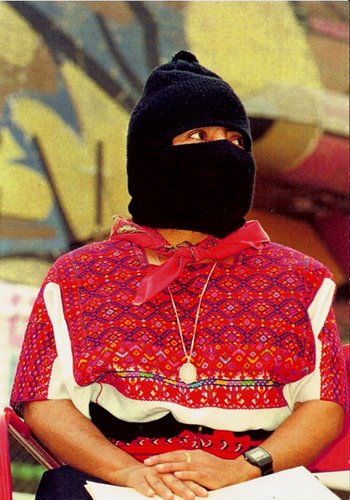
I never reported also on my sadness at the January passing of Comandante Ramona of the EZLN. Zapatista leader Marcos wrote in 1996 of Ramona's importance to our movements - Our word is our weapon - 12 women in the 12th year.
Comandante Ramona's size and brilliance will surprise the international press when she appears in the Cathedral—where the first Dialogues for Peace are held—and pulls from her backpack the national flag, seized by the major on January. Ramona does not know it then, nor do we, that she carries an illness that takes huge bites of her body, eats away at her life and dims her voice and her gaze. Ramona and the major, the only women in the Zapatista delegation who show themselves to the world for the first time, declare, "For all intents and purposes, we were already dead. We meant absolutely nothing." With these words they can almost convey the humiliation and abandonment. The major translates to Ramona the questions of the reporters. Ramona nods and understands, as though the answers she is asked for had always been there, in her tiny figure that laughs at the Spanish language and at the ways of the city women. Ramona laughs when she does not know she is dying. And when she knows, she still laughs.
Before she did not exist for anyone; now she exists, as a woman, as an indigenous woman, as a rebel woman. Now Ramona lives, a woman belonging to that race that must die in order to live ...
For more on Ramona see http://www.bbcf.ca/_articles/who_is_ramona.htm or
http://www.ezln.org/archivo/fzln/ramona.html
Tonight during my storytelling time, I will try to tell my 6 year old daughter Jade of the great stories of Commandante Ramona and brother Damu Smith, for they live on in the memories of our children who will undoubtedly carry on their struggles.
Remember the fighting spirit and leadership of Damu Smith and Comandante Ramona of the EZLN!

Friday, May 05, 2006

Celebrate, don't desecrate Cinco de Mayo

I commonly ask my Ethnic Studies students at San Francisco State to explain the origins of May Day and Cinco de Mayo. And, almost always no one ever has any consciousness of the history of either day. This is particularly frustrating to me since both holidays were born out of struggles here in the US - the militant labor movement of the 1880's and the Chicano Movimiento of the 1960's.

Ironically, SF's Indy Media is reporting today that racist/anti-immigrant groups are desecrating Cinco de Mayo by holding "anti-illegal immigrant" rallies on May 5 and 6 in the San Jose area. The mainstream media reports of the historic May 1st rallies and marches throughout the United States barely mentioned the connection that immigrant communities are making to the struggle of working people represented by OUR international workers day.

To connect my students with more on Cinco de Mayo and immigrant workers' struggles, I often use perspectives from former LA 13 defendent and longtime Chicano Movement veteran Carlos Munoz' writings - Carlos often describes Cinco de Mayo as an anti-imperialist holiday [1862 Battle of Puebla] which was popularized by activists within the Chicano movement of the 1960's.
Be Down with the Brown! - For a great historical piece about the student-led blowouts/walkouts from the 1990's - see 'Betita' Elizabeth Martinez' piece from ZMagazine over 12 years ago wrote about the post-Prop 187 Latino student blowouts up and down California - and the use of Cinco de Mayo as a tool to advance community struggles.
For another great piece on the significance of the Cinco de Mayo today see Rosalio Munoz' piece
A Holiday for Democracy Some historical thoughts on Cinco De Mayo
In the coming week millions of Mexican Americans, mexicanos, Latinos, African Americans, Asian Americans, Native Americans, white Americans — Americans of all kinds — will take part in Cinco de Mayo events across the United States. The holiday is celebrated more in the Southwest, but increasingly in other parts of the country as well. It is as American as tamale pie, almost as much as May Day, the international workers’ day, but more popular with the media and government.
The celebration of Cinco de Mayo in the U.S. precedes that of May Day. The victory of the meztizo/indio Mexican troops over the French at Puebla in 1862 predates the attack on the workers in Chicago’s Haymarket Square by well over a decade. One of my great-grandfathers was helping organize Cinco de Mayo events in Tucson by the early 1880s.
Munoz argues for the linking of May Day with Cinco de Mayo
One way to acknowledge this is to combine the commemorations of Cinco de Mayo with May Day. In some ways, the support for Cinco de Mayo by the powers that be developed here as an attempt to detract from May Day. Celebrating the International workers’ day was one of the traditions Mexican immigrants brought here from their homeland. That’s all the more reason to celebrate democracy on both days.

Thursday, May 04, 2006

SF Freedom School, June Jordan School for Equity, and AYPAL, Youth Together fight for Educational Justice 52 Years After Brown

One of my favorite things about living here in the SF Bay Area is that there are always dozens of cultural and political events going on almost every week to pick and choose from. That's what attracted me to SF in 1984 in the middle of the conservativism of the Reagan years - I visited here from my hometown of Sacramento and have never left. As a parent too the diversity of organizations and events and actions here in the City allow me to bring my 6 year old to socialize with other social justice movement families and teachers. As a lifelong learner and teacher, it allows me to always expand my own worldview from the struggles and stories and experiences of so many that pass through SF and the Bay Area.
The San Francisco Freedom School is holding their first annual -
San Francisco Freedom School Concert/Fundraising Event
featuring Veterans of the Civil Rights Movement,
the Bay Area Labor Chorus and
Awele Makeba, storyteller/actor and teaching artist for social change
6:30 PM
Saturday, May 6, 2006
St. Francis Lutheran Church, Parish Hall
152 Church Street, San Francicso
across the street from Safeway (K, L, M, J, N, F, 94K, 94M, 94N)
6:30 PM Food and Drink; 7 PM to 8:30 PM Program
RSVP greatly appreciated but not essential
Call 415-703-0465 or email mke4think@hotmail.com
--- --
June Jordan School for Equity is also celebrating their accomplishments this evening at their campus in the Excelsior district of SF - check out the SF Weekly article on June Jordan and the small schools movement in SF by Ryan Blitstein's great article A Study in Size.

As SF Teachers have ratified their tentative contract [I and the rest of the Board of Education are likely to vote in favor of the settlement as well on May 9] and Oakland teachers struggle over their tentative agreement, SF Schools blog is highlighting - Thank a Teacher Today Campaign:
Parents For Public Schools has joined the San Francisco Education Fund, DonorsChoose, and others to promote the Thank a Teacher Today Campaign during the month of May 2006. The campaign encourages everyone in San Francisco to take a moment during the month and throughout the year to personally thank teachers and let them know that we recognize and appreciate their dedication and hard work on behalf of our City¡¦s young people.
And as the anniversary of the historic Brown vs. Board of Education Supreme Court decision approaches - grassroots student, teacher and community groups are continuing their campaigns for educational justice - Please support Oakland's AYPAL, Youth Together and others -

Frustrated Oakland students, community members, concerned parents, teachers and the public demand equal resources for the Oakland Public Schools. Hundreds of Complaint forms have been collected and will be submitted to the School District to demand concrete changes in the Public Schools in Oakland. Our schools are in a State of Emergency with inadequate resources, dilapidated facilities, unqualified teachers that are the root causes of many issues in Oakland. Settlement provides up to $1 billion for the lowest-performing schools base Academic Performance Index (API) deciles 1-3, which 62 Oakland public Schools are eligible to get these funds.
When: Wednesday, May 17, 2006 (anniversary of Brown vs. Board of Education)
Where: Lincoln Rec. Center is 250 10th Street @Harrison in Oakland Chinatown
Time: 4:15-5-30pm
AYPAL's Campaign Demands:
• Fully Funded Schools
• Equitable Resources across School Sites
• Full compliance with the William's Case Settlement
For more Info on AYPAL/Youth Together and the Williams VS. California case [filed 2000, settled 2004]

---

Next week - UC Berkeley friends from Ethnic Studies and CJWP and the Enviromental Justice Movement are sponsoring this great dialogue that links many different struggles - Frontlines and Fence Lines... Linking Black Panthers, Zapatismo Environmental Justice and Sustainability
May 9, 2006
6:00-8:30 pm
Room 126 Barrows Hall
UC Berkeley (N of Bancroft bet. Telegraph and Bowditch)
What contributions can the Black Panthers, Zapatismo, racial justice and
indigenous movements have for movements towards environmental justice
and sustainability? Ashanti Alston, a former Black Panther Party member and member of the Black Liberation Army, shares his stories and lessons learned from years of working in the BPP and BLA and also from several recent trips to zapatista territory, for movement building.

Monday, May 01, 2006

San Francisco/Bay Area Immigrant Communities Make History

More photos on Flickr
San Francisco and Bay Area news accounts are estimating heavy student and teacher participation in today's rallies and marches for Immigrant Rights and International Worker's Day. See photos on Flickr.

The San Francisco Chronicle is reporting that only 1/3 of Mission High School students showed up for class today.
At San Francisco's Mission High, just 282 students -- less than a third of the usual 872 -- showed up for classes. Principal Kevin Truitt said he was left with the emptiest campus he's ever supervised -- and he was all for it.

San Francisco schools are reporting that 750 teachers and staff were absent from work today - May Day. 12,354 students were absent today from the school district (approximately 22%).
On a typical school day, 5% of students are absent in the district.
  • 5311 students were absent from elementary and K-8 schools (20%)
  • 2877 students were absent from middle schools (26%)
  • 4161 students were absent from high schools (21%)

Our central office reported that many teachers and students not only from Mission High, but also Balboa, O'Connell, ISA [International Studies Academy], Thurgood Marshall High Schools particpated in the immigrant rights/May Day rallies and marches.

The Chronicle is reporting that other school districts also had large walkouts/blowouts or students that didn't show up for school today probably in commemoration of the immigrant and workers' rights demonstrations.

-- San Jose: 4,876 students absent, or 16 percent.
-- San Diego: 26,008 students absent, or 20 percent.
-- Los Angeles: 71,942 middle and high school students absent, or 27 percent.

More Photos on Flickr

Sacramento's largest demonstration


The largest demonstration in Sacramento history.
I have been to many demonstration in Sacramento reaching back to the 60’s. I have marched with the UFW when they brought 15,000 to the state capitol.
Today’s march for immigrant rights in Sacramento was the largest demonstration I have ever seen. The crowds not only filled the capitol grounds, they extended over 8 blocks down the capitol mall. And from there, since the mall was full, marchers had to move over to N street to approach the capitol from the South Side. Early news reports say there were tens of thousands. Based upon prior demonstrations, there must have been at least 30,000 people here.
The entire world is experiencing a major restructuring of the global economy, directed by transnational corporations and the institutions which these corporations control (NAFTA, WTO, FTAA,GATT).
Economic policy; free trade and globalism produces massive immigration in many parts of the world. As a direct result of NAFTA , over 3 million small Mexican farmers were driven from their lands. Not surprisingly, some of them, and their children, came to the U.S. looking for work to feed their families.
While transnational capitalism produces migration, democracies need policies to respond. HR 4437 is a Republican proposal to militarize the border and to build a 700 mile wall. We have already increased border enforcement by over 800% since 1986. Militarizing the border will not work.
Neither employer sanctions, border walls, nor Minutemen will stop this migration.
A fair and just immigration policy would recognize and protect the dignity of all working people.
We need to address the economic policies which produce immigration and defeat HR 4437.
Duane Campbell

May Day in SF/Oakland already shutting down business as usual

AP photos - MayDay Milwaukee 2006
120 years after immigrant worker organizing for an 8 hour workday in Chicago led to the Haymarket Massacre of 1886 immigrant communities in San Francisco and Oakland are shutting down business as usual throughout our Bay Area. Already at 10am this May Day [International Workers Day] KTVU and NBC11 are showing tens of thousands marching down International Blvd. in Oakland towards the Federal Building. In SF thousands are massing at Justin Herman Plaza near the Ferry Building for a mass march down Market Street to the Civic Center later this afternoon and later on the Federal Building for a 5pm rally. San Francisco Unified School District is reporting large numbers of teachers seeking substitutes today as well. SF's Mission High School, along with other Southeast area schools like O'Connel, Thurgood Marshall, Balboa, and ISA [International Studies Academy] are reporting large numbers of students participating in the demonstrations. Left in SF Blog has some photos of the SF rally this morning. Many teachers are supporting the May 1st demonstrations by either tying lesson plans to immigrant and workers' rights issues or supporting the call for today's rallies/protests as a do-it-yourself hands-on lesson in making history. SF's Mission High School, along with other Southeast area schools like O'Connel, Thurgood Marshall, Balboa, and ISA [International Studies Academy] are reporting large numbers of students participating in the demonstrations. Left in SF Blog has some photos of the SF rally this morning. Other teachers are using immigration and labor curricula to emphasize the teachable moment in the classroom as well. SF's Teachers for social justice and others are pointing teachers and parents to NYCORE's [NY Collective of Radical Educators] great website with all kinds of useful lesson plans - No Human Is Illegal: ¡NingĂşn Ser Humano es Ilegal! - An Educator’s Guide for Addressing Immigration in the Classroom.
The early SF media reports are showing that students are walking out in huge numbers as well from San Jose to Oakland.
For info on knowing your rights to protest or getting legal defense in case of an employer or school official crackdown - or
ACLU Northern CA
ACLU Immigrant Rights Project
-----
For more info on the nationwide protests - http://immigrantsolidarity.com and Indymedia.US
Special Coverage May Day 2006
May Day 2006: The Gran Boicott is on
27 Apr 2006
May 1st has been celebrated for more than a century as International Workers Day, commerating the struggle for the eight hour workday in the US and the state murder of anarchist labor organizers in Chicago in 1887. The militant labor movement in Chicago was largely due to the influence of radical immigrant workers from central Europe, who were the most exploited of the working class. May First is celebrated worldwide with the exception of a handfull of countries including the United States.
This mayday promises to be something special; immigrants groups and immigrant solidarity groups have called for May 1st to be a national day of action against HR4437, according to the NO HR4437 Network: On May 1, we are calling No Work, No School, No Sales, and No Buying, and also to have rallies around symbols of economic trade in your areas (stock exchanges, anti-immigrant corporations, etc.) to protest the anti-immigrant movements across the country.
Nationally, the May First demostrations promise to be very large. The Los Angeles port truckers have put out a call for a general strike and plan to shut down the ports. Community leaders from the various ethnic communities in Chicago have announced the official route for a massive May Day march. Many are speculating on whether the mass roundups of more than a thousand immigrant workers for Houston based IFCO Systems will serve to hinder or bolster the organizing efforts for May 1st. While the massive demonstrations that have swept the countries have forced the Republicans to backtrack on the harshness of their legislation, what the final result shall be is still up in the air.
see also: US-IMC's Immigrant Rights page Immigrant Solidarity No HR 4437 PDX-IMC's May Day page delete the border