Thursday, September 13, 2007

SF's Richmond District Activism stops STARBUCKS in our Neighborhood

For the past few months I have been working with a number of small business owners, and anti-chain store activists in trying to stop the STARBUCKs multinational corporation from opening their 81st store in SF in our neighborhood, the Inner Richmond District. And last night our work paid off when we successfully urged the SF Board of Supervisors to reject the STARBUCKS in our community. Previously activists like Tess Manalo Ventresca in the Sunset District and other activists in the Hayes Valley and Japantown Districts had kept the chain out of their areas. But we were unsure when some of us first learned of the STARBUCKS proposal in July that we could build the momentum we needed to keep STARBUCKS out.
This was my post to the blog I set up with the other activists -
Thank you so much to everyone who wrote, called, rallied and spoke out at the 9/11 Board of Supervisors meeting to stop the Starbucks in the Inner Richmond District.
The SF Examiner and SF Chronicle coverage didn't adequately acknowlege the tremendous groundswell of support we built from our Richmond District community and other neighboring communities to stop the STARBUCKS:

Starbucks' effort to flood San Francisco with coffee shops ground to a halt Tuesday when the Board of Supervisors blocked a new outlet in the Richmond District under chain store regulations passed by voters last fall.
The board voted 9-1 to overturn the Planning Commission's June approval of a Starbucks at the corner of Geary Boulevard and Fifth Avenue, killing the proposal.
Jesse Fink, who has owned a nearby cafe for 25 years, filed the appeal on behalf of the Clement Street Merchants Association, which represents approximately 30 merchants in the area.
"I don't want San Francisco to lose its character and become a city of strip malls. ... That's what Starbucks is all about," Fink said in a hearing before the board.
Kudos especially to organizer extraodinaire Bryan McKeon, Toy Boat's Jesse Fink and his family, and Meg Lynch of Velo Rogue Cafe and the many richmond district small business folks that supported and built this campaign from 2 people to over 4700 united voices in a few weeks. Thanks also to David Tornheim, Dean Preston - Local-Imact.org, Eric Brooks - Our-city.org, Kathryn Roberts, and planning commissioner Christina Olague and others that provided key strategic advice. And Sue Hestor and Steve Williams for their legal advice as well.

Most of us were worried going into the 9/11 hearing, but by the time the Supervisors were deliberating we knew we had won. My 7 year old daughter Jade joined in the celebration last night too, not only because she thought there might be free ice cream from Toy Boat. I told her 'this is what democracy looks like' - and it's better than ice cream.

Tuesday, September 11, 2007

Excellent posting from Duane

Duane Campbell has an awesome blog if you are interested in what is happening to education from the CA state legislature point of view. Check out his commentary following his posting of the Sac Bee article about new teachers.

Thursday, September 06, 2007
The California Legislature usually gets it wrong on public education

Sunday, September 09, 2007

9/29/07 Celebration for Bill Sorro @ Horace Mann Middle School

[Photo of Bill Sorro [center] with Belvin Louie, Giulio Sorro and Al Robles from Asian Week, article by former editor Neela Banerjee]
The details for the 9/29 Bill Sorro 'Celebration' are listed below. Unfortunately I will be in Atlanta @ a Civil Rights Movement 40th Anniversary event. But hundreds are expected to celebrate Bill's life and the movements he helped build. He was a Horace Mann Middle School parent as well years ago and the school, in the heart of the Mission District, is a regular spot for economic and social justice summits and gatherings in our communities.

From Lilian Galledo, director of Filipinos for Affirmative Action:
***
A Celebration of Bill Sorro's life

"...Bill wanted a celebration/ party as opposed to a memorial."

The celebration will take place Saturday, September 29, 2007, from 1pm to 5pm at
Horace Mann School, 3351 – 23rd St @ Bartlett, San Francisco, CA. Available in the school's parking lot off Barlett Street. But the school is just a couple of blocks from the 24th St. BART station.

Mabuhay Bill Sorro!

Friday, September 07, 2007

More Tributes to Bill Sorro and his legacy in building the "other San Francisco"

Photo of MAC founder Eric Quezada, a community leader and organizer running for District 9 Supervisor - SF Nov. 08 .
From our friends at the Center for Political Education on Bill Sorro's legacy. He and his partner Huli helped build the Center and its predecessor organizations. The article by my SF State Ethnic Studies colleague Jason Ferreira and longtime Mission District activist Eric Quezada is the unedited version of the SF Bay Guardian piece they did this week:

We at CPE honor and celebrate the life of Bill Sorro, a comrade that will truly be missed.
Bill Sorro, Presente!
By Jason Ferreira and Eric Quezada
San Francisco has lost a precious treasure. Not the San Francisco of downtown business interests, or of the dot-com craze, or of the waves of "young urban professionals" moving into the city's overpriced live-work lofts or condominiums. No, we're talking of the San Francisco struggling, on a day-to-day basis, to maintain its very existence: of Pilipino families and elderly in South of Market, of African American residents in the Fillmore, of tenants in SRO hotels, and of immigrant Latina/o workers in the Mission. In the early morning hours of Monday, August 27th, this San Francisco lost veteran activist Bill Sorro.
Bill passionately fought for this "other" San Francisco.
Born in 1939, Bill Sorro grew up in San Francisco's working class and predominantly African American Fillmore District, long before working class folk were pushed out by Justin Herman's notorious redevelopment schemes. Coming from a family that suffered as a result of anti-miscegenation laws [his Pilipino father was arrested and jailed for marrying a white woman], Bill consistently sought to connect the struggle against class exploitation to that of racial oppression.
Nowadays people in progressive circles often discuss ways to decrease ones footprint in the world; it can truthfully be said, however, that Bill Sorro left a tremendous footprint in peoples' lives and in their collective struggles.
Recently, he became an inspirational anchor for a growing housing justice movement in San Francisco, from the Mission Anti-displacement Coalition to the South of Market Community Action Network (SOMCAN).
Compañero Bill, however, leaves a much deeper and longer legacy: most obviously, for Pilipinos (as a leader of the famed International Hotel struggle, as a member of the Kalayaan Collective and, later, of KDP-the Union of Democratic Pilipinos, as a founder of the Manilatown Heritage Foundation, and as mentor for countless Pilipino youth), but equally for communities of color in general, for the working class in particular (as a long-time union activist and committed socialist), and ultimately for all that suffer and struggle against the indignities of oppression and exploitation ... whether it be here in the belly of the beast or across the globe. Standing in solidarity with anyone fighting for justice, Bill embodied the often-quoted, but rarely lived, notion that the essence of any true revolutionary is a profound love for the people! And, man, Bill loved the people! Right on, brother! All Power to the People!
He stands in that long tradition of individuals like Philip Vera Cruz, Paul Robeson, Dolores Huerta, and many others who made enormous contributions to history. But Bill made history by believing in and nurturing the leadership of others, by supporting the insights and wisdom, the creativity and resourcefulness of everyday people. He believed power truly existed in the people themselves; they need not look outwards for salvation, only into the mirror. Bill made societies most discarded people-the elderly, the homeless, the immigrant, queer and transgendered people, individuals with substance abuse issues, youth of color-count and believe in themselves.
Bill leaves behind a tight knit family-his wife Giuliana, who he met on the 2nd Venceremos Brigade to Cuba and subsequently married at the I-Hotel, and children Desu, Daphne, Danae, Django, Giulio, Joachin, and Jordan-as well as one that expands to include literally hundreds of community activists and friends, all who feel a part of the Sorro family. This broader family-one that includes many who may never have even met him-continue to organize and fight to realize Bill's dream: a world in which people matter more than profit and property. And we collectively dedicate ourselves to fight for that future described in Bill's favorite song: Donny Hathaway's "Someday We'll All Be Free."
By Jason Ferreira, Assistant Professor, College of Ethnic Studies, San Francisco State University; and
Eric Quezada, Mission Anti-Displacement Coalition, and Executive Director, Dolores Street Community Services.

--
The Center for Political Education: Dedicated to building strong movements and the left through education, analysis, theory, dialogue and activism

Thursday, September 06, 2007

9/10 SF forum - Chip Smith's The cost of privilege; taking on the system of white supremacy and racism; 9/23 Forum on Revolutionary Art

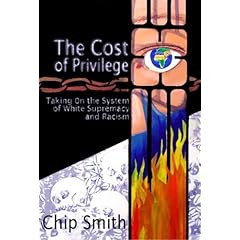
Monday 9/10 @ Galeria de la Raza - SF - join me and other activists and organizers in discussing our decades of work in challenging white supremacy and institutional racism in America. And, pick up Chip Smith's great new book - The Cost of Privilege: Taking On the System of White Supremacy and Racism

Sunday 9/23 @ the Ctr for Political Education - join the SF Print Collective in celebrating the revolutionary art of Emory Douglas and others.

---------------

The Cost of Privilege: Join us for a discussion on the fight against white supremacy
with author Chip Smith, Alisa Bierria (INCITE! Women of Color Against Violence), Rachel Jackson, Eric Mar (SF State Ethnic Studies and Asian American Studies faculty and member of the San Francisco Board of Education), and Molly McClure (Catalyst Project)
Monday, September 10th
7-9:30 PM
2851 24th St., Galería de la Raza Studio 24 Space
on the corner of 24th and Bryant in San Francisco, wheelchair accessible*

The Cost of Privilege: Taking on the System of White Supremacy and Racism, published in February 2007, will be the catalyst for a discussion amongst the author and Bay Area activists and organizers about:
* historical development of white supremacy, patriarchy and capitalism
* histories of resistance and what we can draw from them for today's struggles
* building an intersectional approach around race, class, gender and sexuality into our activism and organizing
The book takes readers from the creation of the white race over three centuries ago to the present-day myth of a colorblind society; from the intersections of class, gender and race to the concrete benefits-and harsh underside-of the privileges white people experience every day; from the victories when people ally across the color line to the failures of some of those alliances to hold; from personal transformations to international struggles.
$5-$10 donation requested, no one turned away for lack of funds.
Co-sponsored by the Catalyst Project, the Center for Political Education and Freedom Road Socialist Organization/Organización Socialista del Camino para la Libertad.
For more information call or e-mail, 415-431-1918 or http://www.politicaleducation.org/
*Galería de la Raza is wheelchair accessible, unfortunately the bathroom at the gallery is not.
_____________________________________________________________________
Chip Smith has given us a powerful weapon for the battle against white supremacy. It combines an in-depth look at the long history of this profoundly rooted plague with an enlightening, up-do-date review of the many efforts to end it. We have here much more than a brilliant analysis of past and present, the author dares to outline a bold program of revolutionary action that lays out both the challenges to be faced and how to confront them. Who could ask for more?
--Elizabeth (Betita) Martínez, Chicana author, activist and director of the Institute for MultiRacial Justice

This is a path-breaking study of the sometimes baffling dynamics of racial oppression in the United States. In fact, this is the most comprehensive and clear analysis of racism and national oppression that I've seen. It is recommended reading for any serious activist fighting for social justice in our time. Not just theory, but a guide to action!
--Komozi Woodard, Professor of History, Public Policy and Africana Studies, Sarah Lawrence College

*********************************************************************

REVOLUTIONARY ART: New work from the SF Print Collective with presentation and book signing with artist Emory Douglas
ONE DAY ONLY - Sunday, September 23, 2007
Exhibit 4 - 7 pm, Emory Douglas @ 5 pm
Located at the Center for Political Education, 522 Valencia Street at 16th St.
An exhibition of posters from the San Francisco Print Collective's Silkscreen Postermaking workshop. We will feature a talk, slideshow and Q&A with former minister of culture for the Black Panther Party Emory Douglas, signing his new book, Black Panther: The Revolutionary Art of Emory Douglas. This event will also raise funds to Free the San Francisco-8, former Black Panthers and community leaders arrested in January on 36-year old charges, based on confessions extracted by torture.
As a primer for public artists, SFPC's Silkscreen Postermaking workshop teaches students how to use the mass media for activist organizing with a focus on guerrilla art, graphic design, and legal defense. Participating artists include: Fiona Glas, Allison Lum, Davis DeBard, Arla Ertz, Ellen Frances, Ly Mai Hoang, Serena Huang, Stacy Kono, Harris Kornstein, John Lewis, Fernando Marti, Gabe Martinez, Jennifer Miller, Nicole Rivera, Suzanne Shaffer, Melanie Ann Tom, Amy Vanderwarker, Debra Walker, and David Shih-chun Wu.
$5-$100, sliding scale, no one turned away for lack of funds.
Sangria, beer and non-alcoholic drinks and snacks!
Sponsored by the Center for Political Education and the SF Print Collective. This space is not wheelchair accessible.
For more information, contact sfprintcollective@gmail.com or center@politicaleducation.org
_______________________________________________________________________________ The SFPC is a printmaking collective that uses graphic art to support social justice organizing. We make public art to challenge the mass media and broadcast progressive politics directly to the streets. For more info. or to get involved in the next silkscreen postermaking class, contact sfpcprintclass@gmail.com or http://www.sfprintcollective.com/
--
The
Center for Political Education: Dedicated to building strong movements and the left through education, analysis, theory, dialogue and activism
522 Valencia,
San Francisco, CA 94110
(415) 431-1918;
center@politicaleducation.org

Tuesday, September 04, 2007

Remembering Bill Sorro and the I-Hotel Struggle

I dug up a couple of photos I took of the late Bill Sorro at the I-Hotel commemoration in August 2004, before the 2005 re-opening of the I-Hotel Senior Housing and Manilatown Center site in 2005. See my commentary this morning in BeyondChron.com.

From Beyond Chron: One of San Francisco’s most beloved community leaders Bill Sorro passed away on August 27th. Bill was a fierce activist in many labor, social justice, housing rights, and neighborhood struggles for many decades but is best known as a leader in the struggle to save and rebuild SF’s International Hotel (‘I-Hotel.') He was one of the warmest and most positive people I have ever met, who worked tirelessly nurturing younger activists like me and generations of others in our movements....

Bill’s family and friends are organizing a memorial sometime on the weekend of September 29th. Details will be announced shortly. Until then, please honor Bill by visiting the Manilatown Center exhibit entitled ‘A Serving of Love: The Passion of Bill Sorro,’ a gallery exhibition featuring the interviews, photographs and other historical material from his life - on display through October 6 at the Maniltaown Heritage Foundation, 868 Kearny Street, SF. Bill and his family are also featured in KQED's American Family Portraits: The Sorros.

More Reflections on Bill and his life -

Manilatown Heritage Foundation

Eric Quezada and Jason Fereira from the SF Bay Guardian

Rona Fernandez's Random Rants and Reflections

Tony Robles and Tiny gray-Garcia - Poor Magazine

Robert Haaland - Left in SF - Long Live Bill Sorro's Fighting Spirit

Robyn Takayama/NoNoGirl Radio

Wayie Ly/APEX - KPFA 94.1fm

Tony Osumi & Jenni Kuida on Bill's views of 911

Robyn Takeyama: on 'A Serving of Love' and other projects on Bill's life, cultural work and internationalism and Bill Sorro: His Life and Activism from CA Council for the Humanities

Asian American Movement Ezine

Monday, September 03, 2007

Progressive Forum: Sacramento

Invitation
The Crisis in our Democracy:
Sacramento Progressive Forum
9 Am- 4 PM.
October 4, 2007. CSU-Sacramento. University Union

All of us together know more than any one of us alone.

Join us for a dialogue on current issues facing the progressive movements and their allies in our region. The Progressive Forum seeks to bring together scholars, students, social justice and union activists, and policy makers. The forum is created to nurture a new kind of conversation from within the campus and the social movements. We seek to move beyond the overly fragmented movements each competing with each other to find ways to cooperate and support each others work.
This gathering aims to enhance personal and organizational ties between those engaged in ongoing workplace and community organizing efforts, issues organizing and students and scholars.. The forum should become a place where the diverse movements gathers their energies and where activists learn from internal dialogue. This is an initial step toward elaborating, discussing and debating our visions and ours strategies.
The key thematic areas for the Fall 2007 Forum will include:
Immigration
The War
Democratic Party
Media and democracy
Crisis in public education
Race/ ethnicity and the political organizing .
Corporatization of University/ decline of public universities
Women’s work: Women’s issues
Working class life and culture
The state of our unions
Sponsors:
Bilingual/multicultural education. CSU-Sacramento
Peace and Conflict Resolution Studies
Democratic Socialists of America
Sacramento Progressive Alliance
Student Progressive Alliance
Teach Peace Foundation
Ethnic Studies Department
Labor Studies: CSU-Sacramento

A blog for the forum has been set up at http://progressiveforum07.blogspot.com/

Friday, August 31, 2007

Stop Richmond District Starbucks - send letters now!

This might be a little off topic - but I am working with other Richmond District activists and small business folks to stop another Starbucks from coming into the inner Richmond where I live.
click here to send an email letter to the SF Board of Supervisors now!
And tell your friends and neighbors - pack SF City Hall Tuesday 9/11 at 4:30pm for the hearing to decide on the issue. Or contact us is there are other ways you can help! [Thanks to www.local-impact.org for their support]

Tuesday, August 28, 2007

Bill Sorro Presente! Longtime San Francisco Movement Leader Leaves Tremendous Legacy of Struggle

Longtime Bernal Heights community activist Bill Sorro, a leader in the International Hotel Struggle 30 years ago, passed away early Monday morning, according to his family.
Bill was a mentor to many of us in the Chinese Progressive Association, the labor movement, anti-displacement movements, and affordable housing struggles. He leaves an incredible legacy [see the current exhibit at the Manilatown Center in the I-Hotel site] of struggle and radicalism in the Asian American and progressive communities in the San Francisco Bay Area.
Strength to Bill's partner Huli, and his children Desu, Daphne, Django, Giulio and Joachin and the family that Bill and Huli built. We will make sure your legacy and spirit live on - Long Live the International Hotel and the Fighting Spirit of Bill Sorro!

Monday, August 27, 2007

SF Teachers & Board of Education Reach Tentative Contract Agreement After Grueling round-the-clock bargaining

After numerous bargaining meetings, several closed session Board of Education meetings over the past few weeks, mediation, and a grueling 17-hour session this weekend, our district and United Educators of San Francisco have announced a tentative settlement. This is big. It means that on the first day of class, our teachers and paras will not be in labor actions challenging the district for a fair contract, as was anticipated. Congratulations to UESF - United Educators of SF- and new Superintendent Carlos Garcia for hammering out the details this weekend. Now we can all get to work building community support for adequate funding for our schools and a sorely-needed School Parcel Tax on the February 2008 San Francisco Ballot.
Here's today's statement from UESF President Dennis Kelly 
The United Educators of San Francisco and the San Francisco
Unified School District have reached a tentative agreement
on the contracts of the certificated (teacher) and
classified (paraprofessional) bargaining units. The
agreement came after a seventeen hour round-the-clock
mediated bargaining session that started at 6pm on Friday.
There will be a joint union/district press conference on
Monday at 4:30 at 555 Franklin Street.
Ratification procedures are still being discussed for the
union.
My personal gratitude to all those who supported the
Bargaining Team and the team members themselves who
demonstrated creativity, tenacity and endurance in seeing
that these contracts were settled before the students
crossed the threshold to begin the new school year.
Dennis Kelly

We revealed today that the agreement includes a 3% raise starting in January, 2008, for teachers and paraprofessionals. In addition, teachers will receive a $225 classroom supply budget this year and paraprofessionals will receive an additional paid professional development day this year and next. The educators will also receive additional support for dependent healthcare coverage.

contains changes in several areas of the contract, including increased dependent health benefits, class size articulation for the child development program, and increased training in special education. The Board of Education and the Union also agreed that the district could have the ability to hire teachers year round for hard-to-staff schools and hard to fill subject areas.

UESF Members will be meeting in the next few weeks to discuss the details of their proposed contract and are expected to take a vote shortly thereafter. The Board of Education will also meet to vote on the tentative contract as well.


Wednesday, August 08, 2007

Supreme Court Limits School District’s Ability to Desegregate: It’s Up to Teachers and Communities to Ensure Educational Equity

A version of this will appear in the August Newsletter of United Educators of San Francisco. http://www.uesf.org


On July 28th a 5:4 majority of the U.S. Supreme Court furthered chipped away at the landmark 1954 Brown v Board of Education case by striking down the school desegregation plans in Seattle, Washington, and Louisville, Kentucky. Both plans had used race/ethnicity in a limited manner for student assignment and were initiated by the local school boards to combat de facto segregation.

San Francisco teacher, parent and civil rights organizations are now debating the impact of the decision on our schools. Our Board, new Superintendent Carlos Garcia and legal staff are closely analyzing the decision and its implications for our future desegregation efforts.

In the complex split decision, the Court’s most conservative four justices - Roberts, Scalia, Alito and Thomas - argued that race cannot be used in student assignment plans or even as a factor in developing policy. Chief Justice Roberts wrote, “The way to stop discrimination on the basis of race is to stop discriminating on the basis of race."

While the new swing vote on the court Justice Anthony Kennedy wrote a concurring opinion supporting the other four conservatives in striking down the Jefferson County and Seattle plans, he importantly joined the four liberal justices in recognizing educational diversity and overcoming our history of segregation to be “compelling governmental interests” – among our country’s highest priorities – that communities can pursue through careful race-conscious efforts.

Kennedy’s opinion further defined new limits on just how race may be used in school districts with defacto segregation like ours. “This Nation has a moral and ethical obligation to fulfill its historic commitment to creating an integrated society that ensures equal opportunity to all its children.”

The ruling seems to allow the following to achieve a more integrated educational environment for districts: recruitment of school teachers and staff of diverse backgrounds; collection of data on student performance using race; and the use race as a general factor to guide decisions for new school construction and in determining attendance boundaries for a school.

Despite the striking down of the Seattle and Louisville desegregation plans, Kennedy’s 5th vote IN FAVOR OF the limited use of race in desegregation plans was at least a shred of a silver lining in an otherwise devastating decision that many civil rights advocates say has dramatically turned back the clock of civil rights and educational equity efforts many decades.

The ruling will have an impact on our desegregation and educational equity efforts in San Francisco and on hundreds of school districts throughout the country. We filed a friend of the court brief in support of both the Seattle and Jefferson County desegregation plans. Our Consent Decree monitor Stuart Biegel and many community groups have decried the rapid re-segregation and growing inequality in our district over the past 6 years and urged the San Francisco Board to reintroduce race into the student assignment system.

Our Board has been in intense discussions with our lawyers since the end or our own 1983 SFUSD Consent Decree in late 2005 – a federal court order which required SFUSD to desegregate our schools. We are now studying our existing race-neutral ‘diversity index’ and our now outdated ‘Excellence for All’ [2001] desegregation plan and are likely to decide on a new approach in the coming months after we have heard from teachers, staff, parents and other stakeholder groups.

It seems to me that the 2007 Seattle/Louisville schools decision will be remembered historically as a dark day in civil rights history. But, I agree with SF Freedom School founder and author Kathy Emery that “legal decisions in and of themselves do not create change.” The law though can contribute to fundamental social change when teachers, parents, and students use such landmarks as Brown or the Seattle decision as leverage in our organizing and fighting for broader changes like adequate funding for all schools and educational equity and equality for all of our students. Ultimately, it’s up to us – teachers, parents and communities united - to ensure equality of opportunity to all San Francisco students.

Friday, August 03, 2007

Richmond District Community Opposes the 81st Starbucks in SF

I was appalled last summer when I saw the Starbucks in the Forbidden City in Beijing, China. Now, they are trying to open their 81st store in our City, a few blocks from many other local small business coffee houses and cafes. But Richmond District residents are fighting back, like Sunset, Hayes Valley and other neighborhoods several years ago.
Check Out the New Community Campaign to Protect Richmond District Small Businesses and Communities by Opposing the 81st Starbucks in the City and the 6th in the Richmond District and Surrounding areas.
Our 2004 SF law to protect communities from chain stores or 'formula retailers', the first in the US for a large city, apparently has some loopholes that allowed Starbucks to obtain a 'conditional use permit' from the SF Planning Commission. Now, our neighborhood has to appeal the decision to the SF Board of Supervisors on Tuesday August 7th. Please Join Us!

Saturday, July 28, 2007

Marriage Equality YES; Racism NO! - Community Groups Challenge Anti-Asian Adam Sandler "Chuck and Larry" Film

Community groups are challenging the Anti-Asian Racism in Adam Sandler's new film which makes a statement about marriage equality.
See Mara Math's excellent review and MANAA's statement which targets comedian Rob Schneider who is part Pilipino and has a record of anti-Asian depictions.

MANAA Blasts Rob Schneider For Offensive Racial Caricature in Chuck & Larry Movie

LOS ANGELES-MANAA (the Media Action Network for Asian Americans), the only organization solely dedicated to monitoring the media and advocating balanced, sensitive, and positive coverage and depictions of Asian Americans, is offended by Rob Schneider’s “yellow face” portrayal of a Japanese man in the current #1 movie in the country, I Now Pronounce You Chuck & Larry starring Adam Sandler and Kevin James.
...
“Sandler showed his movie to GLAAD (Gay and Lesbian Alliance Against Defamation) and edited out scenes they deemed offensive because he didn’t want to make a movie that would offend the gay community. He should’ve shown it to MANAA; we would’ve had quite a few things to say to him.
MANAA is reachable at manaaletters@hotmail.com, (213) 486-4433, and P.O. Box 11105/Burbank, CA 91510.
San Francisco-based groups like the Chinese Progressive Association, Chinese for Affirmantive Action and the gay-straight alliance building network Asian Equality are discussing some kind of local collective community response.
Coalition on Homelessness activist Mara Math's review of the film gives insight into the insidiousness of the film as it relates to queer communities, Asian Americans and other people of color as well:

Inclusivity as interpreted by Chuck and Larry may mean waving a rainbow flag, or at least waving at one, but it's an odd kind of rainbow: all the stripes are white.
Chuck and Larry boasts some of the most galling anti‐Asian stereotyping since Mickey Rooney donned false buck teeth as an Asian landlord in Breakfast at Tiffany's. In fact, Rob Schneider's chalk‐on‐a‐blackboard riff as a Japanese‐Canadian minister seems to have been recycled directly from the 1961 film.
Sandler, Ayckroyd, Schneider, and an uncredited David Spade are all "Saturday Night Live" alumni, and Chuck and Larry is infused throughout with that cocky SNL assumption, "But we're too hip to be racist." It's just soooo hysterical that the Japanese minister can't pronounce the letter "r," doncha know, that the alleged joke is repeated a dozen or twenty times. A barely‐clad bevy of Asian bimbettes gets three seconds to titter, "Tee‐hee‐hee, you so naughty, Mr. Larry!" or some such, before disappearing. And except for brief glimpses of two extras, these are the only Asians in the film.
In fact, these Asian caricatures, together with Nicholas Turturro (World Trade Center) as a Latino firefighter and Ving Rhames as the one black character, are the only people of color in the entire film — it's Woody Allen's whitewashed New York all over again. Rhames' character, Duncan, fares no better than the Asians (not even getting a first name): His "dangerousness" is exaggerated a la the Scary Black Man stereotype, before Chuck and Larry's masquerade motivates him to come out himself. The fiftyish Duncan could not possibly, of course, have found himself inspired by Marlon Riggs, James Baldwin or Audre Lorde, or even E. Lynn Harris.

Mara Math's full review

More on Yellowface

More on MANAA and other media watchdog groups

More on Building stronger alliances for Marriage Equality and social justice

Wednesday, July 04, 2007

U.S. Social forum

From the blog: Facing South
U.S. Social Forum: Another politics is possible
A driving message coming from the 10,000+ activists assembled at the U.S. Social Forum is that our country needs a new kind of politics.

Not politics in the traditional sense. Most of the grassroots activists, non-profit leaders, progressive journalists, socially-engaged scholars and others here in Atlanta aren't the kind that would go to, say, the Take Back America confab of progressive electoral leaders that happened in D.C. earlier this month.

The Social Forum goes beyond "politics as usual." The issues being discussed -- from profit-driven health care to U.S. imperial wars -- are those routinely ignored by Big Media. The voices given a platform -- people of color, poor and working-class activists -- are those typically locked out of the debate. The strategies are more aimed at challenging the imbalances of wealth and power in our society than how to impact the 2008 elections.

As a result, it's no accident that the make-up of conference attendees is so different from most progressive events (and more closely resembles the realities of our country): my quick and unscientific estimate is that about half the participants are people of color, and judging from last night's excellent plenary on immigrant rights, a sizable number are new immigrants -- just like the U.S.

My friend John Nichols, who's covering the Forum for The Nation and also covers establishment politics in Washington, gives his take of the political spirit here:
Instead of imagining what might be, contemporary politicians spend most of their time talking, at best, about treating existing wounds to the body politic and, at worst, about "threats" that no longer exist. In the former category, place all the Democratic and Republican politicians who promise a "new direction" with regard to the Iraq quagmire but never get around to rejecting the neo-conservative -- or more precisely, neo-colonial -- policies that got us into the mess in the first place. In the latter category, place all the partisans who suggest that the problem with our health-care system is too much government involvement -- which is a little like claiming that the problem with a headache is too much aspirin.

At a certain point, you just want to say: "Get over it! At a point when only one in five Americans think the country is headed in the right direction, isn't it time we changed course?"

That's the message of the thousands of Americans who have gathered in Atlanta in recent days for the U.S. Social Forum.
I think it would be interesting if the people who came to the U.S. Social Forum were put in the same room -- or mega-convention center -- with people more closely involved in progressive electoral politics. In 1972, Julian Bond -- the civil rights veteran (and co-founder of the Institute for Southern Studies) -- argued in his book "A Time to Speak, A Time to Act" that it was imperative for 1960s activists to "transform our movement into an electoral instrument," to translate the era's grassroots base-building into political power.

The disconnect between the amazing display of activist energy here in Atlanta, and the decisions being made in Washington, make clear that this is also an issue today.

But it's also clear that our political establishment needs shaking up -- and that, as always, there's a need for powerful movements outside conventional politics that tackle the hard questions, and force new issues and ideas into the national consciousness (and in the process, help us realize that ideas now dismissed as the fringe -- like universal health care -- are actually mainstream).

As Nichols at The Nation says:
There is no question of the need for such a movement. Our electoral processes are a shambles, as evidenced by the dubious results of the last two presidential elections. Our campaign finance system is a crime. Our media aids and abets all that afflicts the nation. And working families find it harder and harder to make their voices heard on the job, in the school or in the community. The crisis is clear. What's exciting about the U.S. Social Forum is that the solutions -- fundamental structural and policy changes in foreign and domestic policies, rather than tinkers around the edges -- are coming into focus.
Labels: u.s. social forum

Thursday, June 28, 2007

The Court decision today

Today’s Supreme Court decision on school integration plans.

Lets be honest: The Supreme court decision was a victory for conservatives. It reflects the Bush Supreme Court. Our opponents, such as the Linda Chavez Equal Opportunity Commission, Ward Connerly and others, oppose the sue of racial and ethnic measures to make school assignments. But, they do nothing to improve the quality of schooling in the poverty schools. They want to fight about racial categories but not work to improve schools. It is important to not ask the oppressor to design the remedies for past discrimination.

But, our moderate allies and elected officials share the responsibility for this defeat.
The school integration policies of cities have not worked, they have not produced high levels of school achievement for all. So, parents fight sending their children to integrated schools because many of these schools are dysfunctional. ( See Choosing Democracy, 2004)
School districts in Seattle and Louisville were defeated ( as will be Sacramento, Los Angeles and others) because they relied upon the lawyers approach and refused to listen to or to change the educators approach.
Since the 1990’s, we have had a school reform plans usually based upon writing standards and standardized testing, placing pressure on teachers to follow a specific curriculum and a focus on testing. The data on this process is in- it has not significantly improved most schools.
While there are exciting examples of improved achievement, in general, school achievement has remained stagnant. (NAEP) There is only limited evidence that this process actually improves schools , student achievement, or improves student opportunity. (Rothstein)
There has been limited improvement in most schools because the interventions used do not deal with basic causes of low achievement, unequal funding of schools, high teacher turn over, family disruption, un safe schools, crime, safety, unemployment have not changed—and therefore the local school is unlikely to change.
We need to improve the schools. The current dominant school leadership and legislative leadership has not improved the schools. The refuse to make the necessary changes to improve schools. The lawyers approach of integration- without school improvement, has failed.
In most cities, including Sacramento, Los Angeles, S.F., Oakland, etc, we have legal integration, but we also have extreme inequality of opportunity. The goal is not diversity, the goal is equal educational opportunity. These lawyers- these school administrators- have not worked for equal opportunity.
Now, in response to the Supreme Court decision, it is time to improve the schools. It is time to stop using lawyers as a substitute for school reform.
Our opponents, such as the Linda Chavez Equal Opportunity Commission, Ward Connerly and others, oppose the sue of racial and ethnic measures to make school assignments. But, they do nothing to improve the quality of schooling in the poverty schools. They want to fight about racial categories but not work to improve schools. It is important to not ask the oppressor to design the remedies for past discrimination.
Duane Campbell.
author. Choosing Democracy: a practical guide to multicultural education. (2004)

Wednesday, June 13, 2007

SF Chooses New Schools Superintendent Carlos Garcia; African Americans and Immigrant Rights Groups Build Alliances

NEW SUPERINTENDENT -
San Francisco Unified School District's 2-year nationwide search for a new superintendent concluded last night at our Board of Education meeting and this morning with our official announcement of Carlos Garcia as our new Superintendent.
Garcia is a veteran urban school district superintendent with 11 years experience overseeing districts with enrollments ranging from 7,800 to 300,000 students including two large urban school districts - Fresno , California , and Clark County , Nevada . Clark County District is the 5th largest school district in the country.

Garcia was principal at San Francisco's Horace Mann Middle School - in the Mission District - from 1988 to 1991. During his tenure, the school was restructured, student achievement improved, and the school was designated as both a California Distinguished school and a Blue Ribbon school. Under his leadership Mann was one of the first middle schools in the country to implement block scheduling and there was a long waiting list of families seeking admission.

June Jordan School for Equity teacher Giulio Sorro, a former student of Garcia's at Horace Mann, said Garcia brings a strong sense of community and compassion to his leadership. Sorro and hundreds of district staff welcomed Carlos back home today with open arms. Outgoing superintendent Gwenn Chan who is retiring this summer passed a torch to Garcia and wished him good luck in taking the reins of SFUSD.

To me, Carlos brings the spirit of a 'street fighter' who will challenge all our students to reach their full potential. Our board and district staff will be working him as well to aggressively fight for equity and social justice and to move our district forward for all our communities.

Mainstream press coverage about Garcia's record, accomplishments and challenges -
- SF Chronicle 6/13
SF Examiner 6/13
SF Bay Guardian Opinion 0606
---------------
UNITY -
In the tradition of building stronger unity within and between communities of color, San Francisco Bay Area African American and immigrant rights groups are building bridges for racial justice and human rights this evening.

Please join The Black Alliance for Just Immigration and the Bay AreaImmigrant Rights Coalition

A Forum and Report Back from: Braving Borders, Building Bridges: A Journey for Human Rights

An African American Tour of the U.S.-Mexico Border

Wednesday, June 13, 2007

Dinner: 5:30 p.m.

Program: 6:00 to 8:00 p.m.

Laney College Forum

900 Fallon Street, Oakland

Donations accepted

African American leaders will share their experiences on a human rights tour of the US-Mexico border. They include Rev. Phil Lawson, San Pablo City Councilmember Leonard McNeil, former Peralta Community College Board Member Alona Clifton, Liz Derias of the Malcolm X Grassroots Movement and BAJI Coordinator Gerald Lenoir.

We will hear music, have dinner and begin creating relationships necessary to foster true positive change for all our communities.

For more information, contact Gerald Lenoir at bajimail@yahoo. com, (510) 849-9940 or Larisa Casillas at 510-839-7598, larisa@immigrantrig hts.org.

MORE INFO on Bay Area Immigrant Rights Coalition

Tuesday, June 12, 2007

David Bacon: Who Killed the Immigration Bill, and Who Wants it to Come Back?

See labor journalist David Bacon's insightful analysis of the demise of the recent immigration bill. I worked with David in the Northern California Coalition for Immigrant Rights years ago in San Francisco. Bacon lays out the political forces involved- from big business giants to small grassroots groups and the influential 'liberal' immigrant lobbying organizations. Bacon also lays out the future challenges for grassroots immigrant rights groups and labor activists in supporting comprehensive immigration reform that is based on human rights and economic justice for immigrant workers and their families.


By David Bacon - TruthOut/Report Oakland, CA 6/9/07

Within hours of the Senate vote to kill its comprehensive immigration reform bill, the lobbyist for software giant Oracle Corp. had already declared that Silicon Valley's proposal for more guest workers was still alive. "We don't think it's dead," Robert Hoffman told the San Francisco Chronicle. Microsoft Corp. CEO Steve Ballmer threatened to move more high tech jobs out of the country if electronics corporations didn't get more contract migrant labor. Other corporate spokespeople also announced they were looking for ways to revive the Senate bill in which they'd invested so much political capital.Immigrant communities and union activists had been in the streets for months, trying to stop the same bill.

In San Francisco alone, seven were arrested in the office of Senator Diane Feinstein, during the recess that preceded the June 7 vote. Dozens more debated the senator in front of her home the morning after the arrests. Around the country, similar demonstrations did what they could to kill the bill. The National Day Labor Organizing Network called it a "cynical and mean-spirited effort of those Senators that seek to poison the immigration reform debate yet again," and warned, "we are fearful that an insufficient Senate bill cannot be adequately repaired in the House of Representatives or in a conference session." It was no surprise that many greeted the (perhaps temporary) death of comprehensive immigration reform as a necessary move to protect immigrants themselves. These groups saw in the bill a threat of more contract labor programs, more enforcement and raids, greater militarization of the border and erosion of basic due process rights.

Filipinos for Affirmative Action, voicing a criticism common in Asian American and Latino communities, said the bill "moved away from permanent, family-based immigration toward a temporary employment system." As debate in the Senate proceeded, even the bill's promise of legalization for the nation's 12 million undocumented residents proved so restrictive that only a small percentage eventually would have qualified. Migrants without status would have had to place their families in jeopardy just to apply.

After the vote in the Senate defeating cloture, killing the bill at least for the moment, John Sweeney, head of the AFL-CIO, declared it "plagued by anti-family, anti-worker provisions," and called it " doomed at the onset. The bill abandoned long-standing U.S. policy favoring the reunification of families and failed to protect workers' most basic rights." Despite the fact that the bill was brokered by the Bush administration, many of its proponents were not Republicans, but liberal Democrats, most prominently Senator Edward Kennedy.

Supporting it was a network of lobbyists referred to in the press as "immigration advocates," large employers, and conservative think tanks. For two years this alliance advocated a strategy of trading legalization of undocumented immigrants for increased immigration enforcement and guest worker programs. The National Immigration Forum and the DC umbrella group it initiated, the Coalition for Comprehensive Immigration Reform, were key players in this strategy. Behind them was the Essential Worker Immigration Coalition, which brought together over 40 of the largest corporate trade and manufacturing associations in the country, under the aegis of the U.S. Chamber of Commerce. EWIC head John Gay, also head of the National Restaurant Association, chairs the NIF board.

These Washington groups supported all the compromise bills embodying the legalization/enforcement/guest worker tradeoff, beginning with the original Kennedy/McCain bill in 2005. The same argument was used to justify them all: "It's not possible to get legalization without including more enforcement and guest worker programs." While the groups occasionally disagreed with individual provisions of the proposals that followed, they not only agreed with the basic structure and architecture of these bills, but became their ardent advocates in meetings around the country.

As the proposals moved through negotiations with the administration and Congressional Republicans, legalization schemes became more restrictive, enforcement provisions more ferocious, and contract labor schemes more extensive. Yet the recently defeated Senate compromise was greeted as a "good starting point." Even at the end, the DC groups called on immigrant communities to urge defeat of "bad" amendments to it, while continuing to urge Senators to support the comprehensive immigration reform, or tradeoff, framework.

While Congress considered this series of proposals, the Bush administration embarked on a series of highly publicized immigration raids and workplace firings, to put pressure on immigrant communities and unions to accept its reform program. The bills themselves called for giving the Immigration and Customs Enforcement agency, part of the Department of Homeland Security, more enforcement authority to conduct these raids. The administration, for instance, proposed that employers be required to fire any worker whose Social Security number didn't match the agency's database. Although Bush never actually issued this regulation, and the bills obviously hadn't passed, ICE and employers began using it as the basis for enforcement actions.

Workers at the Woodfin Suites in Emeryville, California, were fired after they tried to enforce the city's living wage ordinance. At the Smithfield pork plant in Tar Heel, North Carolina, hundreds were fired, and many then deported, during the hardest-fought union organizing drive in years. Similar raids and firings swept the country, as the administration set ICE loose on immigrant communities, implementing the very language in the comprehensive reform bills. Beltway lobbying groups often expressed alarm over the raids, but didn't withdraw their support for bills that would have made such raids more widespread.

After coordinated raids at Swift meatpacking plants in November, in which over a thousand workers were picked up for deportation, Homeland Security Secretary Michael Chertoff told reporters the enforcement actions would show Congress the need for "stronger border security, effective interior enforcement and a temporary-worker program.'' Bush wants, he said, "a program that would allow businesses that need foreign workers, because they can't otherwise satisfy their labor needs, to be able to get those workers in a regulated program." Within weeks of Chertoff's statement, the Southern Poverty Law Center issued a report, "Close to Slavery," which provided exhaustive documentation that current guest worker programs, like those the administration proposed, systematically violated workers' rights. Abuse in H-2 programs was so extensive, and government enforcement of existing labor protections so completely absent, that SPLC called them "fundamentally flawed."

The SPLC and other exposes gave guest worker programs such a bad reputation that DC-based groups took pains to disassociate themselves from the term. The bills they supported would "break the mold," they claimed, by creating contract labor programs that wouldn't exploit workers. They invented new terms: "essential worker" or "new worker" plans. Behind the semantic fog, however, the bills preserved the two crucial characteristics of all employment-based guest worker schemes: new migrants could only come if recruited by an employer or labor contractor, and people had to remain employed to stay. Migrants losing a job and unable to find another within a short time would be deported.

To justify contract labor programs, the DC coalition asserted constantly that U.S. corporations face dire labor shortages. The Bureau of Labor Statistics, however, estimates the May, 2007 unemployment rate at 4.5%, and says over 7 million workers were unemployed in 2006. Most unions believe these are serious undercounts. Unemployment in African American and Chicano communities is much higher, over double digits even during economic booms. Yet instead of raising wage and benefits to attract workers, or paying more taxes to improve education and training in working class communities, employers held that only huge guest worker programs could meet their labor needs. In an joint oped piece for Politico.com, Thomas Donahue, CEO of the U.S. Chamber of Commerce, and Andy Stern, President of the Service Employees International Union (one of two unions that supported the tradeoff bills) stated that "we need legislation that will create a carefully monitored essential worker program," and called it "a system that provides U.S. businesses with the workers it needs."

Meanwhile, legalization proposals in the same tradeoff bills were presented as the payoff for immigrant communities. Yet many of the legalization schemes threatened to disqualify immigrants guilty of document fraud. ICE now says this includes anyone who's given a false SS number to get a job, something almost all undocumented workers have done. Other proposals would have imposed employment requirements, imposed high fines difficult for most working families to pay, and required people to take an undetermined amount of time off work to return to their home countries to apply for readmittance, with no guarantee they could pass a host of bureaucratic checks. Most proposals would have had people wait at least a decade before they could get a green card for permanent legal residence (not citizenship). Legalization programs wouldn't even take effect until the U.S. gained "operational control" of the border, leaving the door open for years of increased enforcement with no change at all in the status of the undocumented.

Many organizations outside DC did not support this approach to immigration reform. Instead they called for a positive agenda focusing on human and workplace rights, legal status and equality. They proposed reforms that didn't criminalize migration, work or the border itself, and that instead protected families and communities. The National Network for Immigrant and Refugee Rights urged that "we work for a different "starting point" for immigration reform that protects the rights of all immigrant families, workers and communities."

The beltway lobbying strategy started by asking what employers and a Republican administration would be willing to accept. Groups like NDLON, however, proposed building a popular movement to change the political terrain in Washington, like the civil rights movement of the 1960s. Responding to lobbyists who called the Senate bill the only chance to reform immigration law for years, NDLON said "We know the struggle for justice and immigration reform requires a long view of history, and we will not be pressured into accepting an insufficient compromise simply for sake of political expediency. We owe it to this and future generations to pass a bill that we can all be proud of."

"The best way to guarantee the rights and wages of all workers in this country," added the AFL-CIO's John Sweeney, "is to give every immigrant the opportunity to become a citizen, with all the rights and duties that entails. At the same time, Congress must revise our immigration system so that in the face of labor shortages, future foreign workers may enter this country not as dispensable units of production but as permanent residents with the same rights and protections as all other U.S. workers."

Basic differences have divided the immigrant rights and labor movements, not just over tactics and strategy, but also over goals. Should immigrant rights groups and unions support increased enforcement? Should they allow employers to recruit hundreds of thousands of workers a year, on visas which condition their right to stay in the US on continued employment? Should temporary or contract labor programs be the condition under which the undocumented are allowed to stay?

This division, between Washington-based organizations, and grassroots coalitions outside the beltway, has existed for over a decade. In 1996 many community-based coalitions around the country withdrew from the National Immigration Forum when it insisted it was not possible to save the rights of undocumented immigrants in the Clinton-backed immigration bill. The DC-based strategy tacitly called for saving the rights of legal immigrants by telling Congress that while the country needed to do something about illegal immigration, legal residents shouldn't be punished in the same bill. The strategy failed, and according to Filipinos for Affirmative Action, "the Illegal Immigration Reform and Immigrant Responsibility Act undermined the basic rights of all immigrants, denied their right to due process, and expanded the reasons for detention and deportation." The starting point for immigration reform should be instead an agreement that "all immigrants have a right to be treated equally, with full legal, employment, human and civil rights."

Today's disagreements are similar. They are in part over strategy and tactics, but also raise a deeper issue: Should U.S. immigration policy become a labor supply system for corporations, or should it support families and communities? In the mainstream press, this question gets little coverage because the framework proposed in Congress so heavily sets the media agenda. Anger over exclusion from the debate provoked the Mexican American Political Association to declare that "We are totally opposed to the off-handed declarations made by compromising individual Latino television commentators or organizations that advocate - NOTHING IS WORSE [than failure to pass an immigration bill]. In fact, NOTHING WILL BE WORSE [than the proposed Senate legislation] in terms of the millions of individuals and families who will be criminalized in perpetuity."

Moving from an effort to defeat anti-immigrant legislation to an agenda that can win more progressive reforms requires an open debate over those disagreements. As Silicon Valley and other employer groups move to bring the Senate bill back, that discussion is more urgent than ever.
_________________________________

Friday, June 08, 2007

NCLB sets immigrants, kids of color and working class kids further behind

As our SF Board of Education debates our advocacy stance on Eliminating NCLB through a policy I drafted with our teachers, parents and the Educator Roundtable, the traditional advocates of Equal Educational Opportunity - Chicano/Latino advocacy groups, liberal politicians, teachers unions, etc. - appear divided on the upcoming re-authorization of NCLB.
Thanks to Judy Rabin of Schools Matter and Duane Campbell of Choosing Democracy for their plug of James Crawford's June 6 Education Week commentary, No Child Left Behind: A Diminished Vision of Civil Rights which helps explain the divide.
James Crawford, president of the Institute for Language and Education Policy, argues No Child Left Behind represents a "diminished vision of civil rights" and is actually creating a growing divide in educational equity. The vision of a child's most basic rights to an equal education has been lost and forgotten in an era of accountability and test scores. In fact, in this article, he builds a solid case against NCLB by explaining how the consequences of the legislation are antithetical to the original purpose of ESEA.It is a powerful article because it provide a historical perspective and goes beyond the usual rhetoric to make a case against NCLB as a inherently unjust and unfair law that violates the basic civil rights of children.
But Crawford also gives great insight into how conservative forces have taken the upper hand in FRAMING the issues:

Eliminating achievement gaps is paramount among the law’s goals; equal educational opportunity is not. In fact, the latter term—which had been prominent in previous versions of the federal Elementary and Secondary Education Act—appears nowhere in NCLB. (No doubt an anonymous congressional staffer performed a search-and-delete operation on the bill, just as one did with the word “bilingual,” which was also expunged.)

What’s the significance of this shift in terminology? Achievement gap is all about measurable “outputs” standardized-test scores—and not about equalizing resources, addressing poverty, combating segregation, or guaranteeing children an opportunity to learn. The No Child Left Behind Act is silent on such matters.
Dropping equal educational opportunity, which highlights the role of inputs, has a subtle but powerful effect on how we think about accountability. It shifts the entire burden of reform from legislators and policymakers to teachers and kids and schools.

Monday, May 28, 2007

SF Progressives Gear Up for '07 Mayoral Race and the Future of our Communities

Next Saturday I and other progressive activists and organizers are mobilizing for a major progressive summit at our Tenderloin Community Elementary School. We are trying to reinvigorate the spirit of the 1974 San Francisco Community Congress efforts in neighborhoods throughout the City. On June 2nd progressive elected officials and grassroots activists will join together to plan for the November 07 elections and beyond.
Former Mayoral Candidates Matt Gonzalez and Tom Ammiano and Supervisors Chris Daly, Aaron Peskin and Ross Mirkarimi may address the convention sometime after 2pm along with Board of Education President Mark Sanchez and me.
Please join us!

----
Dear Progressive Friends and Allies,
Please reserve Saturday, June 2nd on your calendar for the most important progressive gathering of the year.
To set the stage for our progressive campaigning this summer and fall, we will be convening to consolidate our platform, train in the nuts and bolts of electioneering, launch our candidate(s) for Mayor of San Francisco, and have lots of fun!
Saturday, June 2, 10-5
Tenderloin Community School
627 Turk Street (Van Ness), San Francisco


Wednesday, May 09, 2007

Popular Education Conference

CHICAGO, June 21 to 24, 2007


Free Minds, Free People will bring together teachers, youth, parents, researchers and community-based educators from across the country to begin building a movement to develop and promote Education for Liberation. Education for Liberation is an umbrella term we use to describe the work of people who are trying to link education, social justice and activism.

This conference features dozens of workshops by and for educators and youth on topics including social justice schools, action research, arts and liberatory education, Freedom Schools, youth organizing, teaching critical consciousness and much more. It will take place in Chicago at Little Village/Lawndale High School.

The SF Freedom School will be represented on a panel entitled, "Freedom Schools, Then and Now"

Please consider going!!! REGISTER TODAY!!!

Sunday, May 06, 2007

Connecting the Chinese Exclusion Act with Today's Racism and Nativism; Slowing Down to Catch up with my Family

Graphic by Jim Dong, one the founders of SF's Kearny Street Workshop

Amidst the historic celebrations/protests and dialogue around May Day, Cinco de Mayo and China's Revolutionary May 4th Movement, SF Chronicle reporter Vanessa Hua wrote an excellent piece on the significance also of the 125th Anniversary of the Chinese Exclusion Act - May 6, 1882.

SAN FRANCISCO - Anti-Chinese law had effect for generations: Exclusion Act forced many immigrants to lie in order to stay

In 1881, an 11-year-old boy in China named Yung Wah Gok begged for a chance to go to the United States like the thousands of other Chinese workers who had already left to seek their fortune on the railroad, in laundries and working other jobs.
A year later, immigration laws swung the door shut by barring Chinese laborers from entering the United States or naturalizing as citizens if they already were here. If Wah Gok had not persuaded his uncle to take him, he might never have emigrated.
This first attempt at regulating immigration to the United States tore apart families, cut the Chinese population in the United States in half, and forced many Chinese Americans to perpetuate secrets and even lies well into the 20th century.
"It created total exclusion from American life," said Wah Gok's granddaughter Connie Young Yu, 65, a Bay Area native. "If they could never be citizens, how could they participate?"
Today is the 125th anniversary of the signing of the 1882 Chinese Exclusion Act, and the Chinese Historical Society of America in San Francisco is hosting commemorative events all month.
Growing up, Young Yu heard many stories about how the act affected her family. To find a wife, her grandfather had to return to China because of laws that prevented him from marrying here. And he waited 14 years to bring his wife home; he had to prove he had become a merchant, a loophole that admitted very few.
Other Chinese people managed to squeeze through another exception to the Exclusion Act affording people born in China the right to enter the United States if one of their parents was American-born. Many Chinese Americans brought in people who weren't their children, people who came to be known as "paper sons."
For decades, many Chinese American families had two surnames: their real one, used in the Chinese community, and the name used in the official, white world to conform with their paperwork. In San Francisco, after the 1906 earthquake and fire, when government buildings containing birth and immigration records were destroyed, even more Chinese immigrants began claiming they'd been born here and bringing in paper children.
Congress had debated whether excluding people based on race violated the principles of fair play and Christian behavior, said Anna Naruta, director of collections at the Chinese Historical Society. But Nativists rallied to ensure the act's victory.
Loud support for the act came from California's then-Gov. George Perkins, who called a state holiday to allow workers to demonstrate in favor of it, "conveying to Congress and to our Eastern brethren the deep interest which inspires us to check this evil and stop this curse."
Chinese immigrants immediately challenged the Exclusion Act, saying it violated international law. But the U.S. Supreme Court ruled that Congress had the right to determine immigration laws.
By 1892, Chinese laborers had to carry a certificate proving they were here legally or risk deportation. No one else had to carry such proof.
Foreign-born people accounted for 13 percent of the population of the United States in 1880, according to the U.S. Census. That's compared with 10 percent in 2000.
"The law was a codification of racism, a microcosm of what was happening in society," said Eric Mar, a San Francisco school board member who teaches Asian American studies at San Francisco State University. Mar and other Chinese American leaders and educators in the Bay Area see parallels between the targeting of the Chinese and the current sentiment toward illegal immigrants in the United States.
"There's a long history of anti-immigrant sentiment in the United States. We have made a lot of shameful mistakes over the years about who we decide we should welcome as Americans," said Bill Ong Hing, a professor of law and Asian American studies at UC Davis. "We're treading down the same road today."
Only after volunteering in Chinatown after law school -- and seeing client after client with false identities because they were paper sons or descended from them -- did Hing understand how much the act had affected the Chinese American community and begin to clear up some of the mysteries in his life.
"Then it made sense, with my parents and relatives -- why a lot of them were worried, and why I had uncles that weren't really my uncles," said Hing, 58. "You realize how this affected the community. They had to lie and cheat to get into the country, to do what is natural for many people -- to seek a better life."
Congress repealed the act in 1943, when China and the United States became allies during World War II, but large-scale Chinese immigration wasn't allowed until the passage of the Immigration and Nationality Act in 1965.
Each new generation of Chinese Americans rediscovers the Exclusion Act -- and its lessons.
Lisa Chen, 17, a senior at Galileo High School in San Francisco, was shocked to learn about the act in history class. But she didn't connect it to her personal experience as the American-born daughter of Chinese immigrants who arrived in the 1980s.
"My family was not involved in and doesn't really think about it," Cheng said on a recent weekday in Chinatown, where she works as a counselor in training in the employment program at Community Educational Services.
But Allen Cheung, 22, who just recently learned that his great-grandfather had worked and died in the United States, now directly connects the act to his immigrant parents, himself and the future. After he visited China in the winter, his mother finally began to reveal the family's history. She thought he was finally old enough to understand, said Cheung, a student at San Francisco State who leads its Asian Student Union.
"Before that, I didn't see how I fit into the grand narrative of 1882, 1906 and paper sons," said Cheung. "Now I've learned a lot more. To know my great-grandfather was here, I start to feel connected to a lot of history. My life, my struggle, is in America."

Tuesday, May 01, 2007

San Francisco Students and Teachers Marching on May Day; Protecting Students Rights in Walkouts


Today - May Day - I will be proudly marching with many of our
students and teachers who support dignity for all
immigrants and economic justice for everyone. Last
week I authored a resolution in solidarity with
immigrant student and community efforts to uphold our
local Sanctuary Ordinance and other local human rights
for immigrants policies.
To deal with the large numbers of students that plan
to walkout out sometime around noon today our district
is doing our best to protect their safety. To me,
International Workers Day always serves as an
important learning moment to teach about economic
justice, democracy, civil rights and immigrant rights
as well.
Initial reports from student organizers show that many
San Francisco schools will be participating in the
rallies and walkouts, including Lowell High, Mission
High, June Jordan School for Equity, John O’Connell
High, Gateway High, International Studies Academy or
ISA, Leadership High, Balboa High. Last year a number
of middle schools also participated in the May Day
marches and rallies as well.
To ensure district awareness of board and district
policies, on Friday the superintendent and staff
reminded every school site that if a student decides
to participate in the march, that staff should not
attempt any physical restraint of students. But the
sites can inform parents or guardians that the student
left the school for that purpose.
Larger WALKOUTS - if a large number or critical mass
of students at a school attend the march, then a
teacher or certificated staff person from the site
will be accompanying students to protect the safety
of our students.
Some of our school resource officers will not be at
their sites today. They too will be monitoring the
march. We are expecting reports beginning at 11am. I
will be marching from Mission High School with
students and teachers to Dolores Park at Noon and then
on to the Civic Center by 1pm or so.

More on Protecting Students' Rights to Protest
http://edjustice.blogspot.com/2006/03/protecting-students-rights-to-protest.html

Monday, April 30, 2007

Repressive ICE Raids create fear in immigrant communities; civil and human rights violations growing

The repressive ICE Raids are creating fear in immigrant communities throughout the San Francisco Bay Area. Even though the immigrant rights, faith-based, and youth organizations in San Francisco have forced the Mayor, Board of Supervisors and School Board to support our Sanctuary Ordinance and uphold the rights of undocumented immigrants, the federal ICE raids are leading to growing civil and human rights violations. And, as the SF Chronicle reporter Tyche Hendricks documents below, families are being torn apart and children are being traumatized by the raids or 'Operation Return to Sender' throughout our region. A broad coalition or organizations, including grassroots groups to labor unions, youth and student groups and faith-based congregations are rallying and marching on May Day - International Workers Day here in the SF Bay Area:
From the SF Chronicle:
The human face of immigration raids in Bay Area: Arrests of parents can deeply traumatize children caught in the fray, experts argue:
...Victor and Elvira Mendoza were detained for weeks after agents arrived at their San Pablo home in January to serve a warrant for someone who didn't live there. The brother and sister had come to the Bay Area from Mexico in 2003 to be reunited with their parents, legal U.S. residents, whom they had last seen when Victor was 13 and Elvira 9. In a crackdown begun last May against illegal immigrants who ignored deportation orders, including convicted criminals, U.S. Immigration and Customs Enforcement agents arrested 18,149 people by Feb. 23.

Immigration agents arrested siblings Victor and Elvira Mendoza, 21 and 17, when it turned out the fugitive they were looking for no longer lived at the Mendozas' home. Officers detained 6-year-old U.S. citizen Kebin Reyes for 12 hours when they arrested his father as an illegal immigrant.

These and many other families across the Bay Area and the nation were turned upside down this year by Operation Return to Sender, a federal immigration crackdown begun last May. The raids focus on illegal immigrants who have ignored deportation orders, but 37 percent of the 18,149 people arrested nationwide through Feb. 23 were not wanted fugitives.

Mental health experts say the raids are traumatizing children. Legal scholars and public officials are raising constitutional questions about the way the raids are carried out and about their impact on communities as a whole. And immigrant advocates say changes in immigration law -- including tougher provisions enacted in 1996 -- leave little room for illegal immigrants to correct their status.
...The American Civil Liberties Union and the Lawyers' Committee for Civil Rights sued federal authorities in San Francisco on Thursday on behalf of Kebin Reyes, now 7, saying agents violated the child's civil rights when they took him into custody. Attorneys charge that the federal government violated Kebin's Fourth and Fifth Amendment rights to liberty and to being secure in his own home.

When agents arrested his father, Guatemalan-born Noe Reyes, on March 6, they would not allow him to call relatives who could take charge of Kebin and instead held the boy until an alarmed uncle heard about the arrest from neighbors, Noe Reyes and his lawyers said Thursday. "He went with his dad so he wouldn't be left home alone," said immigration agency spokeswoman Lori Haley. "We work with the families to find someone to take care of the child."

Noe Reyes, the boy's sole parent in the United States, who was released April 18, said Kebin has been fearful and withdrawn since the arrest and suffers recurring nightmares....

"Just because someone is Latino or has an accent doesn't mean an officer has reasonable suspicion they are undocumented," said Lawyer's Committee staff attorney Philip Hwang. "Even being in the household where one occupant is undocumented doesn't create reasonable suspicion, because there are legion mixed-status households."

...Bay Area residents have said farewell to devoted parent volunteers, talented soccer coaches and close friends. Scores of Berkeley residents mourned the departure of Felipe and Norma Espinoza, who lived undocumented in the United States for two decades and built a much richer life for their three boys than they would have had in their hamlet in Michoacan, Mexico.

The Espinozas were placed in deportation proceedings before the current federal campaign. They hired a lawyer to try to gain legal residency, but the lawyer -- later disbarred -- didn't show up for court appearances after he took their money. In February, the couple told their sons to say goodbye to their classmates and pack their bags. The court had ordered them deported and the family returned to the two-room house where Felipe was born.

Felipe, a former steelworker, said in a phone interview that he hasn't yet found work, even as a field hand. Felipe Jr., 14, said he is studying math two years behind the geometry class he left at Berkeley High School and wishes he could return to the Bay Area, even without his parents.

Child psychology experts say children suffer most from the disruption of armed agents coming into their homes and taking away their parents -- and sometimes themselves. Children can experience stress, depression and anxiety disorders, said Amana Ayoub, a psychologist at the Center for Survivors of Torture, located in San Jose, who is familiar with Kebin Reyes' experience.

Psychiatrist Dr. Alicia Lieberman, director of the Child Trauma Research Project at UCSF, said children who witness their parents being taken into custody lose trust in their parents' ability to keep them safe and begin to see danger everywhere.

"Over and above the sense of terror about, 'What will happen to my mommy and daddy and what will happen to me?' the common thread is, 'We cannot trust the authorities,' " Lieberman said.

Many adults have responded the same way, said Evelyn Sanchez, advocacy coordinator with the Bay Area Immigrant Rights Coalition.

"We've been in touch with a lot of families that have been affected by the raids, and understandably they are scared," Sanchez said. "Being undocumented is no light matter anymore, and they are really taking cover."

...Rocío Avila, a lawyer for La Raza Centro Legal in San Francisco, said an adult client of hers was detained during a raid even though he is a U.S. citizen.

"He attempted to let them know he was a U.S. citizen, and they didn't initially believe him," she said. "He asked, 'Who are you here to see? Do you have a warrant?' They handcuffed him immediately and put him on the floor."

The man, fearful of publicizing his name, is considering legal action.

Elizabeth Larose Dunn, who leads Marin Montessori School, said a sixth-grade student whose parents were arrested in immigration raids in March and did not want to be identified by name is a high achiever and "beloved in the school."

"This is America, a place we'd like to think all of our children are safe," she said. "I'm so sad about this on a personal level."